
Would you like to change the market?
Select area of operation
You will be redirected to another page for the selected market
FAQ
Would you like to change the market?
Select area of operation
You will be redirected to another page for the selected market

    Blog

    Check our blog

    Learn more about the latest industry trends, changes in regulations and development opportunities for your company.
    30 October, 2024

    VAT in real estate transactions

    Understanding the rules that apply to the taxation of real estate transactions is essential for anyone operating in the market, whether investors,...

    28 February, 2025

    Omnibus package – incoming changes in ESG reporting

    The European Commission’s proposals to simplify ESG regulations as part of the so-called Omnibus Package published on February 26th 2025 have sparked...

    Latest

    • ESMA new greenwashing rules for investment fund names

      Last week, the European markets regulator, European Securities and Markets Authority (ESMA), announced its final guidelines for investment funds using “green” terms in their names. These guidelines will be in effect from three months after their publication in all EUB languages on the ESMA website, with a total transition time of six months for existing funds.

      New greenwashing rules

      According to the ESMA, interest in sustainable investments has grown dramatically in recent years, providing an incentive for funds to market themselves accordingly. Thus, these new rules are placed to address a new need in the industry, with the proportion of funds using such terms increasing four-fold in the past 10 years, according to one ESMA study.

      In the finalised version of the guidelines, which has changed slightly since the proposal was first introduced in November 2022, investments must meet a requirement of 80% minimum in sustainable causes to meet the criteria for terms like “sustainable” in investment names, with exclusions according to Paris-Aligned Benchmarks (PABs). There must also be a commitment to investment in truly sustainable causes.

      greenwashing

      The final guidelines do include a transition category, featuring terms such as “improving”, “evolution”, and “progress” or terms related to “social” or “governance”. This also contains the 80% investment threshold but applies the exclusions of the EU’s rules for Climate Transition Benchmarks (CTBs) to allow for investment in companies which still derive some revenue from fossil fuels.

      The document also includes guidance in the event of a combination of these two categories.

      Other markets have enacted similar regulations recently. Last September, the US Securities and Exchange Commission (SEC) amended its ruling to include fund names in scope and set a similar 80% threshold for investments. Likewise, the UK Financial Conduct Authority passed an anti-greenwashing packaging in November which added criteria for how firms use terms such as “ESG”, “green”, and “sustainable” in their marketing in an effort to reduce unfair or misleading claims.

      With investors and legislators alike increasingly interested in sustainability, many sectors may have to adopt such new guidelines to ensure fair competition and proper compliance with the EU’s increasing legal requirements. Companies in all industries will be expected, whether by legal obligation or by consumer scrutiny, to back-up their sustainability claims.

      Sources:

      – Brasseur, Kyle. “ESMA guidelines tackle greenwashing via fund names.” Compliance Week. 17 May 2024.
      ESMA. “ESMA Guidelines establish harmonised criteria for use of ESG and sustainability terms in fund names.” 14 May 2024.
      – Segal, Mark. “EU Issues New Rules for Funds Using “ESG” or “Sustainability” Names to Address Greenwashing Risk”. ESG Today. 14 May 2024.

      11 June, 2024
    • Circularity at company level

      What exactly does circularity mean for a company? We hear about circularity in multiple sustainability contexts, from the EU Taxonomy priorities and the European Green Deal (and even Duni Group’s 2030 Sustainability Strategy!) but what exactly does it entail at the microscale of a company?

      Circularity

      While often circularity is referred to in terms of the “Circular Economy”, in reality, it is more about the amalgamation of making individual systems circular. Thus, a life-cycle perspective is essential, where actors work to move the existing cradle-to-grave linear economy into a cradle-to-cradle, more circular one.

      This can mean:

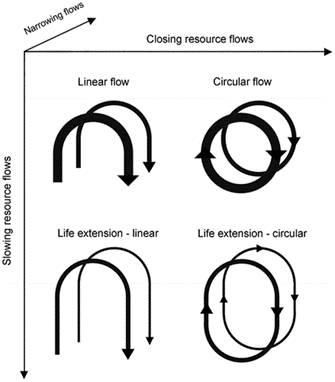
      • Slowing loops: Slowing down the resource flows by designing quality products which have long lifespans, and which can be repaired or remanufactured when issues arise. These days, many products, from our appliances to our personal electronics are designed with “planned obsolescence” to force consumers to continually be buying new products every few years. Slowing resource loops is just better for consumers, the environment, and, if capitalised on through creative business models, can be better for producers as well.
      • Closing loops: Even the best designed products will eventually reach the end of their lifespans. For this stage, we need to close the loops by putting the materials back into the system to the extent possible. Recycling is an example of closing the loop commonly employed in communities around the world. Other instances of closing the loop include designing products to be compostable or using waste for energy.
      • Narrowing loops: An added method is through resource and energy efficiency, which some call “narrowing the loop”. While this approach does not slow resource flows or create circular or closed systems, it does mean that fewer resources are put into the system in the first place, which ultimately supports the goals of the Circular Economy.

      circularity

      Image source: “Product design and business model strategies for a circular economy” by Bocken et al. (2015)

      Benefits

      Why should companies pursue this circularity? The Ellen MacArthur Foundation, a pioneer in the sphere of circularity has identified a few reasons:

      • Profit opportunities: For example, by leasing laundry machines instead of selling them, customers can save roughly 1/3 of the cost per wash and manufacturers can make roughly 1/3 more profit. This is just one example of a business using circularity to creatively increase their revenue streams. Another example is IKEA, who have introduced a buy-back programme and can resell the used furniture.
      • Reduced risk in the supply chain: In the past few years alone, wars, the pandemic, and even a ship stuck in a canal have upset global supply chains. By using fewer virgin materials, companies are less susceptible to volatile prices and disruptions, and have more opportunities to use alternative materials provided by more decentralised suppliers.
      • New business services: A shift to a more circular economy, as the EU is planning, will create demand for additional services, such as collection of end-of-use products to reintroduce into the system, specialised repairs, and parts manufacturing, to name a few. By capitalising on this demand early on, companies can not only increase their revenue streams but can benefit from being first movers in the industry.
      • Improved customer interaction: With new business models, such as leasing or trade-ins, businesses establish more long-term relationships with their customers with several touch points throughout their products’ lifespans. Thus, companies can gain insights into usage patterns, common issues with the products, etc., which will ultimately lead to improved products and customer service in the long run.

      Further benefits include:

      • Increased resource and energy efficiency (and thus cost savings in production)
      • Cost savings from relying on used materials over virgin
      • Minimised waste, which is essential, given Europe’s move toward EPR
      • Enhanced brand reputation because many consumers report interest in sustainability
      • Keeping ahead of regulation and avoiding penalties of non-compliance

      So, while the Circular Economy can seem like a daunting goal, breaking it down to the company level demonstrates tangible and actionable ways for individual businesses to benefit from circularity.

      Want to learn how to implement greater circularity into your business model and strategy and get ahead of your EU legal obligations? Contact our Environmental Compliance Expert, Diego Perdomo!

      Sources:
      – “Product design and business model strategies for a circular economy” by Bocken et al. (2015) as published in the Journal of Industrial and Production Engineering
      3E Exchange
      Ellen MacArthur Foundation

      28 May, 2024
    • China’s reporting requirements

      China’s three biggest stock exchanges – the Shanghai Stock Exchange (SSE), Shenzhen Stock Exchange (SZSE), and Beijing Stock Exchange (BSE) – have joined the ranks of the EU, US, Brazil, and Singapore, among others, to establish ESG reporting requirements for companies. These requirements are stricter than the International Sustainability Standards Board (ISSB) financial requirements and better reflect the recently adopted comprehensive standards of the EU.

      Reporting requirements

      The four “core content” topics include (1) governance, (2) strategy, (3) impact, risk and opportunity management, and (4) indicators and goals. This, similar to the new EU legislation on corporate sustainability reporting, employs a “double materiality” approach, where both an inside-out and outside-in perspective are considered. More specifically, the guidelines include requirements on…

      • Rural revitalisation
      • Supply chain security
      • Energy use
      • Climate change
      • Ecosystems and biodiversity
      • Scope 3 emissions
      • Circular economy
      • Anti-corruption
      • Anti-bribery

      These requirements will apply to almost 500 companies, or about half of the listed market value and begin in 2026 (for the 2025 reporting year). The obligations apply to companies meeting the following criteria:

      • on the Shenzhen 100, Shanghai Science & Technology Innovation 50 Index, and SSE 180
      • dual-listed companies on both domestic and international markets

      Roughly 70% of these companies do already publish some form of a sustainability report. In addition to these, Beijing exchange listed companies, mostly SMEs, will see voluntary standards for reporting.

      According to Boya Wang, an ESG analyst for Morningstar, these regulations are aimed at standardising reporting across China and in line with Europe, and thus, “by catching up with international standards, the government hopes to attract foreign money-especially from institutional investors”. Foreign investment to China has been decreasing in recent years and direct investment reached a three-year low in 2023. Therefore, by increasing transparency and reducing greenwashing risks, Chinese companies can become more attractive and reliable for investment.

      sustainability

      Furthermore, Wang expects that these reporting guidelines and emphasis on sustainability can “broaden the scope of ESG investments” beyond most common industries such as electric vehicles and renewable energy. It can also encourage more environmentally sustainable practices in other sectors.

      However, some foreign investors feel that the risk of governmental authoritarian intervention is too high to make the standards effective. For example, Alecta, Sweden’s largest pension company, has recently stated that it will not directly invest in Chinese firms because of these regulatory concerns. Therefore, only time will tell how enforceable and transparent these guidelines will be, particularly in a nation still dependent on coal and non-renewable fuels, but it is seen as a positive step in the right direction for such a large player in the global economy.

      Sources:

      – Mark Segal for ESG Today (12 Feb 24)
      – Matt Davies for Impakter (23 Feb 24)
      – The Business Times (21 Feb 24)

      28 May, 2024
    • Circularity indicators for companies

      In the last article “Circularity at company level”, we discussed what circularity means for companies and how companies can contribute to the broader Circular Economy while benefiting financially from this innovation.

      Methods for pursuing circularity

      Methods for pursuing circularity focus on three key areas:

      • “Closing the loop” or returning resources back into the system to reduce the need for virgin material extraction (e.g., recycling)
      • “Slowing the loop” or prolonging the lifespan of products to reduce consumption (e.g., through repair)
      • “Narrowing the loop” or increasing resource efficiency to create with as little impact as possible (e.g., energy efficient machinery)

      Indicators

      To measure progress toward these goals, companies can establish their own indicators and KPIs for circularity, such as Duni Group, that EFF is a part of, which measures virgin plastic and FSC-certified material usage for its Circular at Scale initiative.

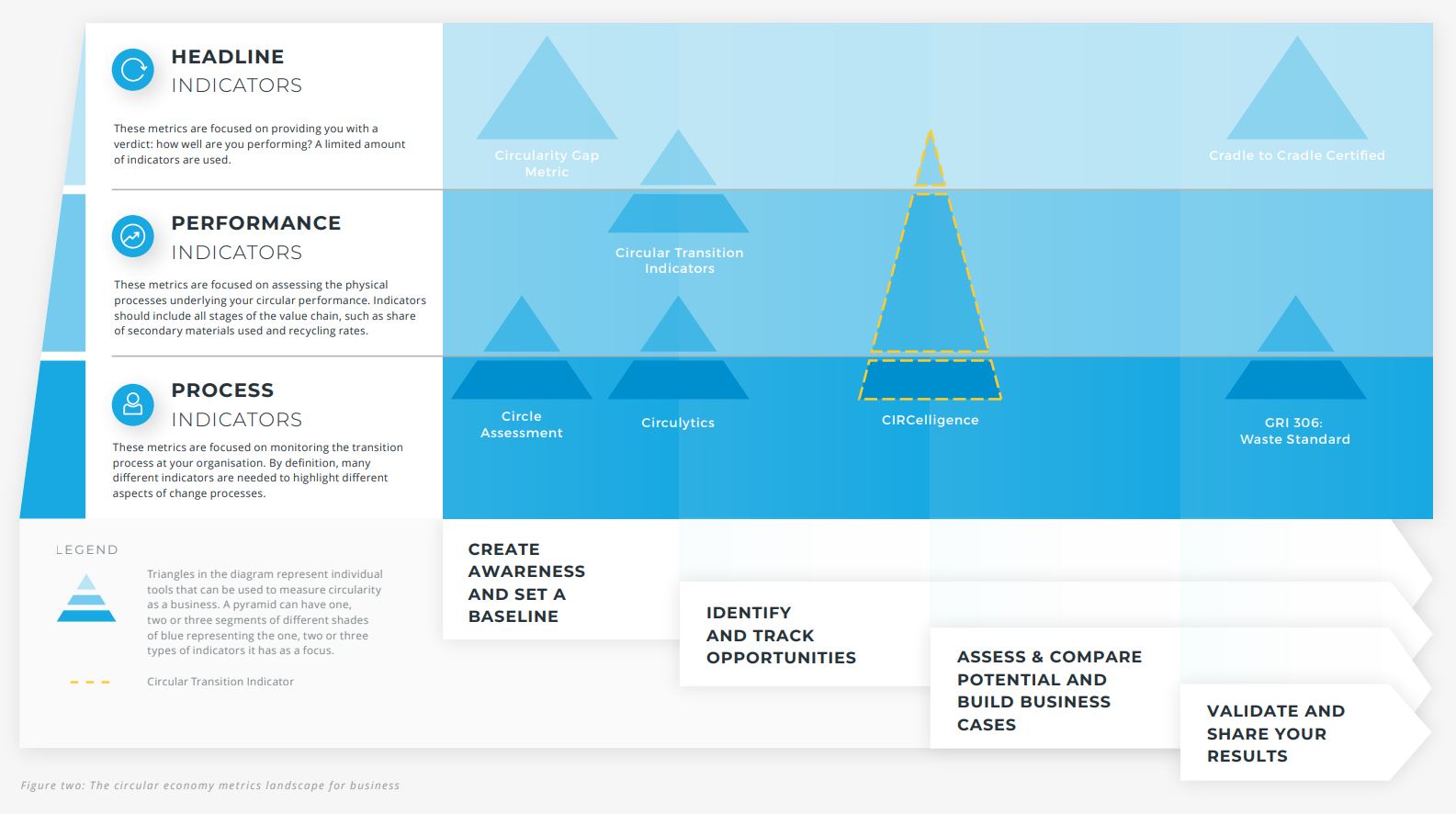
      The following graphic shows several of the available tools and systems for measuring different elements of circularity for companies. Some, such as GRI 306 focus on reporting and can be applied universally to any user, whereas others, such as CIRCelligence, which are more tailor-made to the needs of the particular client.

      Image source: BCG & CE

      These frameworks use indicators, with a wide range in the quantity of data points, which can be broken down into how they measure closing, slowing, and narrowing loops. Others focus more on the impact of circularity on revenue or overall impact or else on the systems that are in place for implementing circularity. For a few of these frameworks, you can see this breakdown below:

      Closing LoopsSlowing LoopsNarrowing LoopsOther
      WBCSD Circular Transition Indicators % material circularity;
      % water circularity;
      % renewable energy;
      Waste recovery
      Actual lifespan% critical materialsCircular material
      productivity;
      % revenue circular;
      GHG impact of circularity;
      Land use change
      EMF Circulytics % virgin vs used vs renewable materials;
      Waste recovery;
      Recirculation % material;
      Waste water recovery
      Uses per lifeWater sources;
      Water resource efficiency before disposal;
      Renewable energy
      Priority for top management;
      Inclusion in risks assessment;
      Inclusion in strategy;
      Targets, plans, tools;
      Circular Economy principles usage;
      Stakeholder engagement;
      Chemical usage;
      Circular Economy services/revenue;
      Finance
      CE & PACE Examples Recycling rate;
      Share of secondary resources;
      Share of renewable energy
      Share of scarce resource& Circularity;
      Share of sustainable products;
      # departments with circularity KPIs;
      Customer attitude;
      Employee awareness
      GRI 306: Waste Waste management practices;
      Waste diverted from vs directed to landfill
      Waste generation
      Cradle-to-Cradle Certified* Circular pathways (biological or technical) plans and actions;
      Use of recycled/renewable materials
      Use of materials compatible with cyclingCircularity education;
      Circularity data transparency;
      Circularity innovation & design;
      Product design for easy disassembly
      *Circularity is just one of five areas of assessment

      If you’d like to learn more about any of these (or other) circularity metrics, or if you’re curious about developing your own, feel free to reach out to either EFF’s Environmental Compliance Expert, Diego Perdomo, or EFF’s Sustainability Expert, Marie Gomersall.


      Sources:

      – “Circularity indicators in practice: Exploring companies’ application and linkages to sustainability” by Emilia Paredes Bassi (2023) as published by Lund University IIIEE
      – “Measuring circularity at the corporate level” by Irene Martinetti and Jarkko Havas (2021) as published in the journal Field Actions Science Reports
      – “Product design and business model strategies for a circular economy” by Bocken et al. (2015) as published in the Journal of Industrial and Production Engineering
      – “How can organisations measure their level of circularity? A review of available tools” by Valls-Val, Ibáñez-Forés, & Bovea (2022) as published in the Journal of Cleaner Production
      World Business Council Circular Transition Indicators
      Duni Group “Becoming Circular at Scale”
      Ellen MacArthur Foundation Circulytics indicators
      EU Circular Economy Monitoring Framework
      Duni Group Boston Consulting Group & Circular Economy CIRCelligence
      Duni Group Circular Economy & PACE

      6 May, 2024
    • USA SEC & ESG Reporting

      The United States Security & Exchange Commission (SEC), which oversees the enforcement of fair market practices to prevent manipulation and protect investors, has interrupted its progress toward climate disclosure rules, citing legal challenges to the new obligations.

      Climate regulations

      Within the United States, some states, notably, California, have established their own climate disclosure regulations, which are also being challenged in the courts. The European Union as well, has developed disclosure requirements to increase transparency for investors and consumers.

      In early March of this year, the SEC released and adopted these standards after two years, the first of their kind to require public companies in the US to disclose their climate risks (and plans to mitigate them), as well as the financial impact of risks such as severe weather events and even, in some cases, the greenhouse gas emissions caused by their activities.

      However, even prior to the final release of these rules, they faced backlash from twenty-five Republican state attorneys general (AGs) and energy services companies, among others, requesting a stay pending review (which was granted by the court) and a lawsuit. These arguments stem from the notion that the requirements are too burdensome and costly for companies, that some of the data points cannot be sufficiently reliable, and, furthermore, that the rules fundamentally overstep the SEC’s authority. The SEC, for its part, argues that the new requirements are “consistent with applicable law and within the Commission’s long-standing authority.”

      esg

      Following the lawsuit from Republican AGs, a coalition of nineteen Democratic AGs have initiated a campaign to support the SEC rules, arguing that the disclosures provide investors with “standardised, comparable, and reliable data” to accurately evaluate the climate-related risks of their investments. Additionally, non-governmental organisations such as the National Resources Defence Council and the Sierra Club believe that the standards are actually insufficient to provide full transparency on these issues.

      Ultimately, the SEC has announced it will pause the development of these rules until the legal challenges have been properly reviewed and resolved. However, in a statement, the body added that “the Commission will continue vigorously defending the Final Rules’ validity in court and looks forward to expeditious resolution of the litigation”.

      Sources:

      6 May, 2024
    • Unlocking sustainable investments: understanding ESG ratings for companies

      In today’s rapidly changing world, investors are not just looking for financial returns; they also want to make a positive impact on the environment and society. This paradigm shift has given rise to the concept of Environmental, Social, and Governance (ESG) criteria, which play a crucial role in evaluating a company’s sustainability performance. In this…

      What is ESG?

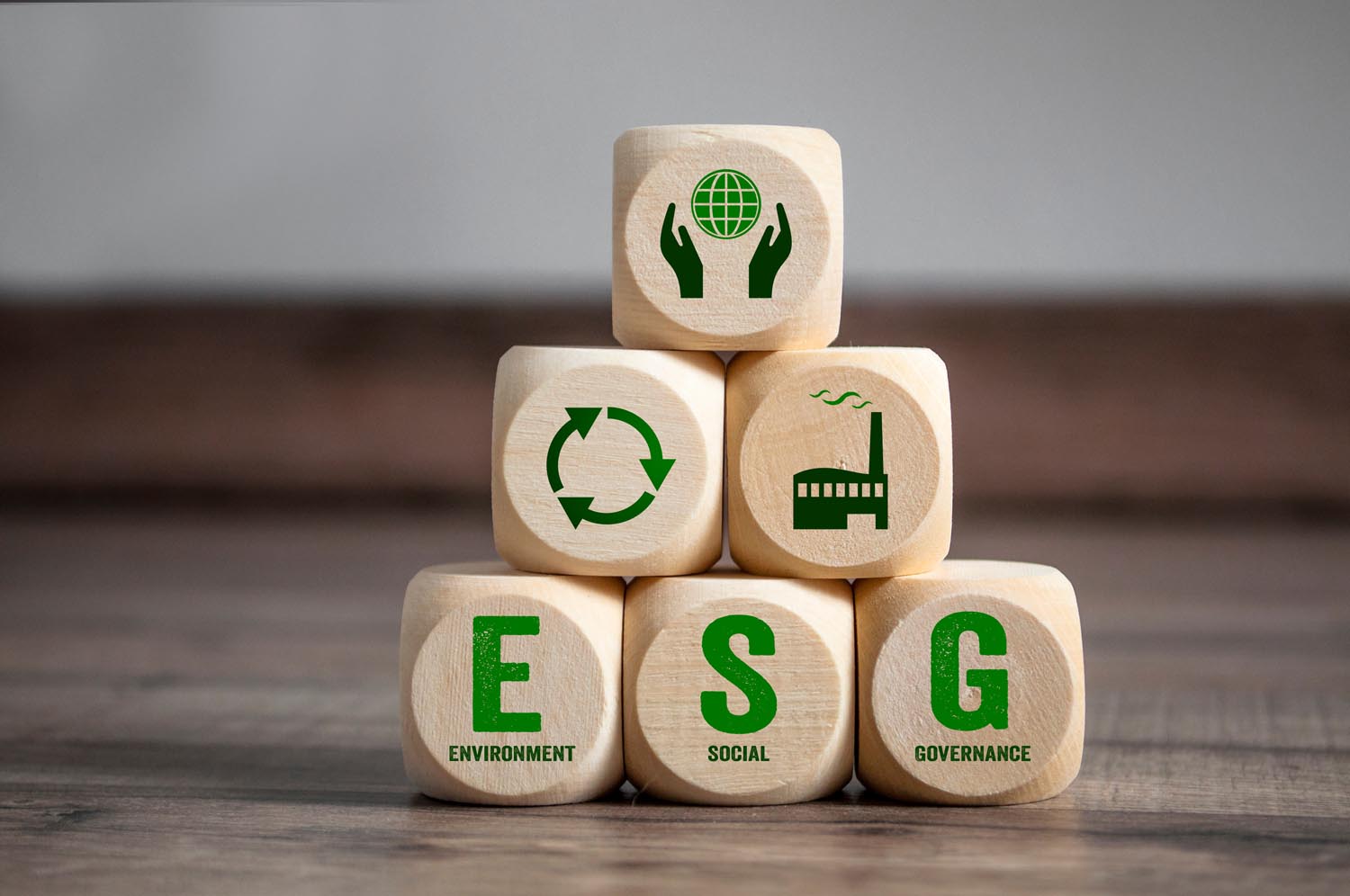
      ESG stands for Environmental, Social, and Governance. These three factors provide a framework for assessing the sustainability and ethical impact of a company’s operations.

      • Environmental: This dimension focuses on a company’s impact on the environment. It considers factors such as carbon emissions, waste management, water usage, and efforts to combat climate change.
      • Social: The social aspect of ESG evaluates a company’s treatment of its employees, community engagement, diversity and inclusion, and labor practices.
      • Governance: Governance deals with a company’s internal structure, transparency, and ethical leadership. It includes areas like executive compensation, board diversity, and adherence to legal and ethical standards.

      The rise of ESG ratings

      ESG ratings provide a standardized way of measuring a company’s performance in these three categories. Various rating agencies assess companies based on a range of indicators, producing a quantifiable score that investors can use to compare companies’ sustainability efforts.

      rozliczenia podatkowe

      Why ESG ratings matter

      • Risk Mitigation: Companies with strong ESG practices are often better equipped to manage risks. For instance, a company that actively addresses environmental issues is less likely to face legal or reputational problems related to pollution.
      • Investor Confidence: ESG ratings are becoming a critical factor in investment decisions. Investors increasingly prefer companies that demonstrate a commitment to sustainability and responsible practices.
      • Long-Term Viability: Addressing ESG factors contributes to a company’s long-term success. Companies that prioritize environmental responsibility and ethical governance are better positioned to adapt to changing regulations and consumer preferences.
      • Attracting Talent: Companies with high ESG ratings tend to attract and retain top talent. Employees are drawn to organizations that align with their values and make a positive impact on society.

      Challenges and opportunities

      While ESG ratings have gained prominence, challenges remain. Standardizing ESG metrics across industries and regions can be complex. Additionally, there is a need for transparency and consistency in reporting to ensure accurate ratings.

      However, the challenges present opportunities. As companies work to improve their ESG ratings, they can drive innovation, foster positive relationships with stakeholders, and ultimately contribute to a more sustainable future.

      ESG ratings are transforming the investment landscape by placing sustainability at the forefront. Investors are recognizing that financial gains must go hand in hand with responsible business practices. As ESG criteria become more integrated into investment decisions, companies that prioritize environmental and social responsibilities will likely be the leaders in creating lasting value for themselves and the world.

      13 March, 2024
    • EPR – who counts as a producer of EEE

      Are you wondering if you have obligations under Spanish Extended Producer Responsibility (EPR) regulation? EFF has recently opened a hub in Barcelona with EPR specialists ready to offer a personalized consultation on your requirements and guide your team through the process.

      Regulation on EPR

      The regulation on EPR has been strengthening in Europe and Spain in order to make the producer responsible for the entire life span of their products. One of the major industries under scrutiny is that of Electrical and Electronic Equipment (EEE).

      The amount of EEE produced worldwide has been rising with digitalization in previous years and particularly recently with the rise of artificial intelligence. Consequently, the Waste of Electronical and Electronic Equipment (WEEE) generated has been increasing exponentially every year in the world and it is estimated that the amount will continue to increase and double by 2050.

      Therefore, EPR regulation plays a fundamental role in this sector since it confers several obligations to those considered producers regardless of whether they are natural or legal persons.

      For companies established in Spain, the criteria to be considered as a producer of EEE in Spain is the following:

      • Designing or manufacturing EEE and marketing them under the firm’s own name/brand in the Spanish market
      • Reselling under its own name/brand or its own EEE-specific brand products manufactured by third parties, without being considered as a “producer” because the producer’s brand appears on the device (see Paragraph 1)
      • Being professionally dedicated to the introduction of EEE from third countries or another EU member state into the Spanish market

      EPR in Spain

      Additionally, entities which are established in another country or member state and which sell EEE via remote communication directly to private individuals or professional users in Spain are considered producers of EEE under the Royal Decree 110/2015 about WEEE.

      An EEE producer that manufactures in Spain and exports all their inventory, without selling any device in the Spanish market won’t be considered a producer in Spain for EPR terms, but it will be a producer in the countries in the EU where it sells its products.

      Finally, it’s important to remark that whoever acquires EEE in a Member State or another country and brings it to Spain privately for their use and enjoyment or to give it to a third party won’t be considered a producer of EEE.

      It is important to distinguish who must comply with the EPR legislation because they are considered a producer of a product. Under the scope of EPR, not only the manufacturer is the producer but also other actors in the chain, for instance, distributors, importers, among others.

      The different types of actors covered under the legislation that are considered as producers are the following:

      • Manufacturers in Spain, unless the manufacturing is done for third parties using the branding of another company, in which case that other company would be considered the producer.
      • White label, own brand, or distribution brand sellers producing devices under their own name (or hiring someone else to), be it in Spain or in another country and then imported to Spain.
      • Importers bringing products from other Member States or third countries to sell in Spain.
      • Distributors who import any of the EEE that they sell are deemed producers. However, if all the devices sold have been acquired from manufacturers or importers already considered producers in Spain (see above), then the distributor is not considered as another producer.
      • Remote sellers who are established outside of Spain and who sell EEE via remote communication channels directly to private individuals or professional parties are considered producers. Note: Remote sellers established in Spain can also fall under other categories within this list and would thus be considered a producer as well (e.g., if they import EEE and sell on the internet, they are also importers).
      13 March, 2024
    • The 2030 Agenda for sustainable development

      The 2030 Agenda for Sustainable Development is a global initiative adopted by United Nations in 2015. This ambitious action plan of integrating three dimensions – economic, social and environmental – aims to ensure the protection and prosperity of our planet and society.

      Sustainable development goals for Poland

      The program is based on 17 Sustainable Development Goals (SDGs), which identify and describe a wide range of challenges our world is facing today. From fighting poverty and famine through making quality education, clean drinking water and sanitation accessible for all, through battling climate change and protecting all life on earth, all the way to guarding peace and justice, the targets are nothing short of intimidating. However, through strengthening the bonds amongst its member state, the UN is determined to meet them.

      From a strictly organizational perspective, the implementation of Agenda 2030 requires universal involvement of governments or international organizations, the private sector, and civil society, as well as research and education centers. A large variety of institutions are encouraged to integrate the Sustainable Development Goals into their strategies, business models and operational activities.

      Key aspects of Agenda 2030 for organizations:

      • Introduction of Sustainable Development Goals – Organizations should analyze how their operations contribute to the SDGs and identify areas where they can make the greatest difference, be it through minimizing the negative impact of their activity or maximizing its positive effects.
      • Innovation and sustainability – Enterprises should introduce new solutions for products, services, business processes and business models, so that they may contribute to creating a sustainable future.
      • Cooperation – As achieving the goals requires strong cooperation across all sectors, organizations should seek to work with governments, NGOs, academic institutions and other businesses to exchange experiences, resources, and knowledge.
      • Transparency and reporting – Organizations are encouraged to build transparency and report on their progress toward sustainability goals. Sustainability reporting not only helps monitor progress, but also builds stakeholder trust.
      • Stakeholder engagement – Companies need to engage employees, customers, suppliers, and local communities in the conversation on sustainability and joint efforts to achieve goals.

      As environmental and social issues gain more public awareness, market leaders and investors are starting to look beyond short-term financial gain. The aftermath of natural disasters, social discontent and economic inequality paint a gloomy picture of our future, but there is potential and hope to be found in our solidarity against these struggles. The only solution to bring companies closer to stability and long-term growth is to take responsibility for their share of damage done to the environment and concentrate efforts to alleviate its consequences.

      29 February, 2024
    • Sustainability ratings

      Sustainability can be defined as socio-economic progress achieved through unification of political, economic and social initiatives which aim to protect our environment as well as improve the quality of life of all communities for generations to come. Poland has committed to implementing the principles of this concept by participating in the United Nations Conference on Environment and Development and signing three declaratory documents: The Rio Declaration on Environment and Development, the Agenda 21 Action Program, the Declaration of Principles for the Sustainable Management of Forests, and two global agreements: The Convention on Climate Change and the Convention on Biological Diversity.

      Sustainability indicators – what are they?

      This system of ratings serves as an informational and diagnostic tool that helps direct social, economic, and environmental activity at various administrative levels, from local to national. Sustainability scoring aims to facilitate supervision of how local, regional, national, and EU authorities , as well as enterprises, implement provisions in various strategic documents, such as plans, programs, or policies.

      Types of sustainability indicators

      These metrics can be divided into several categories, according to the four main dimensions of the idea of sustainability:

      • Social – focusing on improving the quality of life of citizens, ensuring social equality, and promoting cohesion. They consider public health, education, demographic change, public security, and social integration, among others.
      • Economic – focusing on promoting sustainable economic growth that supports universal welfare while minimizing negative environmental impacts and ensuring equitable distribution of profits. Indicators in this category include gross domestic product (GDP) per capita, level of public debt, labor market indicators, innovation, and transportation, among others.
      • Environmental – concerning the protection of natural ecosystems and the promotion of sustainable resource management practices. Indicators in this category regard greenhouse gas emissions, freshwater resources, land use, waste management or biodiversity conservation, among others.
      • Institutional-political – these include global partnerships, cohesion and efficiency policies, openness and participation, and citizen engagement.

      One goal of Poland’s Sustainable Development Strategy is to optimise the exploitation of raw materials, fuels and natural resources , ensure territorial security and environmental protection. Another of its objectives is to preserve national sovereignty, provide universal health care and social welfare, as well as compliance with existing legal system.

      29 February, 2024

    Contact form

    Contact us and we will respond within 24 hours!
    Kontakt
    Close
    Would you like to change the market?
    Select area of operation
    You will be redirected to another page for the selected market
    Polska
    Jesteś tutaj
    United Kingdom
    Go to page