Building abroad? Secure your VAT compliance from the start!
Operating in the construction sector across European markets?
Remember that VAT rules differ from country to country, even if they are based on the same EU Directive. This means that under some circumstances you may be required to register for VAT abroad, for example when:
- You provide construction services or sell goods with installation — then you may be required to account for VAT in the country where the work is performed.
- You sell building materials — depending on the situation, this may also require local VAT registration.
- You maintain a warehouse or stock abroad.
We’ll guide you through this process smoothly and stress-free. Instead of tracking regulatory changes, you can focus on what you do best. We will handle your VAT compliance, no matter where your warehouse is located, where your goods are shipped from, or where your customers are based.
Selling building materials? Here’s what you should know:
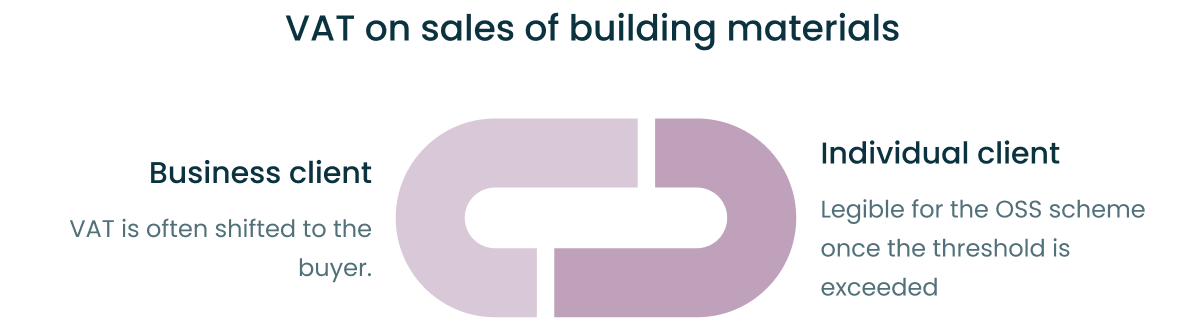
If you send materials to customers in another EU country, your VAT obligations depend on whether your customer is a business (B2B) or an individual (B2C). For business clients, VAT is often shifted to the buyer, which reduces your own responsibilities. For private customers, after exceeding a certain threshold, you can use a simplified system that allows you to declare all sales in a single return.
If you store building materials abroad — for example in the Netherlands — local VAT registration will most likely be required.
Providing construction services abroad?
Under EU regulations, the place of taxation for your services is always the country where the property is located. This means that:
- If you renovate an office building for a company in Belgium, the VAT is settled by your Belgian client.
- If you perform work for a private client in Germany, you must register for VAT in Germany and settle the tax locally.
Selling goods with installation? Local VAT registration is usually required.
When you sell and install goods (e.g. windows, heating or electrical systems) in another EU country, the place of taxation is that country. This means that you’re responsible for settling VAT there — which typically requires obtaining a local VAT number.
Avoid errors, save time, and focus on business growth.
Operating across multiple markets and combining different business models? Instead of monitoring ever-changing regulations, focus on what you do best. We’ll manage your VAT compliance across all jurisdictions — no matter where your warehouse, client, or shipping point is located.
Scale globally – we’ll handle the local compliance.