Would you like to change the market?
Select area of operation
You will be redirected to another page for the selected market
FAQ
Would you like to change the market?
Select area of operation
You will be redirected to another page for the selected market

    Blog

    Check our blog

    Learn more about the latest industry trends, changes in regulations and development opportunities for your company.
    30 October, 2024

    VAT in real estate transactions

    Understanding the rules that apply to the taxation of real estate transactions is essential for anyone operating in the market, whether investors,...

    28 February, 2025

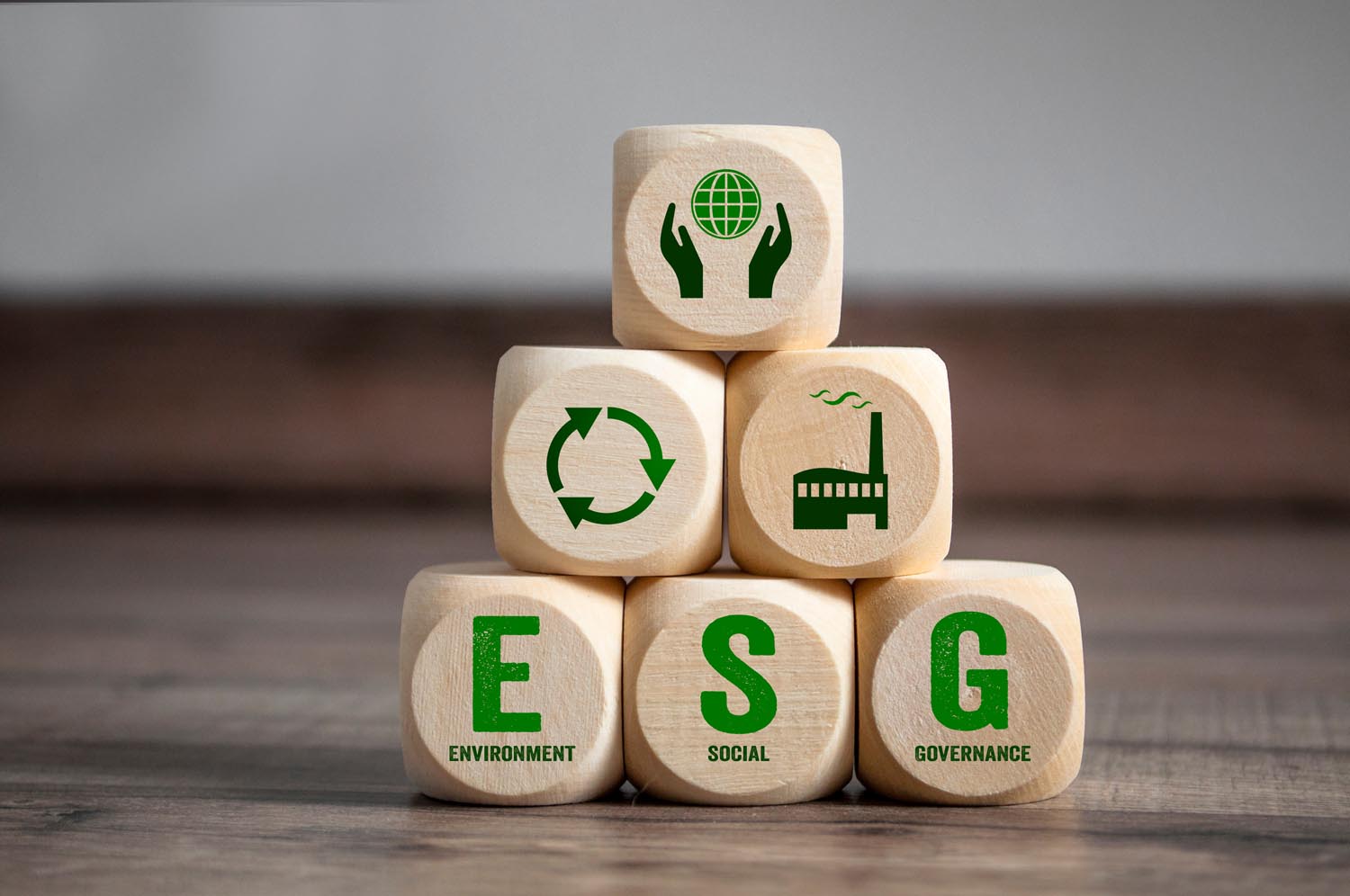
    Omnibus package – incoming changes in ESG reporting

    The European Commission’s proposals to simplify ESG regulations as part of the so-called Omnibus Package published on February 26th 2025 have sparked...

    Latest

    • Intrastat – everything you need to know but are afraid to ask

      According to the EEC, trade between countries of the EU should be based on the same principles as domestic transactions. Such a solution, uniform for all entrepreneurs, facilitates cooperation and eliminates the need for any additional documentation or charges. A need may arise, however, for the enterprise to share some information regarding trade for statistical purposes. Every entrepreneur who conducts trade with other countries of the EU has most likely already come across the term Intrastat. In this article, we explain the nature of Intrastat and any intricacies connected to it.

      What is Intrastat?

      Intrastat is a statistical system designed to collect data on the intra-Community trade. It has been used in the EU since 1993, and in Poland since its joining to the EEC. Intrastat collects information on the goods traded between member countries which are not subject to customs duty. In a way, Intrastat resembles customs declarations, as it includes all necessary information regarding the country of origin, destination, value and nature of traded goods. Separate forms for imported and exported goods are filed monthly, generating statistics of transactions between the member countries.

      outsourcing procesów finansowo-księgowych

      Who is obliged to submit Intrastat declaration?

      Not all entrepreneurs trading with other countries of the EU are required to file Intrastat declarations. The declarations are obligatory for legal entities, natural persons and VAT payers trading with other countries of the EU who exceeded the thresholds set by Statistics Poland. Any entrepreneur who exceeded a threshold in the previous year is obliged to submit their Intrastat declaration.

      How and when to submit Intrastat declaration?

      In Poland, submitted declarations are handled by the Customs Chamber in Szczecin. The declarations are filed via an online form on PUESC website – paper versions are filed only in certain cases. As in case of other types of declarations Polish entrepreneurs are obliged to file, the submission deadline is the 10th day of the month following the conducted intra-Community transaction.

      23 October, 2020
    • FBM vs. FBA on Amazon – which model to choose?

      eCommerce is the up-and-coming sales model – as proven by the growing interest in international trade and conducting businesses online.

      Amazon

      One of the platforms which enable business activities on external markets is Amazon. It provides a valuable support with logistics. Entrepreneurs who wish to expand their businesses in this direction should consider working with this American giant in one of the models it offers: FBM or FBA. What are the differences between the two, and what should you consider when choosing between them?

      FBM – full control of shipping

      Fulfillment By Merchant (FBM) is a model dedicated to sellers who wish to have a full control over the transport of goods. Amazon serves only as a middleman – it does not interfere with the shipment. FBM provides an online platform to plan sales, control logistics, and use other tools which help prepare goods for shipping. In other words, it is the seller who is responsible for the goods. It is a great solution for online sellers, as it enables them to monitor their shipments.

      FBA – sales and logistics combined

      However, some entrepreneurs conducting business via online selling platforms would rather outsource this process in its entirety. The Fulfillment By Amazon (FBA) model was created exactly for them. The main difference is that the responsibility for the preparation and shipment of goods lies with Amazon, and not the seller. There are many advantages to this solution. First and foremost, it is Amazon who carries the responsibility for the shipped goods. Moreover, the seller does not have to acquire an additional space to store the goods.

      księgowość Amazon

      Is there a third option?

      FBM and FBA are not the only solutions offered by Amazon. Entrepreneurs, specifically in the seasonal sector, can also choose the Seller Fulfilled Prime (SFP) model. In order to be eligible for SFP, a special status which allows entrepreneurs to sell “Prime” goods needs to be obtained. In this case, it is the seller who prepares the shipment (like in FBM), and passes it on to Amazon, at the same time benefiting from the advantages of Amazon Prime.

      FBM and FBA accounting

      No matter which model you decide to choose, using Amazon for international transactions may result in additional VAT rates applicable in a particular country. eCommerce sellers who think of expanding their businesses should not only choose the right sales model but also tailor their accounting processes to international trade rules. The support of our experts in international accounting may prove to be invaluable in such a case.

      23 October, 2020
    • Changes in One Stop Shop and their ramifications

      In line with the Council Directive (EU) 2017/2455, the system previously known as MOSS (Mini One Stop Shop) will be converted into OSS (One Stop Shop). The new scheme will result in simplification of tax processes for eCommerce sellers, specifically B2C (Business-to-Consumer) based, as well as other changes. Find out more about the new changes, their ramifications, and whether they will affect selling on Amazon.

      Changes in VAT OSS – what are they?

      The changes proposed by the Council aim at simplifying tax processes for eCommerce sellers, and provide a variety of solutions which facilitate VAT settlement. In line with the Directive, the VAT OSS system will also include companies providing goods on the basis of B2C. The main change to come involves the method of submitting VAT declarations – the declaration will be limited to only one document for the company’s country of residence. It will include all transactions conducted inside the EU. Until now B2C sales which exceeded certain threshold required additional VAT registration. After the changes are introduced, it will not be necessary, as a single VAT registration submitted by the entrepreneur will include all overseas transactions.

      VAT OSS

      How will VAT OSS changes affect selling on Amazon?

      The proposed simplification of VAT declarations may have a significant effect on Amazon sellers. Entrepreneurs cooperating with Amazon will be able to benefit from the solution as long as their goods are stored in warehouses inside the EU. If their goods are stored outside the EU, additional declaration for overseas transactions will be required. Therefore, the changes mainly concern the FBA model.

      Changes in VAT OSS postponed

      The Member Countries have some time to prepare for the changes to come – according to plan, they are to be enforced in July 2021. Although the new scheme was planned to be introduced at the beginning of 2021, the current economic situation has forced it to be postponed. Thus, the countries of the EU have more time to prepare for the Directive by adapting online trade platforms to the new methods of VAT registration.

      However, it is still not conclusive whether the changes in VAT settlements for eCommerce sellers will be enforced in July. Firstly, the European Commission must receive information on national requirements regarding VAT settlements for international transactions from the Member Countries. Many countries may still not have enough time to prepare for the changes. For this reason, it is best to monitor the situation and follow any reports regarding VAT OSS.

      23 October, 2020
    • What eCommerce traders should know

      Many companies engaged in eCommerce conduct their business solely online. Maintaining Accurate and reliable accounting is crucial for all of them. We prepared specially designed accounting services for clients engaged in eCommerce via FBA; comprehensive accounting services for online marketplaces, taking into account the specific nature of online trade, and the individual needs of the company.

      Accounting for eCommerce traders

      Amazon offers entrepreneurs immense possibilities to sell their products on international markets. The number of online marketplaces constantly grows. Online trade requires however not only expertise in using online tools, but also maintaining accurate accounting. For this reason, we provide international tax settlement services for eCommerce traders using FBA solutions, supporting entrepreneurs who wish to expand their business through global networking. We offer flexibility and expert knowledge of the online market, supporting both experienced sellers and those who consider setting up an online shop. Our services also include support with VAT registration, submitting VAT declarations, and advising on VAT related matters.

      modele sprzedaży

      Our services include:

      • FBA and eCommerce consulting
      • International accounting in situ
      • Comprehensive and detailed accounting services for online marketplaces
      • Consulting on accounting and VAT in terms of Amazon FBA.
      • Registering companies, settling VAT (submitting VAT declarations on behalf of the client)
      • Accounting in line with data provided by Intrastat – statistics on trade in goods between countries of the European Union
      • Monitoring company’s financial situation and reporting all financial information
      • Support with handling VAT and invoicing of international transactions

      We also offer full support with accounting and control of online marketplaces. Based on FBA, the eCommerce industry requires more varied financing solutions. As one of few outsourcing companies we provide security, reliability and accuracy of financial documentation along with specialized knowledge in the field, taking into account the changeability of online markets, the mechanisms of online marketplaces and online tools used by them. We provide consulting services for companies conducting their businesses based on FBA, EFN, CE and/or PAN-EU, adapting to each model individually.

      14 October, 2020
    • International accounting – what is it?

      More and more entrepreneurs decide to expand their businesses on international markets, which makes running them even more demanding on many levels, including accounting. Paying VAT, creating new branches, and cooperating with contractors are merely a few of the responsibilities of those who wish to run their business abroad or open to new market in Poland. Both cases require adjusting to existing laws in such a way, so as to ensure transparent and accurate accounting.

      International accounting services

      Companies conducting business internationally have to consider many variables regarding the preparation of financial reports, or issuing and paying VAT invoices. As regulations regarding accounting vary from country to country, it is crucial to learn about them before setting up a company branch abroad or forming a partnership with a foreign contractor. International accounting is a standard service connected with bookkeeping, managing HR departments, and representing the company before financial institutions. It also takes into account regulations on accounting and taxation existing in a given country. Moreover, international accounting explains the differences between various methods of tax settlement and helps monitor financial conditions on a domestic and international scale, as well as supports international companies with the registration of a company and submitting VAT declarations.

      International accounting: supporting companies

      International accounting specialists possess expert knowledge necessary to advise on international finances. It can be stressful to manage payroll, monitor tax regulations, and issue VAT invoices on a foreign market. For this reason, outsourcing is a great method of shifting the responsibility from the entrepreneur, allowing them to focus on running and expanding their businesses instead.

      2 September, 2020
    • International taxation

      Although Personal Income Tax (PIT) in Poland may not put much strain on domestic enterprises, for those companies which operate internationally, taxation becomes a little more complicated. It is not the calculation of revenue for the previous year that causes most problems for the companies but determining what type of taxation they are subject to depending on where they operate. Not only does it keep some entrepreneurs awake at night but it may also discourage them from expanding to foreign markets.

      Taxation abroad – facts and myths

      Calculating tax for companies which operate on several markets requires a comprehensive approach. Both the knowledge of the Polish tax laws and rules for international income tax calculation are vital. It is also essential to determine the right tax residence of the enterprise, that is the place of residence for tax purposes, which is based on entrepreneur’s domicile and the type of business activity they conduct. Having determined these matters, the entrepreneur can decide on what type of taxation they are subject to. It is also important to acquaint oneself with the double taxation laws in the countries in which one operates, so as to avoid paying taxes in two or more countries. When in doubt, an experienced accountant with the expert knowledge of international tax laws can always lend a helping hand with the calculation of revenue and tax reliefs, or the analysis of payments in accordance with the international tax law.

      polska księgowość

      2 September, 2020
    • Amazon FBA: what is it and how does it work?

      Logistics on international scale and invaluable support for online selling – that’s how one can in short describe Amazon FBA, the selling platform of Amazon, a giant on the market of digital commerce. Owners of online stores use this form of trade for many reasons, and its benefits mostly result from Amazon’s access to the biggest international markets.

      What is Amazon FBA?

      Amazon FBA (Amazon Fulfillment By Amazon) is a service allowing for the sale of goods all around the world with Amazon’s logistical support. As part of this partnership, Amazon takes care of both the packaging and shipping of the parcels as well as their further handling.
      One of the benefits of this solution is the access to the world’s biggest markets, thus increasing sales and expanding to export. Sellers do not have to worry about managing their own storage facilities or the timeliness of deliveries. However, the main benefit is transferring the responsibility for the shipment and preparation of the product from the retailer onto the deliverer. Not only does this influence the operating of online stores but also matters related to finances. An online business wishing to use the opportunity of selling their goods internationally should be aware that this also changes the type of accounting.

      Amazon FBA

      How does Amazon FBA work?

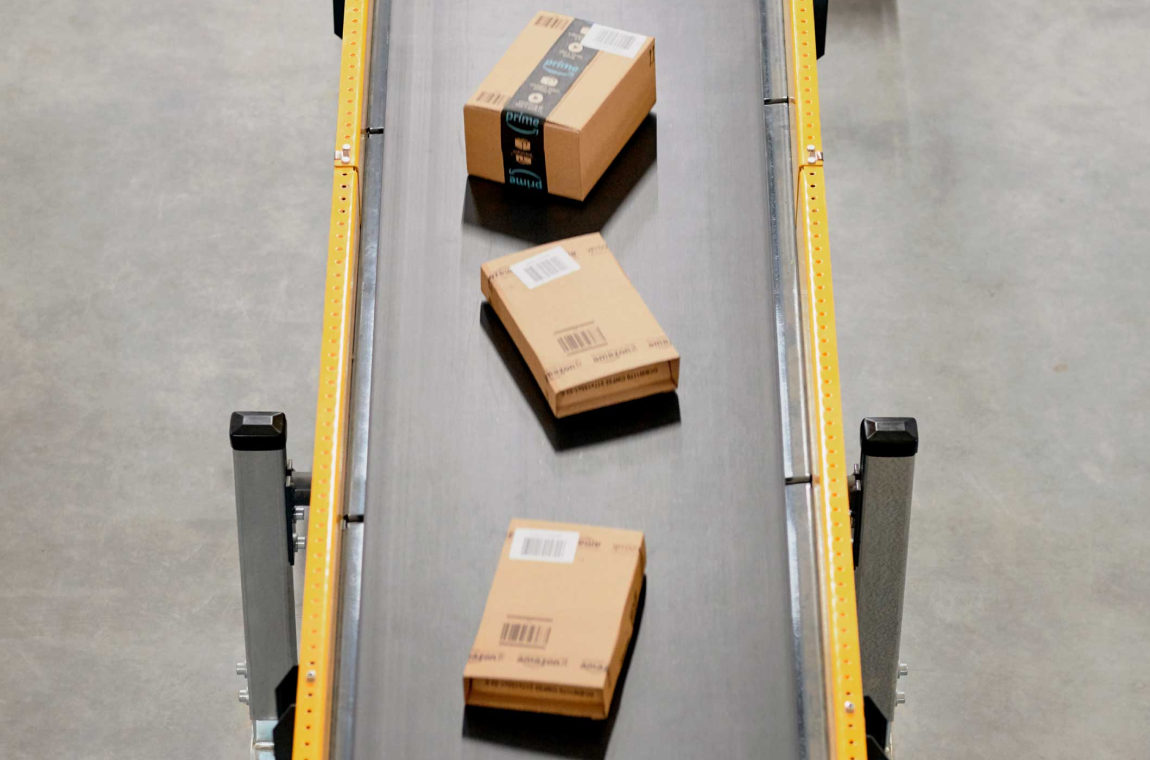
      Amazon FBA’s support in sales has a great influence on export. Thanks to a complex logistical network, the platform can provide its services to the eCommerce industry in a beneficial and easily introduced way. Amazon’s logistic centres bring the products into warehouses and then commence a procedure whose aim is to ship the products abroad. These services consist of, among others, the receiving, cataloguing, storing, completing, packaging and shipping of products. Amazon also takes over the customer service in a given country – any details of the parcel are also given in the language preferred by the customer.

      27 August, 2020
    • VAT compliance

      VAT is one of the most important sources of income for most governments. In the EU, VAT has increased its share of government revenue during the last ten years compared with income taxes and social security contributions. This is one of the reasons why VAT reporting obligations and penalties have also increased.

      About VAT compliance

      In the VAT system companies have a special role as tax collectors for the government. They charge VAT to their customers and then deliver the funds to the government. There are few areas within tax which are so complicated and where there are so many potential pitfalls as within VAT. There are different rates for different products and services. VAT may be fully-, partially- or non-deductible depending on the circumstances. For international trade there are differences in VAT treatment depending on if sales are to businesses or consumers. In some countries VAT needs to be reported on transaction level which requires IT systems capable of this. These are just some of the many complexities and difficulties within VAT. You need to know your business partners and assure they are registered for VAT. Invoices need to be designed in a correct way. Even for large corporations it is a major challenge to maintain in-house competence and resources to keep up with regulations, changes in them and reporting requirements.

      rozliczenia podatkowe VAT

      Apart from compliance issues as those mentioned above there are many practical difficulties with maintaining in-house VAT capabilities. Seemingly ordinary matters such as holidays, sicknesses and personnel rotation are cumbersome and usually expensive to address. You often find yourself over-staffed or under-staffed. Through outsourcing you can both reduce costs and improve quality of VAT compliance by tapping into the resources of high-class service providers.

      Reporting and filing VAT returns in foreign jurisdictions is often not possible for an individual company as you need local accesses to log in to reporting systems. You also often need to provide documentation in local languages. A competent outsourcing provider will solve this for you, either through its own capability or through an established network of partners. It is quite difficult to find a suitable partner by yourself in other countries. Price and communication issues are quite common. If you need a fiscal representative it is especially expensive, for example a non- EU company needs one in the European union and vice versa.

      When outsourcing VAT compliance you also have an opportunity to optimize VAT flows transactional systems. A lot of manual work and cost can be avoided if you configure accounting systems in the best possible way. An incorrectly or incompletely configured accounting system may not correctly calculate the tax you owe or should reclaim. It may also not support you with reports and traceability of transactions. By letting the system do the work you save many hours of work and you also reduce risks for manual errors. It also enables accounting personnel to focus on other issues such as business controlling rather than checking VAT transactions. It also helps companies recruit quality personnel who prefer to work with value added processes rather than manual controls.

      The majority of businesses are interested in reducing risk in their overall VAT processes. The key to controlling risk is to understand end to end VAT processes within the company, from master data maintenance to invoicing, payments, filing VAT returns and more. With the help of a VAT specialist you can maintain solid routines and conduct periodical healthchecks. This reduces risk for systematical or ad-hoc errors which can result in both penalties and perhaps negative effect on the company’s cash-flow. Responsibilities and key drivers for VAT and other indirect taxes may be spread throughout an enterprise, in any of such diverse departments as finance, IT, supply chain, logistics, and human resources. An external eye may therefore be extra valuable when evaluating total VAT risks and processes in a company.

      EFF offers comprehensive VAT compliance and outsourcing services. We offer both VAT compliance services, such as VAT registration and filings in most jurisdictions of the world, and VAT consulting and risk control services. With EFF’s help you can solve practical issues and also optimize and risk-minimalize VAT processes. EFF’s experienced team of experts can assure you continuity and efficiency.

      8 July, 2020
    • Integrated expense management part 2

      Payments and invoices need approval and coding to ensure that they are paid and accounted for correctly. For best efficiency and the least errors it’s normally best to let master data settings steer coding.

      Expense management

      The master data of goods and services combined with data from other dimensions will contain information about accounts, cost centers, cost bearers and perhaps more that’s used to code transactions. If you combine this with automatic approval of invoices that match purchase orders and deliveries, then invoices can be both coded and approved without any manual work apart from occasional maintenance of master data. Other daily processes like writing and sending purchase orders and registering deliveries will take care of other inputs needed. If, in addition to this, the invoices and purchase orders are sent and received electronically (EDI not PDF:s or similar) then you have a fully automated process.

      The opposite to an automated process is when you receive invoices on paper or pdf and manually code and approve. Usually, this is done with a workflow tool (invoice is scanned and then circulated electronically) which to a certain extent makes the task smoother but still you are far from an automated, error-free and fully efficient process. It is recommended to keep manual coding and approval to a minimum. The risk of fraud is also higher with a manual approval process due to the fact that an employee with sufficient authority more easily can ‘push through’ invoices.

      The coding and approval of certain expenses like entertainment and business travel can be particularly challenging and difficult. Restaurant and conference costs, for example, are often partially non-tax-deductible and there may be different VAT-rates on the same invoice. It’s difficult to avoid a manual process for codng such expenses. Usually it’s best to process them withing the expense management process rather than within procurement and accounts payable.

      rozliczenia podatkowe

      The coding and approval of certain expenses like entertainment and business travel can be particularly challenging and difficult. Restaurant and conference costs, for example, are often partially non-tax-deductible and there may be different VAT-rates on the same invoice. It’s difficult to avoid a manual process for coding such expenses. Usually it’s best to process them within the expense management process rather than within procurement and accounts payable

      Registration and approval of vendors

      Many organizations strive to reduce the number of vendors and even more so the number of new vendors registered. Registration of new vendors is a time-consuming and costly process. Organizations usually want to control and approve the introduction of new vendors to assure they comply with requirements concerning such things as payment terms and general legitimacy.

      In some organizations vendors are registered as they appear – when an invoice is received from a previously unregistered vendor. This process is very common but far from optimal as you risk accepting unfavourable terms and even fake or incorrect invoices. You may also run into trouble with VAT if the new vendor is not properly registered . The vendor could also be on some kind of black list if you are unlucky. Such black lists usually contain vendors that act unethically in different ways, for example through fraudulent business practices, non-payment of taxes and exploitation of child labour.

      It’s absolutely doable to have a both a structured process for registering new vendors and simultaneously a spontaneous ad-hoc process. The structured process would apply to regular vendors with significant volumes expected. The unstructured process would apply to minor purchases and best taken care of in the expense management process so as not to reduce the efficiency of procurement and accounts payable.

      A structured process for introducing new vendors would involve steps to assure that the vendors accepted adhere to the organizations policies concerning trading terms and general suitability. If an organization uses a procurement platform like BasWare or Ariba the process for introducing new vendors is integrated in the platform. Such a process normally involves steps to negotiate terms with the vendor, to check credit rating and black lists and establish price lists and forecasts.

      rozliczenia podatkowe

      For purchases outside the main procurement process an unstructured process may be acceptable. This usually concerns smaller and ‘ad-hoc’ purchases. Examples are trainings, conferences, office supplies and presents. Such purchases are preferrably done within the expense management process with credit card payment. Payment terms are usually more favourable (=longer) for credit card payments than for payment against invoice. By using the expense management process these purchases don’t disturb the main procurement and accounts payable processes. For these smaller purchases there could still be limited checks on the vendors to assure that they, for example, are propoerly VAT registered. In many countries monthly VAT reporting requires organizations to send transaction level data and therefore it may be necessary to register complete vendor data also for credit card purchases and one-time vendors.

      A good control of new vendor registrations and the trading terms applied is a key factor in optimizing an organization’s cash-flow and profitability.

      Payments / Payment files

      An often overseen step of the purchase-to -pay process is the actual paying. It’s a good idea to consider all payments and not just those related to traditional purchasing of goods and services. Other payments include taxes, salaries, fees and utilities.

      Payments can be a rather messy process with many payments done manually outside the main optimized process. There are also inherent security risks within the payments process. How do you, for example, assure that an approved payment really goes to the right receiver.

      Most organizations of a certain size work with so called payment files which are created in the accounting system. Ideally all payments would be done with payment files and there would be as few files and payment runs as possible, one per week or even less. A payment file is created by the accounting system by collecting all approved and due invoices on a certain date. Usually organizations do not make all payments with payment files, however. Manual payments are made for advances, urgent payments and payments which banks cannot process in a file. The latter can, for example be domestic payments in a foreign currency.

      rozliczenia podatkowe VAT

      Another inefficiency with payment files is that you may need to create many of them. Files for domestic payments, for foreign payments in various currencies and more. There are banks that claim to be able to process different types of payments in just one file so instead of sending ten files for payments in ten different countries you would send one file and the bank would forward all of these to the right place. In reality this never seems to work though.

      To make payments as efficient as possible an organization should strive to reduce the number of payment files, payment runs and manual payments. This goes for supplier payments as well as for salary payments and other payments.

      An important aspect of payments is security. A payment file is traditionally a text file produced by the accounting system and then uploaded to the bank. The text file can be manipulated if you know what to do. An account number can be changed, for example. To avoid this you can use various approaches: if technically possible send the payment file directly from the accounting system to the bank, use another format than text (depends on technical possibilities), periodically audit payments. If nothing is checked you will eventually find out when suppliers get in touch for not having been paid.

      Security for manual payments is also difficult to ensure. Important is to divide duties, to never have the same person registering vendors, invoices and making payments. All three tasks should ideally be done by different persons. It is advisable to use a workflow tool for controlling requests and approvals for payments. E-mail communication is best avoided. One of the most well known frauds is sending fake e-mails which look like they are sent by senior management asking accountants to execute payments (CEO- fraud). With a workflow tool such frauds are much more difficult to carry out.

      A convenient way to make payments is through direct debits. A direct debit is a payment which is automatically debited to an account by a vendor when it is due. The payer must in advance give the vendor permission to charge the account. There are many methods for direct debits and we will not go into the details of how these work here. Many are local like Italy’s RIBA or the Nordic Autogiro. The most important direct debit method on a European scale is SEPA direct debit which is a low-cost alternative for both domestic and international direct debits.

      If you want to use direct debits is often a question of policy. Allowing vendors to charge your accounts obviously requires trust and it also limits your possibilities to control outgoing payments. There may be situations when you want to delay payments for cash- flow reasons or due to disagreement and other reasons. Some vendors require customers to accept direct debits. Such vendors usually have a strong or even monopoly-like position. Examples are utilities, insurance companies and government organizations.

      8 July, 2020

    Contact form

    Contact us and we will respond within 24 hours!
    Kontakt
    Close
    Would you like to change the market?
    Select area of operation
    You will be redirected to another page for the selected market
    Polska
    Jesteś tutaj
    United Kingdom
    Go to page