
Would you like to change the market?
Select area of operation
You will be redirected to another page for the selected market
FAQ
Would you like to change the market?
Select area of operation
You will be redirected to another page for the selected market
    Other services
    • More about services
    Business sectors
    Partners
    Get in touch

    Blog

    Check our blog

    Learn more about the latest industry trends, changes in regulations and development opportunities for your company.
    30 October, 2024

    VAT in real estate transactions

    Understanding the rules that apply to the taxation of real estate transactions is essential for anyone operating in the market, whether investors,...

    28 February, 2025

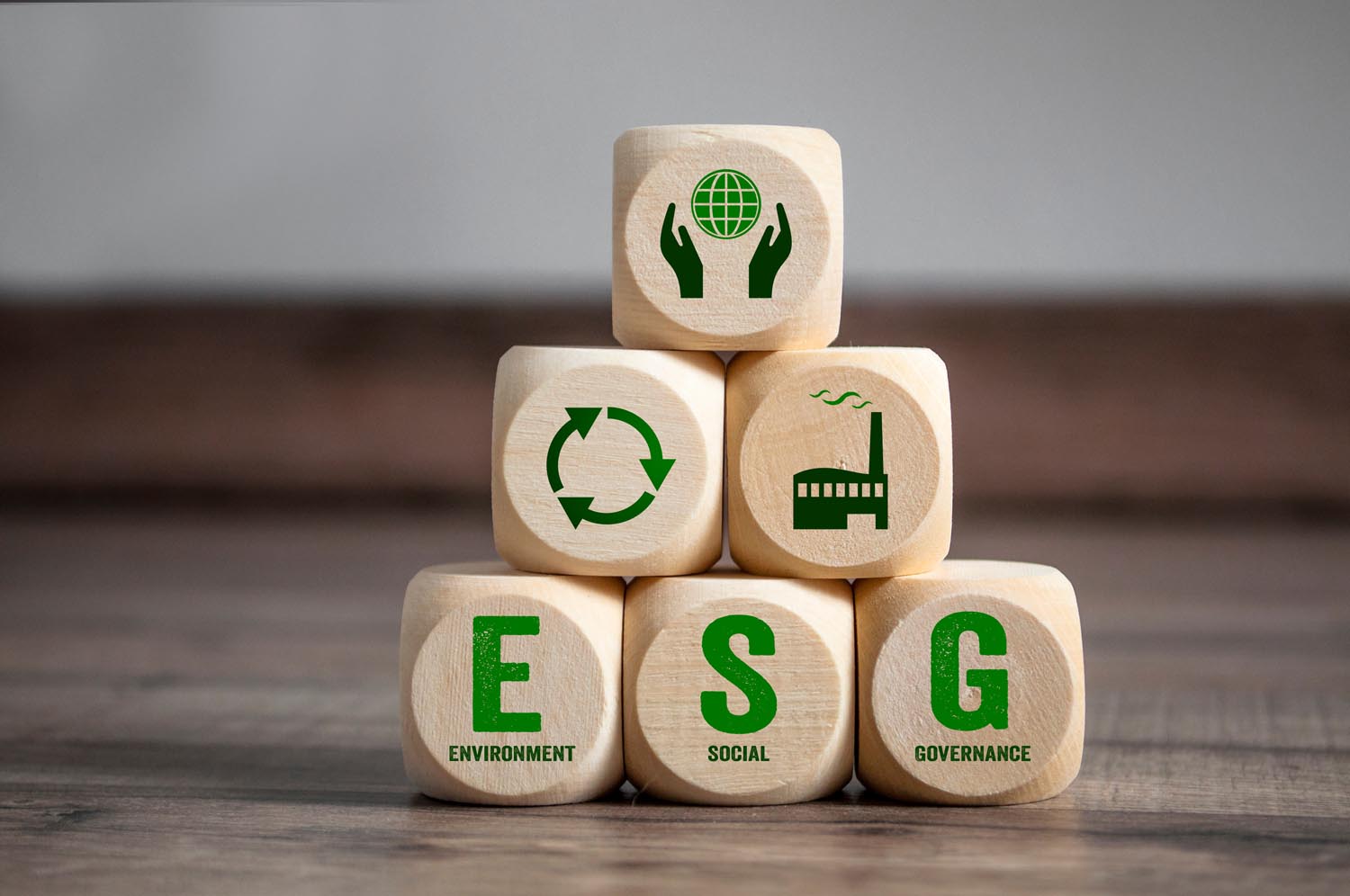
    Omnibus package – incoming changes in ESG reporting

    The European Commission’s proposals to simplify ESG regulations as part of the so-called Omnibus Package published on February 26th 2025 have sparked...

    Latest

    • Changes in distance selling to German consumers after July 1st, 2021

      At the beginning of July 2021 new regulations concerning e-commerce trade to Germany and all other countries of the EU were introduced. The changes stem from the so-called e-commerce package which will revolutionize the current approach to international trade powered by e.g. online shops. For this reason, the Polish tax law must be adjusted to the EU requirements.

      The e-commerce package: main objectives

      The new package aims at gaining more control over e-commerce trade. Its main objective is to facilitate VAT settlement processes regarding goods sold and services provided to customers from different European countries, and therefore, standardising existing tax laws (which differ depending on the country of destination). The e-commerce package will also help with company competitiveness of businesses active in the EU against businesses outside the EU, as well as limit untaxed goods.

      księgowość międzynarodowa

      What changed after July 1, 2021?

      E-commerce traders will no longer use the term mail order sales. Instead, a new term which encompasses all e-commerce-related processes will be introduced – intra-Community distance sales. But the biggest change to come is the introduction of VAT OSS (One Stop Shop), and the necessary adjustment of internal processes to the new requirements regarding e.g. taxes and invoicing.

      The introduction of the eCommerce package means:

      • the end of VAT exemption on the import of small parcels,
      • tax payers’ obligation to settle VAT via a designated interface,
      • a new template for VAT-R registration application,
      • a simplified VAT-OSS procedure for suppliers who sell goods across the EU without having a registered office in the country of destination which will enable them to settle intra-Community distance sales via a single declaration,
      • the end of existing national tax rate thresholds for distance sales which, if exceeded, oblige the tax payer to register VAT in the country of destination. These thresholds will be replaced by a single, unified distance sale threshold of EUR 10.000 (PLN 42.000) which includes intra-Community distance sales in the EU, and, if exceeded, oblige the tax payer to register for VAT-OSS.

      Changes introduced via the e-commerce package are to facilitate the procedures for entrepreneurs in Poland who sell goods to Germany and other EU countries. This, in turn, will allow them to settle VAT via a single declaration and help them save money.

      2 July, 2021
    • Remote work and the upcoming amendment to the Labour Code

      In the face of a pandemic, remote work model has become the best temporary solution for many employers. Temporarily, employees carried out their duties at home rather than at the office, working full time or part time. To many employees it was a very convenient solution, as there was no more need for commuting to work, and the work hours were often much more flexible. Along with the gradual easing of COVID-19 restrictions came the idea of codifying the rules of remote work. Whether the pandemic soon comes to an end or not, it is necessary to make amendments to…

      A mutually beneficial remote work model

      The term “remote work” has been used for over a year, ever since businesses had to adapt to the restrictions imposed by the government which limited social and professional contact. Employers happily used this opportunity to maintain financial liquidity and reduce mass layoffs. With time, remote work proved to be even more beneficial, as it helped reconcile the private life with the professional one, save up on the costs of maintaining rented office space, decreased the probability of taking sick leaves and the costs connected to commuting. Due to the new economic environment, changes to the Labour Code, which would enable utilizing the remote work model even after the COVID-19 pandemic is over, have been proposed.

      outsourcing podatkowy

      Remote work and the proposed changes

      The Ministry of Economic Development, Labour and Technology began work on amending the Labour Code in March 2021 and is now in the process of perfecting the amendments in question. The Council of Ministers will receive the draft no sooner than in July this year. The proposed changes will affect both the employees and the employers, and provide a more precise definition of remote work. According to the definition, remote work is a type of work carried out full time or part time at home or in a different location indicated by the employee.

      This means that employees and employers can choose between a remote or hybrid work model. The type of model must be agreed on by both parties. For this reason, the Labour Code will include the obligation to define the rules of remote work. More importantly, these rules can be set at any time of employment. The amendment will also include the possibility of working remotely on occasion (12 days a year).

      Compensation – what is the employer obliged to provide?

      The employer is obliged to provide the means for direct communication with employees who work remotely, for example by supplying each employee with a desktop or a laptop, a phone or a stable Internet connection. In line with the amended Labour Code the employer will be obliged to ensure all tools necessary for remote work, and cover the costs connected to it. Moreover, technical support will have to be available to all employees, as well as all workshops and OSH courses shall be conducted online.

      Employee’s duties – what an employee should keep in mind?

      An employee who works remotely will have to report in detail on the carried out duties. The report should include the type of tasks performed, and the time spent on each of them. This way, an employer can make sure that employees fulfil their duties. Before deciding on a remote work model, the employee must confirm that their individual place of work meets the conditions of traditional work in terms of technical and work environment requirements.

      księgowość międzynarodowa

      Remote work as the new normal

      If the new amendment is approved, remote work model will gain a more official status. It will no longer be perceived as a solution resulting from a state of emergency but as a highly beneficial alternative which may be the work model of choice for many employers and employees.

      9 June, 2021
    • ESL / ECSL declarations – what are they and when to submit them?

      Are you engaged in international or eCommerce trade and shipping products to other EU countries? If so, then you are obligated to submit additional tax declarations on the products sold and services provided across EU borders. VAT declarations must be submitted in the form of an EC Sales List (also: ESL or ECSL). What exactly is this document, and what should it include? Find out when a sales report should be submitted, and what it entails to avoid any problems in the future.

      ESL (ECSL) – what is it?

      Each entrepreneur who sells products or provides services must submit tax declarations presenting their revenue on a monthly or quarterly basis. This obligation concerns not only those who sell products or provide services in the country but also those who conduct trade internationally. In this case, however, tax settlement looks differently. Additional declarations, such as an EC Sales List (ESL) or its digital format ECSL (so much easier to fill in in the Internet era) are required.

      rozliczenia podatkowe

      What is the purpose of ESL?

      The EC Sales List serves the purpose of reporting VAT on the sale of goods or provision of services across EU borders. Each intra-Community trade should be registered on the list for the convenience of tax authorities. Submitting this declaration is essential in the process of verification whether both parties confirm their tax rates in accordance with EU regulations. In other words, it is possible to check whether tax rates are declared correctly, and taxes are paid in full by both parties of the transaction.

      What should ESL include?

      The EC Sales List should include information required for verification of a transaction between sellers and customers inside the EU. In addition to such basic information as customer’s details, the list must also include customer’s VAT number, their country code, and the value of sales. More importantly, the VAT numbers must appear in VIES – VAT information exchange system. Only then can the ECSL declaration be submitted.

      When should you submit ESL (ECSL)?

      The declarations (ESL filed on paper or ECSL filed electronically) should be submitted by anyone who runs their own business and sales products abroad, provides goods or services to an entity which pays VAT in another country, or specializes in the transport of passengers or goods in the EU. For this reason, the declaration must be submitted both by eCommerce traders selling products to customers in another country, and entrepreneurs who provide construction services across EU borders.

      outsourcing podatkowy

      ESL or ECSL should be submitted on a monthly, quarterly, or yearly basis in accordance with the schedule set by the government. Before you undertake any business activity or expand to new markets it is good to study tax regulations applicable in a given country, so as to avoid any delays or mistakes, and learn more about the EC Sales List by visiting websites of tax authorities.

      ECSL vs. Intrastat – what is the difference between the two?

      People often ask about the differences between the EC Sales List and another declaration of a similar scope, that is the Intrastat declaration. In short, Intrastat helps gather statistical data regarding trade conducted between company’s home country and the country of delivery inside the EU. ESL and ECSL, on the other hand, are tax declarations which must be submitted to appropriate tax authorities. The information presented in ESL is not as detailed as in Intrastat.

      10 May, 2021
    • The VAT-21 form and the taxation of distance selling from Poland

      When conducting business based on distance selling you should keep in mind the available methods of VAT settlement. If all requirements are met, the seller may choose the country of taxation. Why is it worth doing? Choosing the right country of taxation may help you save money. As currently the VAT rate in Poland is one of the highest in the EU, choosing a different country of taxation may result in paying lower tax rates.

      Distance selling from Poland and the selling thresholds

      Distance selling, to put it simply, is the sale of goods from their country of origin by a VAT payer to a consumer located in another intra-Community country.

      However, not all goods are regulated by the rules of distance selling. In accordance with the VAT Act, such goods include:

      • new means of transport
      • goods which must be installed or assembled, with or without a test run, by the vendor or an entity acting on their behalf
      • second-hand goods, art, collector’s items and antiques

      The country of taxation for goods not mentioned above is determined on the basis of distance selling thresholds specified by each country of the EU individually. You can read about distance selling thresholds here.

      If the annual distance selling thresholds for goods shipped from Poland to other countries of the EU have not been exceeded, the country of taxation is Poland, i.e. the country of shipment. The seller may choose the place of destination as the country of taxation, regardless of the turnover obtained from the delivery of goods to that country. However, the decision must be made before the distance selling thresholds are exceeded.

      Note that the new place of taxation must be the country where the goods are being delivered – it cannot be any country of the EU.

      The VAT-21 form and other formalities

      Note that the head of tax office in Poland must be informed about choosing another country of taxation for distance selling. This can be done in two ways: in person or online. The head of tax office is notified via a VAT-21 form, free of charge. The choice of a new country of taxation is valid for two years from the finalisation of the first delivery of goods made after the change.

      If you provide the notice online, you will receive an official confirmation of receipt (UPO) which must be appended to the VAT-21 form, and then sent to the tax office in the country of registration. On the other hand, if you provide the notice in person, you will receive an official stamp on the VAT-21 form. The certified document must then be submitted to the appropriate tax authorities in the selected country of taxation.

      The notice must be submitted no later than 30 days before the finalisation of the first delivery which is to be settled in the new place of taxation. .

      The formalities do not end there. The tax payer has to submit to the Polish tax office a document confirming they notified the appropriate tax authorities in the new country of taxation about the changes made. This document must be submitted no later than 30 days from the first delivery completed after the change had been made.

      The deliveries must also be properly documented – such documentation is the basis for an exemption from the Polish VAT. If the appropriate documentation of goods exported from Poland is not provided, the seller may be subject to VAT in both countries.

      Our support

      If you are already one of our clients, all you need to do is provide us with the confirmation of receipt (UPO) or a paper document certified with an official stamp, and we will take care of all other formalities connected with VAT registration of your company. If you are not working with us and are looking for support, do not hesitate to contact one of our VAT experts. We provide support with VAT registration abroad, as well as with any other tax processes.

      27 April, 2021
    • When is obligatory to register as a VAT payer?

      Are you planning on conducting business activity and wonder if you should register as a VAT payer? Before taking the next step, find out in which situations you will be subject to VAT exemptions.

      Are you a VAT payer?

      In line with the Polish regulations, all entrepreneurs selling goods and services, exporting and importing goods in Poland and inside the EU are subject to VAT. They can be divided into active and exempt taxpayers. An active taxpayer must register as a VAT payer, submit declarations, keep records of goods and services, issue VAT invoices, and pay taxes.

      An exempt taxpayer is an entrepreneur who can be exempt from VAT either on the account of sales volumes or on the account of specific products and services. However, there are certain requirements which they must meet, such as keeping simplified sales records and issuing invoices upon request.

      VAT exemptions

      A taxpayer is exempt from VAT when their annual sales do not exceed PLN 200,000. The exemption is then based on sales volumes. Entrepreneurs can benefit from it as soon as their business is set up. As long as they do not exceed their annual turnover threshold, they do not have to register as a VAT payer. The exemption can also be based on the specific products and services sold. Entrepreneurs can benefit from the latter if the economic activity they conduct is stipulated by Article 43 (1) of the Polish Tax on Goods and Services Act. More importantly, entrepreneurs entitled to this exemption cannot waive it. However, they are obliged to issue VAT invoices with an information on tax exemption.

      When is it necessary to register as a VAT payer?

      As stipulated by the VAT Act, there are instances when the entrepreneur is subject to VAT registration as soon as the business is set up. These instances include entrepreneurs who sell goods listed in Annex 12 to the VAT Act, excise goods (with exceptions), building land, parts of motor vehicles and motorcycles, new means of transport, as well as certain goods sold online – regardless of the annual sales value. Registration as a VAT payer is also obligatory when providing legal, advisory, jewellery and debt recovery services.

      7 April, 2021
    • The new VAT-OSS scheme

      In 2021, changes regarding the methods of settling VAT in the EU will be introduced. The package of regulations will be aimed at entrepreneurs in the e-commerce sector, who focus on selling goods and providing services online. The Polish government is already working on the implementation of the package. So what will the new VAT…

      The e-Commerce package for online traders

      According to the EU directive, entrepreneurs conducting trade online should expect some changes in VAT settlement methods in the second half of 2021. The alterations include the standardisation of VAT declarations in the form of VAT-OSS. The e-commerce package aims at facilitating international trade and providing entrepreneurs with equal opportunities on the European market. The most significant objective of the proposed modifications is creating a single digital market for all member countries. The cause of these modernisations is the rapid growth of the e-commerce sector. The existing tax regulations require adjustment to the new economic conditions. The e-commerce package, on the other hand, completes the series of changes in the VAT regulations introduced by the EU in recent years.

      VAT OSS

      The eCommerce package – proposed changes

      The main objectives of the EU directive include the standardisation of the VAT settlement processes, including the turnover threshold (EUR 10,000). Having exceeded this limit, preparing a VAT declaration for online trade conducted on the territory of the delivery country will be required.

      The EU e-commerce package will enable entrepreneurs to settle VAT with only one declaration in the form of VAT-OSS (One Stop Shop). This way, entrepreneurs selling goods or providing services within EU will not have to register their business in each country individually. They can do it by submitting a single document in the country of identification, i.e. the address of the registered office or the place where the business is registered. VAT will be calculated in accordance with VAT rates applicable in the recipient country.

      When should we expect these changes?

      The changes in the Polish tax law introduced through the package for e-commerce sellers are to take effect in July 2021. It is worth acquainting oneself with the new procedures beforehand, so as to prepare for the alterations to come.

      30 March, 2021
    • Does your business require an EORI number?

      Promisingly, the more popular international trade becomes, the more entrepreneurs decide to expand their businesses. However, before you decide to trade with countries outside the EU, consider these requirements which ensure legal and procedural compliance of such transactions – one of them being the EORI number.

      What is EORI and what is it used for?

      The Economic Operator’s Registration and Identification number is a number assigned to economic entities enabling their identification for customs regulatory purposes in terms of trade between the countries of the EU and third countries. EORI number is mandatory for all entities registered in the EU which export goods to third countries, as well as entities registered outside the EU which plan on importing goods to the EU.

      The EORI number is an integral part of the e-Customs programme implemented in 2009 which aims at improving and digitalizing intracommunity trade-related activities, as well as speeding up customs duty processes. The number is assigned to economic entities which take part in any customs-related activities inside the EU, e.g. when they import goods from outside the EU, or export goods to the countries of the EU as entities registered outside the EU. In such cases, having the EORI number is obligatory. It is crucial to apply for the EORI number before conducting any import/export transactions between the EU and third countries, as it must be confirmed at the very first customs control operation.

      EORI number is unique and assigned only once. Each number is valid on the entire territory of the EU. It facilitates all formalities and excludes the need for any paper documentation. All EORI numbers can be verified online at https://ec.europa.eu/taxation_customs/dds2/eos/eori_validation.jsp?Lang=en.

      The format of the number differs from one country to another. In Poland, it includes a prefix with the ISO PL country code, NIP (tax identification) number, and 00000 suffix (or, if applicable, the last five digits of the REGON number). In case of foreign entities, the number includes PL prefix and a sequence of 14 unique digits and the letter Z at the end.

      Note, that in light of Brexit, trade between the UK and the EU requires having an EORI number as well. In this case, there are two EORI numbers required: the European number (so that goods could leave the EU) and the British number (so that goods could enter UK). Other post-Brexit changes in trade are described in this article.

      How to obtain the EORI number?

      The EORI number can be obtained in several ways. For instance, a filled registration request can be send via post, a courier or personally delivered to the appropriate customs office or customs authority. Another method is to register on PUESC online platform, submit the appropriate forms and fill in tax payer’s information. Registration online requires an electronic signature in order to verify the identity of the requester. In case of lack of signature –or in the case of send the registration request via post – the requester will have to appear in person at the appropriate office and verify their identity.

      Filing registration request is not complicated, yet it can be time-consuming and demanding. For this reason, we decided to include the request for EORI number registration in our offer. If you want to learn more about our services you are welcome to contact one of our experts.

      We also encourage you to read other articles on international trade available under the News section on our website.

      24 March, 2021
    • The Amazon platform launches in Poland

      The e-commerce market in Poland used to be dominated by a local brand – Allegro. However, a few months ago, the third biggest American investor in Poland – Amazon – announced the opening of a Polish version of their platform. It was launched on March 2nd, 2021 – this time without any default redirections to the German version of the site. What does the Polish Amazon site have to offer? Let us have a closer look.

      What does the launch of Amazon.pl mean for sellers and customers?

      Sellers and customers who are used to the Polish brand and conducting trade in Poland won’t have to change their habits. However, they still might want to look for better solutions. In addition to goods from abroad, Amazon also offers goods from Polish sellers. With the development of new technologies, international trade proves to be a promising business model. The current pandemic situation also shows how easy and convenient online shopping can be. Easy access to online selling platforms enabled many people to shop safely in a time when stationary shops were closed and people were staying home due to the lockdown restrictions.

      The diversification of the Polish e-commerce market can be beneficial both for customers who will now have easier access to large quantities of goods, especially goods imported from abroad, and for sellers who can expand their businesses. The Polish version of the Amazon website exposes Polish sellers to the international market, and vice versa.

      Expanding to the European market is facilitated by various tools which enable the offers posted on the Polish Amazon website to be found also on Amazon sites in 8 other European countries. This, in turn, allows for a wider range of offers and upscaling of sales.

      Introducing new competition for Allegro may also influence the commission fees on sales and listings. For now, this margin does not exceed 15% of the price of goods sold. Amazon offers two more selling plans – the Individual plan, which costs 4 PLN ($0.99) per unit sold, and the Professional plan, which costs 165,91 PLN ($39.99) per month no matter how many units are sold. This distinction seems to determine the target selling group, that is small and medium sized businesses.

      Amazon supports small and medium sized businesses also in other ways – from product placement (depending on the selling plan) to logistics solutions and a network of warehouses under the Fulfilment by Amazon (FBA) programme. Nine of such warehouses are located in Poland, providing employment for 18,000 people. Selling on Amazon can also be done directly, depending on the seller’s preferences. In such cases, the sellers are responsible for the shipping the goods, which influences the delivery costs. If you want to learn more about the sales models offered by Amazon, check this article.

      What to keep in mind

      Finding new customers and opening to international markets may seem overwhelming at first. Amazon, however, makes this process much easier thanks to different sales models, and new technological and logistical solutions. Yet the selling process matters is not all that there is to it – you should also remember about
      the tax regulations, which vary from country to country. With the help of our tax experts it should not be troublesome. We offer support with all formalities regarding international taxation and expansion to new markets – even with the post-Brexit changes in trade. If you’d like to learn more, please head to this article.

      5 March, 2021
    • Tax relief and additional funding programmes – where and how to find support for your business during the pandemic?

      Although it has been a year since the pandemic outbreak was officially declared in Poland, entrepreneurs are still struggling with a difficult economic situation, trying to keep their businesses afloat despite the existing restrictions. In order to support them, the government offers a wide range of additional funding and tax relief programmes. As the situation changes rapidly, you should make sure to stay up-to-date with the existing assistance programmes. Find out which elements of the Anti-Crisis Shield programme are available to your business and where to find support.

      The Anti-Crisis Shield programme – the support for Polish entrepreneurs

      Assistance programmes are meant to help Polish entrepreneurs meet their businesses’ essential needs. The governmental assistance is directed both at sole traders and big companies looking for a way to endure this difficult situation. Depending on the type of business and their individual needs, the methods of assistance will differ. Entrepreneurs may choose to benefit from the tax relief, gain additional funds for their employees, reduce operating costs, receive a specific amount of funding to keep their business afloat, extend the date of payment or benefit from a variety of other aids available within the Anti-Crisis Shield programme. But which methods of assistance are used most often?

      A 3-month exemption from social insurance contributions

      The assistance programmes include a partial or full exemption from paying social insurance contributions to the Social Insurance Institution (ZUS). An entrepreneur is entitled to a three month period (indicated by the entrepreneur) of exemption from paying contributions to ZUS. However, there are certain conditions stipulated in Article 31zo-31zx of the Covid-19 Act, which must be met in order to be eligible for the exemption.

      The idle time pay for entrepreneurs conducting business activity

      Entrepreneurs can also apply for an idle time pay, which includes financial support as means of compensation for the lost income. If the financial situation of a company remains unchanged, an entrepreneur can apply for another type of a benefit. This kind of assistance is available only for certain types of businesses, therefore, before applying for the benefit, remember to check whether you company meets the eligibility criteria.

      outsourcing podatkowy

      Loans for microbusinesses

      An interesting solution is a low interest rate loan for microbusinesses. The 5,000 PLN loan is provided from the Labour Fund means, and it can be used to keep the business afloat, settle debts or pay remuneration to employees. Entrepreneurs have 12 months to repay the loan, but this payment term can be extended in justified cases.

      COVID-19 tax relief

      Due to the pandemic, there are additional tax reliefs for entrepreneurs which can be applied when paying tax for the previous fiscal year. These tax reliefs include deducting documented donations for combating COVID-19. Similar solution was adopted for businesses operating at a loss due to the pandemic. The only requirement is to show proof that economic activity conducted in 2020 provided a far lower income than in 2019. Such type of a loss in the time of pandemic can be the basis for the said tax exemption.

      Additionally, income from research and development intended for combating COVID-19 can also be deducted from the tax base for the year 2020. In such a case, the tax base is decreased to 5%.

      Supporting businesses during the pandemic

      The scope of the financial assistance needed varies from business to business and depends on various factors. When searching for the most adequate assistance programme for your business consider the government’s suggestions. All information required to apply for additional funding or tax relief programmes can be found via a search engine available on the gov.pl website.

      1 March, 2021

    Contact form

    Contact us and we will respond within 24 hours!
    Kontakt
    Close
    Would you like to change the market?
    Select area of operation
    You will be redirected to another page for the selected market
    Polska
    Jesteś tutaj
    United Kingdom
    Go to page