

Would you like to change the market?
Select area of operation
You will be redirected to another page for the selected market
FAQ
Would you like to change the market?
Select area of operation
You will be redirected to another page for the selected market
    Services
    • More about services
    Business sectors
    Business sectors we support
    Partners
    About us
    Get in touch

    Blog

    Check our blog

    Learn more about the latest industry trends, changes in regulations and development opportunities for your company.
    30 October, 2024

    VAT in real estate transactions

    Understanding the rules that apply to the taxation of real estate transactions is essential for anyone operating in the market, whether investors,...

    28 February, 2025

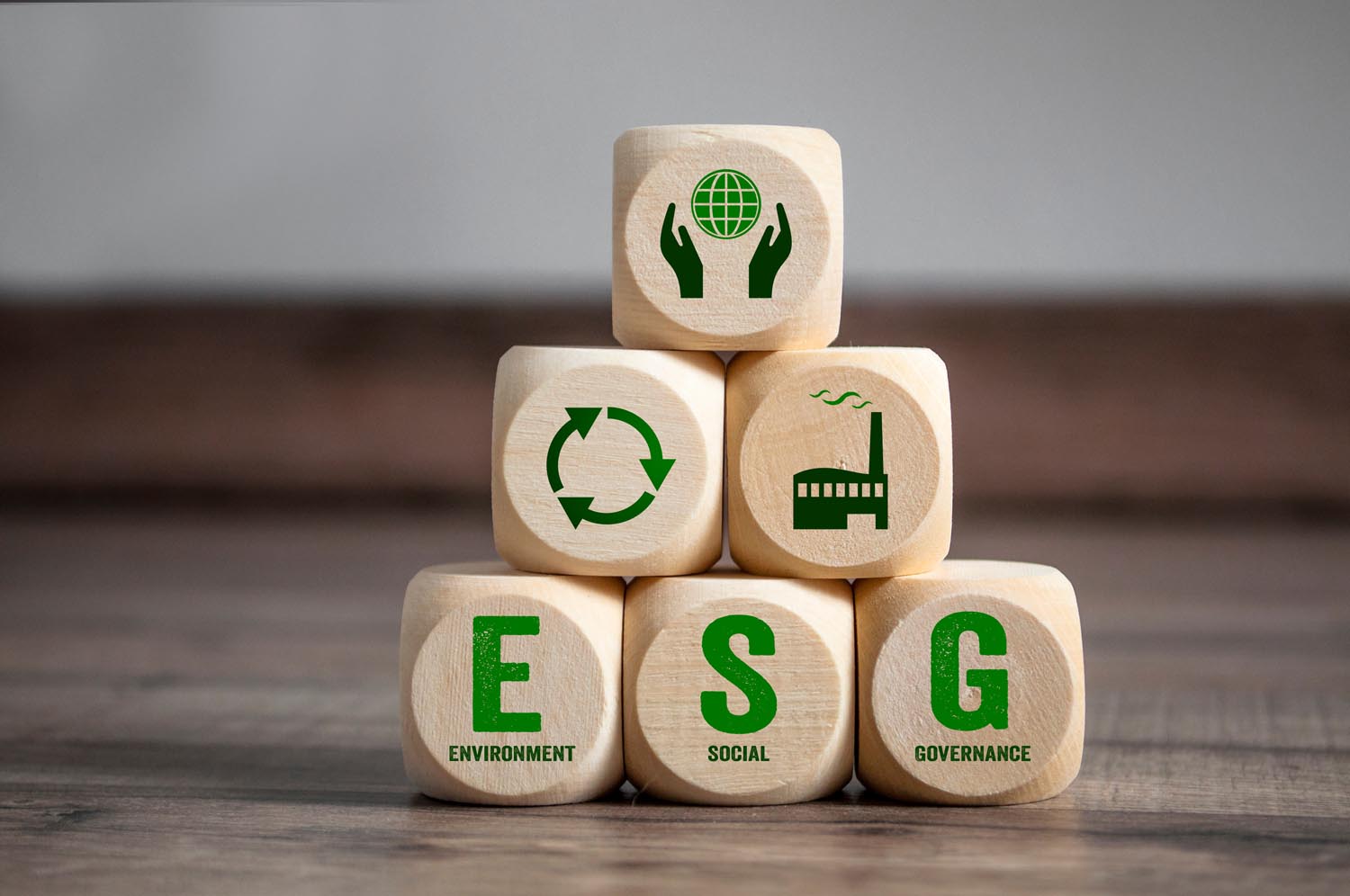
    Omnibus package – incoming changes in ESG reporting

    The European Commission’s proposals to simplify ESG regulations as part of the so-called Omnibus Package published on February 26th 2025 have sparked...

    Latest

    • Benefits of payroll outsourcing

      Professional payroll outsourcing services are an invaluable aid for all entrepreneurs who think of improving the internal processes in their companies. Payroll outsourcing focuses on the preparation of remuneration-related documents in an appropriate and professional manner, as well as on salary calculation. Payroll outsourcing is also responsible for the accuracy of reports and ensures data confidentiality.

      What are the benefits of payroll outsourcing?

      Outsourcing provides entrepreneurs with more than just precise calculation of remuneration. Effective budgeting in relation to hiring new employees, optimization of payroll processes and HR costs are only a few examples of many benefits of payroll outsourcing. Another advantage is flexibility – an outsourced accounting company should be able to adjust their services to a changing market and business. It also prepares detailed employee documentation and is legally liable for its own work. That way, it is the outsourced company which is financially liable for any potential mistakes, and not your enterprise.

      Moreover, payroll outsourcing ensures continuity of service which, in turn, results in the reduction of costs made by your enterprise. Specialists provide support in any situation, for instance, when many employees take a sick leave at the same time or when an intensive recruitment process is planned. Under such circumstances, outsourced accounting team takes over payroll processes, and relieves the enterprise from any financial liability or additional costs resulting from maintaining an in-house HR department.

      payroll outsourcing

      Why us?

      Entrepreneurs who think of using payroll outsourcing services can rest assured that all necessary HR processes will be managed accurately and in accordance with existing regulations. We provide our services in a complex, transparent and convenient manner, with timeliness, accuracy and compliance with all legal requirements in mind. Our approach allows your enterprise to economise on costs, organize HR department’s responsibilities better, and optimize all business processes.

      Shifting the financial liability, having full control over documentation, accurately prepared reports and declarations, reduction of costs, as well as flexible accounting – these are only a few benefits that stem from payroll outsourcing.

      23 October, 2021
    • IOSS or OSS – which option to choose for businesses from UK?

      Brexit has led to many vital economic changes including those in the e-commerce sector.When the UK decided to leave the EU, it became an external trading partner for the remaining Member States. For this reason, the form of taxation for goods imported and exported via the UK to be later sold online had to change.

      What does e-commerce look like in the UK today?

      Entrepreneurs from EU Member States who conduct intra-Community online trade can use a simplified OSS method. But is this option also available to online shops whose owners sell goods form the UK?

      OSS offers two options: the EU scheme available to businesses with their registered offices inside the EU and the non-EU scheme available to businesses with their registered offices outside the EU.

      The non-EU OSS scheme concerns settling VAT on services provided for EU customers in only one Member State (the country of identification, which is also an EU Member State). There is no need for registering or settling VAT in other Member States where the service is provided (consumer Member States). Additionally, the non-EU OSS scheme enables a simpler VAT settlement method for external entities providing services to VAT payers (consumers) from outside the EU.

      What about IOSS?

      Until the end of 2020 business transactions between the UK and EU Member States were based on the intra-Community rules of purchase and delivery of goods and services. Since January 1, 2021, they have been replaced by import and export.

      British entrepreneurs conducting distance sales to EU citizens must also keep in mind the new e-commerce and EU regulations.

      Since July 1, 2021, the exemption from VAT on the import of goods which do not exceed in value 22 EUR has been revoked in all EU countries (in Poland the exemption did not apply to e-commerce). This means that the import of all goods which do not exceed in value 150 EUR will be subject to VAT.

      In order to simplify VAT settlement a special procedure – Import One Stop Shop (IOSS) has been established for entrepreneurs conducting distance sales from third countries or territories into the EU.

      IOSS is dedicated to businesses from outside the EU who sell their products to clients from EU Member States. In short, IOSS concerns goods imported from third countries or territories where the value of the delivered package does not exceed 150 EUR.

      What it means in practice is that businesses from outside the EU who offer distance sales to EU Member States can register both for VAT OSS, and, if all requirements are met, for VAT IOSS in the country where trade is conducted. Hence, it is included in intra-Community trade on the basis of similar but simplified VAT settlement methods.

      In case of any questions or queries about regulations concerning VAT settlement by entrepreneurs conducting business in e-commerce it is best to turn to the fiscal office or an experienced tax advisor for support.

      21 October, 2021
    • IOSS vs. OSS – similarities and differences

      VAT OSS (One Stop Shop) is a replacement VAT settlement method for VAT MOSS (Mini One Stop Shop). Since July 2021 online shops owners can settle VAT easier with the help of VAT OSS or VAT IOSS. One of the options available is OSS – a tax settlement method which allows European companies operating in e-commerce to settle VAT via one declaration while applying VAT rates of the country of the consumer – without the need to register their business in each country separately. Another VAT settlement method is IOSS. What are the differences between the two, and which option…

      IOSS vs. OSS – similarities and differences

      The main difference between OSS and IOSS lies in the rules of international trade. OSS is a list of services dedicated to businesses conducting intra-community distance sales who exceeded sales threshold of EUR 10,000 per year. The threshold includes all sales to all EU countries except for the country of incorporation, contrary to previous rules, according to which, each Member State had their own thresholds for e-commerce trade. In other words, businesses now operate as a part of the EU and sell their goods to clients inside the EU. For entrepreneurs conducting business outside the EU, IOSS scheme has been created. According to the current definition, it applies to sales of goods imported from third countries or territories, which do not exceed the net value of EUR 150. This solution is to facilitate entrepreneurs obtaining goods from abroad cheaper for later sales inside the country of incorporation.

      The entire IOSS procedure has been standardized and simplified as with OSS. Now, one can register online in one of Member States and submit your tax declaration in a single service point. For VAT OSS, it must be the country of incorporation, whereas for VAT IOSS, the seller chooses the country in which they want to report on their sales to EU consumers.

      VAT IOSS or VAT OSS – which one should you choose?

      Registering for VAT OSS is entirely voluntary, and it is up to the seller to make this decision. It is worth mentioning that registering for VAT OSS does not interfere with registering for VAT EU, and it does not exclude VAT exemption, as sales settled via VAT OSS are not considered in the sales threshold verification for VAT exemption.

      If you run an online shop and wish to use a simpler and more accessible VAT settlement procedure, while conducting B2C (Business-to-Customer) transactions, you should consider registering for a simplified settlement method. This choice depends mainly on the type of goods sold and the country in which e-commerce operations take place. The differences and similarities between OSS and IOSS are clear – all that is left is to choose the right solution for the type of business. It is worth remembering that choosing the aforementioned simplifications is optional, and the alternative remains a standard registration for VAT in Member States where the final sale is made. You can find out more about this here.

      13 October, 2021
    • How to choose the right statutory auditor

      Is it time for your company to conduct a thorough financial audit? Many entrepreneurs wrongly associate financial audits with something particularly unpleasant. In fact, examining the financial capacity of your company is a great chance to learn about your company’s strengths, plan next steps, and limit unnecessary expenses which may impede business growth. An accurate and thorough audit which can work for the benefit of the company requires hiring an experienced statutory auditor. What should you know to find the right auditor and what should the recruitment process look like?

      The job of a statutory auditor

      A person with the power to conduct financial audits for a company is called a statutory auditor or simply an auditor. Their main task is to oversee financial statements prepared by accountants. They are mainly responsible for making internal evaluations which can clearly and precisely determine the transparency of various financial activities conducted by the company. Auditing assesses whether all activities are conducted in accordance with the law.

      How to choose a statutory auditor?

      A specialist responsible for conducting financial audits must be a trustworthy person. A statutory auditor is bound by confidentiality. Neither company-related information nor company financial documentation may be shared with third parties (there are exceptions to this rule by law, for instance if the information constitutes crucial evidence in a court case).

      A statutory auditor must be chosen early enough to be able to prepare for the tasks assigned to them and conduct all necessary analyses without time pressure. A statutory auditor must conduct a preliminary examination in order to plan their work. For this reason, audits should not be put off.

      Pricing also matters – it should be relevant to the scope of services provided by the auditor. If the pricing is too low for the amount of work required or if they are willing to spend very little time on the audit – maybe you should reconsider hiring this particular auditor. Remember that you always have the right to ask about the scope of services provided by an auditor, and the basis for price calculation.

      You have to make sure that the statutory auditor that you are considering is the right person for the job. Not all statutory auditors are independent and impartial enough to conduct audits accurately and objectively. Knowing your candidate’s previous experience in conducting financial audits should help you make the decision. It’s worth asking them how many audits they have conducted and how well they know their field of expertise. An auditor must be able to estimate not only the specificity of a particular company but also their financial capacity, as well as any possible risks ahead.

      The final choice of the statutory auditor must not be left to chance. It would be best if the entire hiring process was overseen by the whole management board of the company, and not just one person. An active participation of the most important people in the company will ensure making the best choice possible. In the end, the audit must be conducted in a professional, accurate and reliable manner.

      A statutory auditor – the right person for the job

      A good auditor remains impartial and objective at all times. They are competent accounting supervisors, able to correctly read and interpret financial statements, know their field of expertise well, have a wealth of experience, and demonstrate their expertise in economy, taxes, and crisis management. Choosing the right statutory auditor should not be rushed as the overall result of a financial audit and the company’s future will depend on this very decision.

      13 September, 2021
    • Accounting automation. Will humans be replaced by AI?

      Automation is a word both intriguing and unnerving. Yet, no matter what feelings it evokes, one thing is clear – introducing new technologies in business provides promising opportunities. Such state-of-the-art solutions are no longer introduced solely in the manufacturing sector but also in the service sector, as well as accounting. Will the automation of accountants tasks lead to their positions becoming obsolete? Can automation and human input work together?

      Financial processes automation

      The most recent predictions regarding the automation of accounting processes suggest that in the future all tasks regarding bookkeeping may be taken over by systems specifically designed for it. These systems have been tested by many companies for years, and they are constantly being perfected and updated, so that in the future highly trained employees could be replaced first partially and then entirely by modern technologies.

      Accounting in the modern world

      The automation of accounting processes should be of interest to entrepreneurs who run big and medium-sized businesses and think of optimizing the working time of accounting departments, whilst maintaining a dynamic company growth. New technologies facilitate data entrance, invoicing, NIP and VAT number verification, preparation of accounting contracts, or submission of tax declarations. Thanks to automation all processes are completed much faster and more accurately.

      księgowość międzynarodowa

      How not to be replaced by AI?

      Although such predictions may not seem too optimistic for the employees, it does not mean that all accountants will lose their jobs. In the era of technological development it is important to focus on personal development and discovering new competences which are compatible with our profession. Finance automation is an opportunity for those who are not comfortable with carrying out tedious tasks which require precision. Instead, such employees will be able to focus on more interesting areas of their work, for example crisis management, tax optimization, or accounting management in order to help with company growth.

      24 August, 2021
    • Tax settlement during a pandemic

      In order to help entrepreneurs carry on business activity during a global crisis a variety of alternative support solutions emerged. The new changes concerned, for example, the methods of maintaining financial liquidity or partial cancellation of financial obligations. The latter solution has been quickly implemented, as under the Anti-Crisis Shield programme, business owners were able to benefit from tax exemption or the idle time pay. However, these were only temporary solutions. Many entrepreneurs ask themselves: how will they settle taxes when the global crisis is over?

      Financial support during the pandemic

      In a time of economic crisis caused by COVID-19, many businesses have been challenged by having to implement unprecedented solutions that would enable maintaining financial liquidity, pay remuneration to the employees, and maintain stable company growth. Many of these solutions enabled entrepreneurs to stay in business. Government support provided as a part of the Anti-Crisis Sheild programme also proved to be helpful. Although the proposed support ideas are still available to entrepreneurs, protecting businesses from the consequences of the pandemic should be a more extensive and strategic process.

      Tax settlement during a global crisis

      The current situation along with all financial assistance solutions should be a driving force for calculated crisis management in small, medium-sized and large companies.

      Experienced entrepreneurs, aware that similar situations may occur in the future, know that matters such as timely submission of declarations, planning future expenses, maintaining financial liquidity, providing precise accounting reports, finding additional sources of revenue in case of another economic crisis, adjusting to the Labour Law, and setting realistic business goals must not be neglected.

      Tax settlement in the post-pandemic era

      Economists predict that, similarly to other global crises, the COVID-19 pandemic will also result in economic growth. This means more changes e.g. in tax law which has been under scrutiny in the face of the pandemic. It is possible that many of the proposed or already existing solutions will be implemented for good, whereas others will be replaced by more thought out, hence more long-term solutions for settling taxes.

      30 July, 2021
    • Changes in the ZUS forms after May 16, 2021

      An important change to the process of ZUS ZUA and ZUS ZZA forms filing was introduced mid-May. As of now, entrepreneurs are obliged to provide information on the type of their employees’ or mandataries’ occupation. For this purpose, each profession has a special code assigned. So what is the purpose of this modification and what…

      Occupation codes in ZUS forms

      In line with changes introduced along with the Anti-Crisis Shield 3.0 programme (Art. 10 of the Act of 14 May 2020) templates of ZUS ZUA and ZUS ZZA forms were updated. A space for a 6-digit code for new employee’s occupation was added to the template. When applying for social insurance, employers will now be obligated to indicate the profession of an employee or a mandatary.

      Formal requirements – how to complete the forms?

      When filling in ZUS forms the employer is obligated to include an occupation code. This modification concerns people employed after 16 May 2021. Filling in the occupation code is not necessary in the case of employees that had been employed before that date.

      Payroll

      Where should the occupation codes be included?

      • ZUS ZUA –fill in the code in box 01, section X
      • ZUS ZZA –fill in the code in box 02, section V

      Occupation codes are available in the classification of professions and specializations (Regulation of the Minister of Labour and Social Policy of 7th August 2014) as well as on the Statistics Poland’s (GUS) website. It’s worth to keep in mind that as of 16 May 2021 it is obligatory to provide such a code. Should the code change, it must be indicated on the ZUS ZUA or ZUS ZZA form in accordance with existing regulations concerning reporting changes to ZUS.

      What is the purpose of occupation codes on ZUS forms?

      Adding occupation codes to the social insurance documentation aims at providing more detailed statistical data and tighter control over key information regarding sick leaves. It also helps provide more data on shortage occupations.

      23 July, 2021
    • Changes in distance selling to German consumers after July 1st, 2021

      At the beginning of July 2021 new regulations concerning e-commerce trade to Germany and all other countries of the EU were introduced. The changes stem from the so-called e-commerce package which will revolutionize the current approach to international trade powered by e.g. online shops. For this reason, the Polish tax law must be adjusted to the EU requirements.

      The e-commerce package: main objectives

      The new package aims at gaining more control over e-commerce trade. Its main objective is to facilitate VAT settlement processes regarding goods sold and services provided to customers from different European countries, and therefore, standardising existing tax laws (which differ depending on the country of destination). The e-commerce package will also help with company competitiveness of businesses active in the EU against businesses outside the EU, as well as limit untaxed goods.

      księgowość międzynarodowa

      What changed after July 1, 2021?

      E-commerce traders will no longer use the term mail order sales. Instead, a new term which encompasses all e-commerce-related processes will be introduced – intra-Community distance sales. But the biggest change to come is the introduction of VAT OSS (One Stop Shop), and the necessary adjustment of internal processes to the new requirements regarding e.g. taxes and invoicing.

      The introduction of the eCommerce package means:

      • the end of VAT exemption on the import of small parcels,
      • tax payers’ obligation to settle VAT via a designated interface,
      • a new template for VAT-R registration application,
      • a simplified VAT-OSS procedure for suppliers who sell goods across the EU without having a registered office in the country of destination which will enable them to settle intra-Community distance sales via a single declaration,
      • the end of existing national tax rate thresholds for distance sales which, if exceeded, oblige the tax payer to register VAT in the country of destination. These thresholds will be replaced by a single, unified distance sale threshold of EUR 10.000 (PLN 42.000) which includes intra-Community distance sales in the EU, and, if exceeded, oblige the tax payer to register for VAT-OSS.

      Changes introduced via the e-commerce package are to facilitate the procedures for entrepreneurs in Poland who sell goods to Germany and other EU countries. This, in turn, will allow them to settle VAT via a single declaration and help them save money.

      2 July, 2021
    • Remote work and the upcoming amendment to the Labour Code

      In the face of a pandemic, remote work model has become the best temporary solution for many employers. Temporarily, employees carried out their duties at home rather than at the office, working full time or part time. To many employees it was a very convenient solution, as there was no more need for commuting to work, and the work hours were often much more flexible. Along with the gradual easing of COVID-19 restrictions came the idea of codifying the rules of remote work. Whether the pandemic soon comes to an end or not, it is necessary to make amendments to…

      A mutually beneficial remote work model

      The term “remote work” has been used for over a year, ever since businesses had to adapt to the restrictions imposed by the government which limited social and professional contact. Employers happily used this opportunity to maintain financial liquidity and reduce mass layoffs. With time, remote work proved to be even more beneficial, as it helped reconcile the private life with the professional one, save up on the costs of maintaining rented office space, decreased the probability of taking sick leaves and the costs connected to commuting. Due to the new economic environment, changes to the Labour Code, which would enable utilizing the remote work model even after the COVID-19 pandemic is over, have been proposed.

      outsourcing podatkowy

      Remote work and the proposed changes

      The Ministry of Economic Development, Labour and Technology began work on amending the Labour Code in March 2021 and is now in the process of perfecting the amendments in question. The Council of Ministers will receive the draft no sooner than in July this year. The proposed changes will affect both the employees and the employers, and provide a more precise definition of remote work. According to the definition, remote work is a type of work carried out full time or part time at home or in a different location indicated by the employee.

      This means that employees and employers can choose between a remote or hybrid work model. The type of model must be agreed on by both parties. For this reason, the Labour Code will include the obligation to define the rules of remote work. More importantly, these rules can be set at any time of employment. The amendment will also include the possibility of working remotely on occasion (12 days a year).

      Compensation – what is the employer obliged to provide?

      The employer is obliged to provide the means for direct communication with employees who work remotely, for example by supplying each employee with a desktop or a laptop, a phone or a stable Internet connection. In line with the amended Labour Code the employer will be obliged to ensure all tools necessary for remote work, and cover the costs connected to it. Moreover, technical support will have to be available to all employees, as well as all workshops and OSH courses shall be conducted online.

      Employee’s duties – what an employee should keep in mind?

      An employee who works remotely will have to report in detail on the carried out duties. The report should include the type of tasks performed, and the time spent on each of them. This way, an employer can make sure that employees fulfil their duties. Before deciding on a remote work model, the employee must confirm that their individual place of work meets the conditions of traditional work in terms of technical and work environment requirements.

      księgowość międzynarodowa

      Remote work as the new normal

      If the new amendment is approved, remote work model will gain a more official status. It will no longer be perceived as a solution resulting from a state of emergency but as a highly beneficial alternative which may be the work model of choice for many employers and employees.

      9 June, 2021

    Contact form

    Contact us and we will respond within 24 hours!
    Kontakt
    Close
    Would you like to change the market?
    Select area of operation
    You will be redirected to another page for the selected market
    Polska
    Jesteś tutaj
    United Kingdom
    Go to page