Would you like to change the market?
Select area of operation
You will be redirected to another page for the selected market
FAQ
Would you like to change the market?
Select area of operation
You will be redirected to another page for the selected market

    Blog

    Check our blog

    Learn more about the latest industry trends, changes in regulations and development opportunities for your company.
    30 October, 2024

    VAT in real estate transactions

    Understanding the rules that apply to the taxation of real estate transactions is essential for anyone operating in the market, whether investors,...

    28 February, 2025

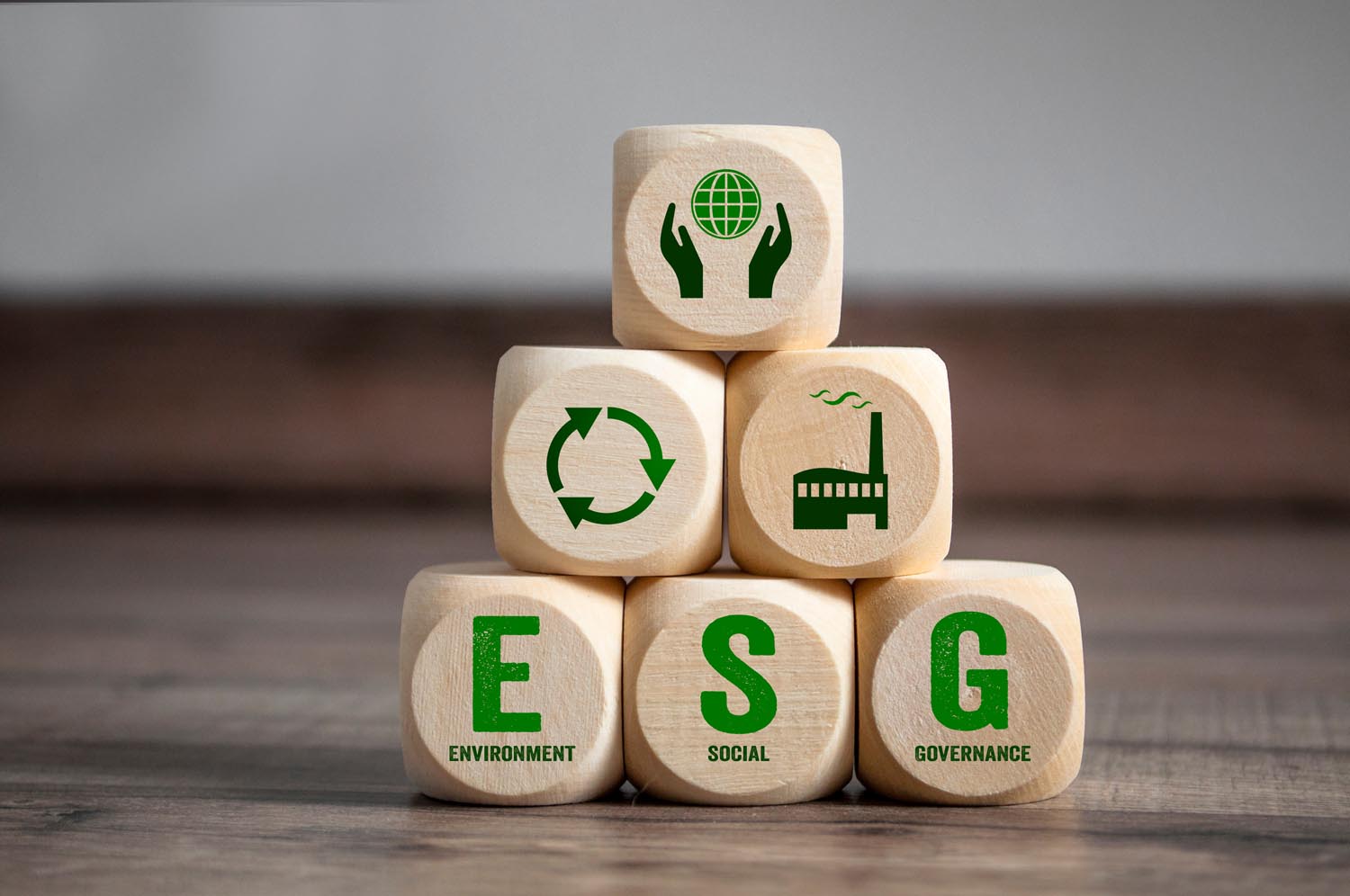
    Omnibus package – incoming changes in ESG reporting

    The European Commission’s proposals to simplify ESG regulations as part of the so-called Omnibus Package published on February 26th 2025 have sparked...

    Latest

    • UK’s new VAT penalty regime as of January 2023

      A new system of penalties and VAT interests will be introduced by HMRC and will replace the previous Default Surcharge system. The change will apply to reporting periods which commence on January 1st, 2023. Contrary to the previous system, penalties will be divided into two types: one for late submission of VAT returns and the other one for making late payments. You will find a new scheme for calculating penalties for both types below.

      Penalty resulting from a late VAT return

      It will be applied in accordance with a new penalty points system. For each delay in submitting a VAT return, the taxpayer will receive 1 penalty point. If they exceed the thresholds listed below, HMRC will impose a £200 penalty. Each subsequent late declaration will result in receiving an equally high penalty (i.e. £200).

      Expiry of all points after the period of compliance*:

      • with an annual submission frequency and a penalty threshold of 2 points, the period is 24 months;
      • with a quarterly submission frequency and a penalty threshold of 4 points, the period is 12 months;
      • with a monthly submission frequency and a penalty threshold of 5 points, the period is 6 months.

      *As long as all returns are submitted on time for the period of compliance and the tax payer makes sure that HMRC has received all outstanding returns from the preceding 24 months

      Penalty for late payment of VAT

      It will be applied based on the length of the period after which the taxpayer settled their VAT liability.

      • within up to 15 days of the due date – HMRC will not impose a penalty (if VAT is paid in full within this time period or the taxpayer agrees on a repayment plan with the office);
      • within 16 to 30 days of the due date – HMRC will impose a 2% penalty (calculated based on the amount of tax due);
      • within 31 days and more of the due date – the penalty will increase to 4% (the first penalty imposed on the 15th day and the next penalty imposed on the 30th day). HMRC will impose a second penalty, charged daily at 4% per annum for as long as the balance is outstanding. It will cease to be charged when the taxpayer pays the outstanding balance in full or agrees on a repayment plan with the office.

      HMRC has also confirmed that for the first year when new rules apply, the first late payment penalty will not be charged. This means that if the taxpayer settles their tax liability within 30 days after the payment deadline, the office will not impose a penalty. Please note, however, that this exception will apply until December 31, 2023 only.

      The official guidelines for the new penalty system can be found here.

      15 December, 2022
    • AP automation tools – are you using them right?

      Nowadays accounts payable automation tools are becoming more and more popular and rightly so. After all they can increase efficiency of the AP process and in turn reduce time and money company has to spend on it.

      How to use AP automation tools?

      However as you probably already deduced from the heading of this article reality is not as simple as that everything changes with an introduction of a new software to your organization. At least not to an extent it could. That is why we would like to point to a few, worthwhile in our opinion, aspects of automation tools implementation.

      Don’t replicate

      You already had a simple solution for accounts payable before and now you decided to go with a more powerful tool as you want to improve your accounting process? It might seem natural to try to replicate some of the solutions you had in your previous system in the new one. However, try to avoid that. The implementation of new software is a chance to start fresh so it’s best not to artificially impose any restrictions on yourself. Sometimes the new solutions work on totally different set of rules so trying to duplicate something that worked in the old one either might not be possible at all or, if it is, you might have to create a complex set of exceptions and workarounds. Which in turn may make the processes not easier but even more troublesome than before. Creating new approach from scratch might seem like a taxing task but in the long run it will allow you to use the system and its functionalities better.

      Customize

      The standard cases are the best. Everything works as it should, the invoices are getting booked automatically and you save both time and money. But wait, why documents from this supplier always get stuck and we need to manually approve the additional cost of pallets or the price deviations, even though it is still within the limits of our agreement with them? Probably because you only have implemented a general set of rules for your company. Which is good but if you face some exceptions from them then they need manual input and the automation stops being so automatic as you hoped it would be. But in most cases you can easily avoid it if you adjust your settings. So for the example in question you set up additional specific rules on the supplier. And the changes can go both ways so depending on the case you can make them either more or less strict. You will have to spend additional time to do that but in turn you will save it in the future.

      Control the process

      Ok, we implemented the new system, set up all the rules, everything works as it should. But then why the KPIs are worse a year after introducing the new system than they were at the beginning? Probably due to changes that constantly happen. Business environment is highly volatile so even if invoices from a certain supplier were posted automatically in the past they might not be now as the company could have changed the way they issue them. That is why you cannot leave the system to itself but rather monitor the process to see if there are some changes to be done – layouts to change, exceptions to introduce, limits to change. The list goes on and on.

      Keep up to date with the news

      Automation tools change over time. They are developed, improvements are implemented, shortcomings are eliminated. Who knows, maybe one of the changes could significantly improve your process? That is why you should keep up to date with what is happening with the solution you use. That way you can use the system to its fullest potential. Also you will avoid being surprised when you see new buttons or layouts which is additional benefit.

      Train, train and then train some more

      The implementation went good but the results are still a bit lackluster? If that is the case perhaps user trainings could be handled better. Even the best automation tool still requires its operators to know how to use it and only then it will work to the best of its capabilities. Therefore it is really important to provide good training materials and to organize enough training sessions so the users who will use the software feel comfortable with it. One thing to have in mind is that the new tools are so extensive the best way is to divide the trainings into separate segments. That way users can learn what is appropriate for their day to day work and will not get overwhelmed with the amount of information.

      Conclusion? AP automation is great but prepare well for it. It might be worth using some external help to make the process easier. We at EFF have experience working with different solutions integrated with various ERPs so we know what to look for and how to use them effectively. We also offer day to day processing in case, while implementing a new tool, you opt for full accounts payable outsourcing to enhance the savings even more.

      We hope that this article was of use to you and you know now what to look for. If you’re interested in hearing more about EFF please do not hesitate to contact us. And regarding tools available on the market we sincerely recommend MediusFlow, which is a very powerful tool to automate you AP processes.

      19 August, 2022
    • The biggest sales platforms in the EU – overview and comparison

      Do you want to sell online not only in Poland but also in Europe? Thus, you need an appropriate sales platform. Check which of them are currently the biggest and choose the one that will meet your needs.

      How to build your online store?

      It’s true – you don’t need much to start selling online, but only if you decide to run your business using a sales platform. It gives you an access to many practical tools to run your online store. Which platforms are the biggest in Europe?

      Amazon

      Number one – the giant on the e-commerce market, namely the American company Amazon. It is the greatest global marketplace, which is available to vendors from all over the world. It also works in Europe, including Poland for some time. When looking at the offer, it is hard to believe the website initially existed as an online bookstore. It is currently possible to buy, above all, electronics, home appliances, furniture and many other products via the Amazon platform.

      księgowość Amazon

      Selling through this online platform is available only for registered users. Once you create an account, you need to select a specific sales plan. This determines the amount of commission that is charged for running the online store. It is also possible to take advantage of additional services, such as the most famous service Fulfilment by Amazon (shipping and returns service). The advantages are primarily a high sales rate, access to markets not only in Europe but also worldwide, as well as customer confidence and fairly low online advertising costs. Disadvantages? Really high competition and high commissions for selected services within sales packages.

      eBay

      The second largest e-commerce player after Amazon is the American eBay. In 2000 it caught on – over 10 million users were taking advantage of the sales opportunity at that time. Today, the website is still popular among online store owners who want to sell their products in Europe and worldwide. The company is constantly expanding and buying other companies in order to achieve the highest possible level of awareness both sellers and buyers. For a long time, the platform operated without sales commissions, that however changed in 2008. eBay lost popularity at the time, but nevertheless remains one of the best solutions for online sales in Europe today. eBay works similarly to Amazon – once you have an account, you have to select an appropriate package and pay a commission. For novice sellers, many options are unavailable until they receive positive feedback from buyers. In return, you enjoy a number of benefits, such as trading partner protection, the ability to hold an auction, and no restrictions on the type of goods sold.

      rejestracja do VAT OSS

      Allegro

      It’s time for the biggest sales platform in Poland, which attracts customers from all over Europe. On Allegro you can encourage people to buy or bid on a whole range of different products. These are mainly clothes, household products and electronic devices. Since its establishment in the late 1990s, the website has undergone numerous changes, which today benefit vendors seeking to pull in customers in European and global markets. Running a store through Allegro isn’t complicated, it also comes with quite a few benefits. It’s an easy-to-use and intuitive platform which provides solutions like numerous tools for sales monitoring and product delivery management. Allegro is also supported by a large group of customers who regularly make purchases through this online platform. Moreover, you can put goods up for sale in selected categories free of charge. However, growing commissions and increasing competition can be considered as disadvantages. In addition, some sales rules, such as time limits, may also prove discouraging.

      Of course, these are not the only sales platforms or marketplaces that are popular in Europe. They also include websites like Kaufland.de, OLX, Shoper, WooCommerce or Magento. Before you choose the right solution, read the offer carefully, the conditions and find out about commissions or additional fees.

      31 March, 2022
    • Future online sales

      The e-commerce industry is developing at a dizzying pace – especially in Poland. For several years we have been observing increasing interest in online shopping. We no longer have to physically go to a store to fill up a shopping cart and pay for its contents. Expectations are growing as fast as new ideas for e-commerce development are coming up. What does the future of the industry look like?

      E-commerce today

      Today, all you need is an Internet connection and a sales platform; through the network, the customer views a product, selects it, pays for it, and orders it with delivery to the desired location. All of this happens in a few moments thanks to such solutions as mobile apps, advanced payment models, or well-developed delivery services. Another innovation that we are already dealing with is multichannel. It consists of a good combination of stationary and online sales. By moving between traditional and online trade, customers learn how to use both ways of shopping at the same time – without excluding either of them. Like any other industry, e-commerce doesn’t like stagnation and is always looking for new development opportunities. No wonder we hear a lot about solutions based on the latest technological achievements. Examples are the smart use of drones in order delivery or virtual and enhanced reality.

      What will online sales look like in the future?

      Digital world at your fingertips – AR and VR

      Companies working in the e-commerce industry will appreciate digital technology even more. They won’t create only mobile applications. The time for discovering potential hidden in AR (augmented reality) and VR (virtual reality) will come. Consumers today want not only to see a product but also to feel it – for example, to test its functionality. Special apps based on AR or VR technology will allow you to arrange your own room, try on clothes or put on make-up. This way the customer will have the opportunity to find out whether he wants to buy a given product without visiting a stationary shop.

      Even quicker delivery: drones will get into action!

      To respond to customer needs, delivery will also be even quicker. By quicker, we mean providing the service within 30 minutes or even 15 minutes after transaction is completed. To make it possible, online stores will invest in modern solutions such as drones. Unmanned aerial vehicles are currently being tested in many places around the world. We won’t have only bicycles and cars – delivery drones are going to be a standard in the next few years.

      Live-commerce

      In the USA the trend is developing very well. We hope, however, it will find its way to the local market as well. We are talking about buying via streaming. Selling online during live transmission allows you not only to showcase products, but also to sell them in real-time. Trade takes place via social media or a specially designed platform in an online store. For example, a boutique may organize an online fashion show and then sell the clothing presented this way.

      Online payment – how and when we want it

      The future of e-commerce concerns also payment methods. Currently, customers can make quick cashless transactions. However, purchasing products is about to be even easier and quicker. One of the ideas that is likely to appeal to consumers is deferred payment. The customer will receive their product immediately but will pay for it much later – for example, within a few weeks after the purchase is completed. This is how to not only attract the customer and affect the security of the transaction but also significantly reduce the percentage of abandoned shopping carts.

      The future of e-commerce

      The customer is always the most important thing in sales, and it will not change in the upcoming years. If we want to succeed in the e-commerce industry, we need to adapt to customer’s needs. Fast, convenient, inexpensive – this is what e-commerce should look like. Do not postpone your plans – online stores are developing at a dizzying pace and the competition does not sleep. You should follow the industry news, test innovative technological solutions, and seriously consider the development.

      7 March, 2022
    • The future of e-commerce

      It is neither surprising nor unusual to say that there is a lot of potential in e-commerce. It has been growing rapidly for years – the revenue from online sales is now calculated in billions, if not trillions. Predictions for the future show that there is potential for even more growth. Where does this success stem from, and what is the future of e-commerce?

      The growing value of e-commerce

      Anyone who runs their own business imust be aware of the consequences of the current economic situation in the world. The most valued business characteristic is flexibility understood as the ability to adjust to new situations and searching for alternative business models. In such a dynamic environment e-commerce simply blossoms. Online trade has become quite significant in recent years, and it doesn’t seem to slow down, as many entrepreneurs who previously conducted their business offline decided to switch to e-commerce.

      E-commerce in the near future

      According to analysts’ prognoses, e-commerce traders will become even more aware of their opportunities. They will appreciate the potential in conducting business online. Entrepreneurs will gain not only more financial liquidity but also a chance for development with the use of modern technologies: progressive apps, augmented reality, subscription automation, and voice search, to name the most important ones. Digital transformation is where e-commerce will evolve exceptionally.

      The e-commerce industry is always on a lookout for new trends in sales. Its main focus is product customization, eco-friendliness, multi-channel distribution, and diversification of delivery options. Customers’ impression plays a huge role here – on the basis of analysis of customers’ shopping habits and constantly changing needs online traders will have to adjust their offers to their clients’ expectations. They will take flexibility to the next level.

      Global expansion of e-commerce

      The number of online shops both worldwide and in Poland is growing. Consumers decide to shop online more and more often. Undoubtedly, the future belongs to e-commerce which is why it is always worth to consider running your business online.

      7 March, 2022
    • The Polish Deal and the upcoming changes in income tax, pt.2

      In the first part of the article, we mentioned some crucial changes related to the introduction of the Polish Deal. Tax relief for the middle class or PIT 0 for 4+ families are only a fraction of what the government has prepared. Today we will take look at the subsequent changes – especially since some of them have already stirred up some controversy.

      The Polish Deal: changes as of 2022

      The implementation of changes in taxes has raised many questions and doubts. The Polish Deal includes inaccuracies that have led, among other things, to a reduction in salaries. Currently, the government is trying to cut losses and bring the proposed laws to order. What amenities are most talked about?

      Universal tax relief

      The tax modifications enacted on January 1 have created confusion in the payroll area. Efforts are underway to compensate for the loss in income. The government is planning to expand the group of beneficiaries who will be able to profit from an additional tax preference – the so-called compensatory relief adequate to annual settlements in 2022. It will be available to employees earning up to 12,800 PLN gross per month.

      Advance payments for income tax

      Due to the above, with the beginning of 2022 the method of settlement of advance payments charged under income tax has changed. The amount of the advance payment cannot exceed the amount charged adequately until the end of December 2021. As a result, employees with a lower paycheck will receive an offset.

      Relief for single parents

      The new relief for single parents is a significant change. It is a fixed amount of 1500 PLN for every parent – no matter how high their income is. They will be able to benefit from it when completing the PIT form. Thus, joint settlement (with a child) will not be possible.

      Joint settlement with a spouse

      Married couples who are thinking about joint settlement are also expected to benefit from the Polish Deal. The wife will be able to file PIT together with her husband for the year in which they entered into a marriage. Thus, it will not be necessary to wait until the end of the tax year. Another condition is also the marital property occurring in a given tax year. Due to the necessity of amendment to the Polish Deal, it is worthwhile to keep up-to-date with all the information on this subject. You can find more details on the Polish government website.

      16 February, 2022
    • Multiple VAT registrations in various countries: how to manage your accounts?

      Does your company register to VAT in multiple countries? If so, here are the best practices offered by our accountants. These will help you run your business both in Poland and abroad.

      Good accounting practices

      Knowledge is everything. Knowing the principles of VAT settlement in other countries, both in the EU, and outside, provides more opportunities for planning your budget and finding the right market. Proficiency in foreign languages is also important, as without it accountants whose task is handling VAT registration abroad will not be able to read financial statements correctly or communicate with foreign tax authorities or clients. Understanding VAT regulations in each country is also crucial, as each state has their own methods of tax settlement on goods and services.

      All there is to know about e-commerce

      Modern day accountants know the kind of opportunities business who conduct online sales or provide services online have. However, the e-commerce sector, just like any other business, is subject to tax, which means that certain tax settlement requirements must be met.

      Accountants providing services for such businesses must be conscious of the ins-and-outs of legal acts. It is also a good practice to acquaint oneself with e.g. VAT rates for international transactions, VAT OSS tax settlement process, as well as other complicated processes which make up international trade, including VAT settlement processes in various countries.

      Stay up-to-date!

      E-commerce accounting is not an easy task which is why we offer experienced support which is detailed, effective, reliable, and transparent. It also covers a consistent implementation of good practices in company’s everyday activities. If you are interested in our offer – do not hesitate to contact us!

      26 January, 2022
    • VAT One Stop Shop scheme for Northern Ireland

      Changes in distance selling between EU member states and non-EU countries made a great impact on the existing methods of VAT tax settlement. In addition to modifications in tax law in Great Britain and Northern Ireland there are also new suggestions resulting from the introduction of VAT OSS which requires submitting tax declarations online.

      Changes in EU VAT regulations for non-EU countries

      The fact that the UK was no longer subject to the rules of intra-community trade raised a lot of questions. How has the situation of businesses with registered offices in Northern Ireland changed? What is the NI – EU trade relation like now? As it turns out, regulations concerning Northern Ireland and are being introduced at a different rate.

      As of January 1, 2021 regulations regarding VAT for e-commerce traders have changed. The most considerable modifications concern not only Great Britain but also Northern Ireland. However, Northern Ireland is subject to a unique set of regulations in this regard. According to a dedicated protocol, Northern Ireland is partially subject to EU VAT regulations and partially treated the same way as Great Britain is – as a non-EU country. The main difference lies in the type of exchange conducted: the former has to do with selling goods, whereas the latter with providing services.

      international-2423867_640

      Entrepreneurs who sell their goods comply with the intra-community supply and acquisition transactions rules, as well as distance sales rules which are applicable in the EU. However, those who provide or receive services will have to settle VAT according to the same rules as businesses from outside the EU. These rules will apply for the next 4 years. The protocol offers a time extension for these rules, which means that these methods of VAT settlement may become the default VAT settlement method.

      Changes in transactions in Northern Ireland

      As of 2021 the VAT settlement method for goods sold in Northern Ireland changed. Settling VAT is much less complicated than it was anticipated prior to the introduction of the simplified VAT OSS scheme for e-commerce for EU member countries. The changes also include a new invoicing procedure.
      Currently invoices for goods sold in or via Northern Ireland are indicated with the XI prefix, instead of the GB prefix, as previously. The GB prefix will however remain on the invoices for provided services. This modification aimed at a more efficient VAT declarations management of tax payers registered in Northern Ireland. What is crucial for the sellers, is to differentiate between import and export.

      rejestracja do VAT OSS

      A VAT number for Northern Ireland generated in OSS should also be included in an invoice for control purposes (it’s important to remember that it is a different number than tax identification number). It is possible to use both numbers for verification purposes but it must be indicated on the invoice what type of goods are subject to OSS, and what type of goods are settled in a standard Irish VAT declaration.

      Adding new “XI” country codes for particular tax payers is crucial in maintaining order in trade between EU member states and non-EU countries. It will also take the administrative workload off clerks and entrepreneurs, and shorten the entire procedure.

      In case of any questions or doubts regarding current VAT settlement methods for companies operating in Northern Ireland, it is worth seeking support of a tax advisor who always remains up-to-date with changes in taxation in EU.

      17 January, 2022
    • The Polish Deal – Relief for automation and robotization of production

      The new economic plan prepared by the government includes various tax reliefs. One of such reliefs is the tax relief for robotization which enables entrepreneurs to obtain a return on purchasing innovative technologies. Which companies can benefit from it?

      Supporting entrepreneurs focused on development and progress

      On 1st January 2022 various changes in tax law will be introduced in accordance with the Polish Deal initiative. The benefits of the relief will be particularly obtained by companies who plan on investing in industrial robots. The automation of manufacturing and processing is an expensive investment which is why the government provided support for entrepreneurs in a form of tax relief programme. The relief for robotization allows for a 50% deduction of costs of purchasing innovative industrial systems.

      All companies focused on development and restructuring of the current manufacturing and processing methods will benefit from the new initiative. Introducing new systems will become more accessible even for smaller companies which could not invest in industrial robots in the past due to high purchase costs.

      rejestracja do VAT OSS

      Additionally, the new programme supports other tax solutions such as the Research and Development tax relief (R&D). This relief allows for deduction of costs connected to the conducted research and developing activities. According to the new regulations the amount of cost deduction may be up to 200%.

      Automation – a tax relief for ambitious change-seeking entrepreneurs

      Both solutions offered as part of the Polish Deal are supposed to not only be financially beneficial but also open doors for automation of the manufacturing industry. A chance to buy more industrial robots should provide support also for businesses who lack employees with specialised knowledge. Some of the tasks can or even should be automated – and this is one of the reasons why the relief was introduced.

      4 January, 2022

    Contact form

    Contact us and we will respond within 24 hours!
    Kontakt
    Close
    Would you like to change the market?
    Select area of operation
    You will be redirected to another page for the selected market
    Polska
    Jesteś tutaj
    United Kingdom
    Go to page