
Would you like to change the market?
Select area of operation
You will be redirected to another page for the selected market
FAQ
Would you like to change the market?
Select area of operation
You will be redirected to another page for the selected market
    Other services
    • More about services
    Business sectors
    Partners
    Get in touch

    Blog

    Check our blog

    Learn more about the latest industry trends, changes in regulations and development opportunities for your company.
    30 October, 2024

    VAT in real estate transactions

    Understanding the rules that apply to the taxation of real estate transactions is essential for anyone operating in the market, whether investors,...

    28 February, 2025

    Omnibus package – incoming changes in ESG reporting

    The European Commission’s proposals to simplify ESG regulations as part of the so-called Omnibus Package published on February 26th 2025 have sparked...

    Latest

    • China’s reporting requirements

      China’s three biggest stock exchanges – the Shanghai Stock Exchange (SSE), Shenzhen Stock Exchange (SZSE), and Beijing Stock Exchange (BSE) – have joined the ranks of the EU, US, Brazil, and Singapore, among others, to establish ESG reporting requirements for companies. These requirements are stricter than the International Sustainability Standards Board (ISSB) financial requirements and better reflect the recently adopted comprehensive standards of the EU.

      Reporting requirements

      The four “core content” topics include (1) governance, (2) strategy, (3) impact, risk and opportunity management, and (4) indicators and goals. This, similar to the new EU legislation on corporate sustainability reporting, employs a “double materiality” approach, where both an inside-out and outside-in perspective are considered. More specifically, the guidelines include requirements on…

      • Rural revitalisation
      • Supply chain security
      • Energy use
      • Climate change
      • Ecosystems and biodiversity
      • Scope 3 emissions
      • Circular economy
      • Anti-corruption
      • Anti-bribery

      These requirements will apply to almost 500 companies, or about half of the listed market value and begin in 2026 (for the 2025 reporting year). The obligations apply to companies meeting the following criteria:

      • on the Shenzhen 100, Shanghai Science & Technology Innovation 50 Index, and SSE 180
      • dual-listed companies on both domestic and international markets

      Roughly 70% of these companies do already publish some form of a sustainability report. In addition to these, Beijing exchange listed companies, mostly SMEs, will see voluntary standards for reporting.

      According to Boya Wang, an ESG analyst for Morningstar, these regulations are aimed at standardising reporting across China and in line with Europe, and thus, “by catching up with international standards, the government hopes to attract foreign money-especially from institutional investors”. Foreign investment to China has been decreasing in recent years and direct investment reached a three-year low in 2023. Therefore, by increasing transparency and reducing greenwashing risks, Chinese companies can become more attractive and reliable for investment.

      sustainability

      Furthermore, Wang expects that these reporting guidelines and emphasis on sustainability can “broaden the scope of ESG investments” beyond most common industries such as electric vehicles and renewable energy. It can also encourage more environmentally sustainable practices in other sectors.

      However, some foreign investors feel that the risk of governmental authoritarian intervention is too high to make the standards effective. For example, Alecta, Sweden’s largest pension company, has recently stated that it will not directly invest in Chinese firms because of these regulatory concerns. Therefore, only time will tell how enforceable and transparent these guidelines will be, particularly in a nation still dependent on coal and non-renewable fuels, but it is seen as a positive step in the right direction for such a large player in the global economy.

      Sources:

      – Mark Segal for ESG Today (12 Feb 24)
      – Matt Davies for Impakter (23 Feb 24)
      – The Business Times (21 Feb 24)

      28 May, 2024
    • Norway at your fingertips; how does EFF’s new service facilitate entry into this dynamic market?

      A new service at EFF, enabling direct VAT registration and VAT compliance services in Norway, opens up a wide range of opportunities for Polish entrepreneurs to expand in this attractive market. Norway, as part of the European Economic Area (EEA), is becoming an increasingly inviting destination for various industries in Poland every year. It has attracted attention of not only online sellers (e-commerce), but also companies in the construction and renovation industries, as well as experts offering a variety of highly specialized services.

      What makes the Norwegian market so attractive?

      Why is the Norwegian market so attractive to Polish entrepreneurs? First of all, Norway prides itself on a stable economy and a high standard of living, which creates favorable conditions for business development due to its receptive domestic market. In addition, its openness to innovation and high demand for a variety of services mean that this market offers many opportunities for entrepreneurs looking for new growth prospects outside the European Union.

      Oslo

      Why Norway?

      For construction and renovation companies, Norway is a particularly attractive destination due to the country’s rapidly developing infrastructure and high demand for new buildings, both public and residential. For specialized professionals offering services in Norway, such as IT technicians, business consultants or IT specialists, the country provides great conditions, such as the population’s high technological awareness and the growing demand for high-tech services.

      With the implementation of the new service, EFF’s clients have the opportunity to effectively expand their business beyond the borders of the European Union. It provides an advantage of Norway’s growth potential and the wealth of opportunities this market offers, with a particular focus on scaling business beyond the structures of the European community.

      Kamil Rzezak, Tax Expert at EFF

      EFF’s new direct VAT registration and VAT Compliance service in Norway, supported by expanded partnerships in its network of tax advisors throughout the European Union, makes it easier and more efficient to enter the Norwegian market.

      13 May, 2024
    • ICA – what is it and whom does it apply to?

      Purchasing products from companies operating within the territory of EU member states may generate tax liabilities if the transactions are carried out within the framework of Intra-Community Acquisition of goods (ICA). What elements are taken into account in determining the tax base, and when exactly does tax liability arise? Today’s article will answer these questions and more.

      ICA – what is it?

      Intra-Community Acquisition of goods refers to a situation in which a business, registered for VAT in one EU member state, purchases goods from an entity registered for VAT in another EU country. ICA is follows what is known as the reverse charge mechanism, in which the obligation to charge VAT is shifted from the seller to the customer. In this way, the buyer reports and then deducts the tax on this transaction.

      The basis for calculating tax under ICA is the amount that the customer is obligated to pay for the purchased product. It includes: all taxes, duties and other expenses the purchase necessitates, with the exception of VAT, as well as service charges, such as commissions, packaging, transportation and insurance costs, which are charged by the seller.

      Obligation to register as a VAT-EU taxpayer

      Entrepreneurs in Poland who wish to conduct Intra-Community transactions must register as VAT-EU taxpayers. This enables tax identification at the European Union level and is required for proper reporting of VAT transactions. Without this, a business should not purchase or sell goods within the EU internal market.

      EPR in Spain

      ICA – when does tax liability arise?

      The so-called reverse charge, or reverse liability, is different from a typical sales transaction, which may be grounds for misunderstandings should the purchasing party be unfamiliar with the process.

      Article 20(5) of the Directive on Value Added Tax, defines the moment when ICA tax obligation arises as the moment when the taxpayer issues an invoice, but no later than on the 15th day of the month following the month of delivery of said goods.

      Accounting for ICA transactions

      As of July 1, 2023, new regulations in tax law (the SLIM VAT 3 package) took effect, introducing changes in the reporting and settling of Intra-Community Acquisition transactions. Now, in order to deduct VAT, it is sufficient to report the tax due in the tax return for the period in which the tax liability became due. Thus, the invoice is no longer a necessary document for tax deduction.

      According to the provisions of Article 86(2)(4)(c) of the Value Added Tax Directive, the amount of VAT that a taxpayer is entitled to deduct corresponds to the amount of VAT that is due for transactions of Intra-Community Acquisition of goods. As a rule of thumb, the taxpayer is obliged to include the VAT to be deducted in the same accounting period in which they are obliged to pay the VAT due. As a result, transactions of this kind do not affect the final VAT burden, keeping it neutral.

      7 May, 2024
    • Circularity indicators for companies

      In the last article “Circularity at company level”, we discussed what circularity means for companies and how companies can contribute to the broader Circular Economy while benefiting financially from this innovation.

      Methods for pursuing circularity

      Methods for pursuing circularity focus on three key areas:

      • “Closing the loop” or returning resources back into the system to reduce the need for virgin material extraction (e.g., recycling)
      • “Slowing the loop” or prolonging the lifespan of products to reduce consumption (e.g., through repair)
      • “Narrowing the loop” or increasing resource efficiency to create with as little impact as possible (e.g., energy efficient machinery)

      Indicators

      To measure progress toward these goals, companies can establish their own indicators and KPIs for circularity, such as Duni Group, that EFF is a part of, which measures virgin plastic and FSC-certified material usage for its Circular at Scale initiative.

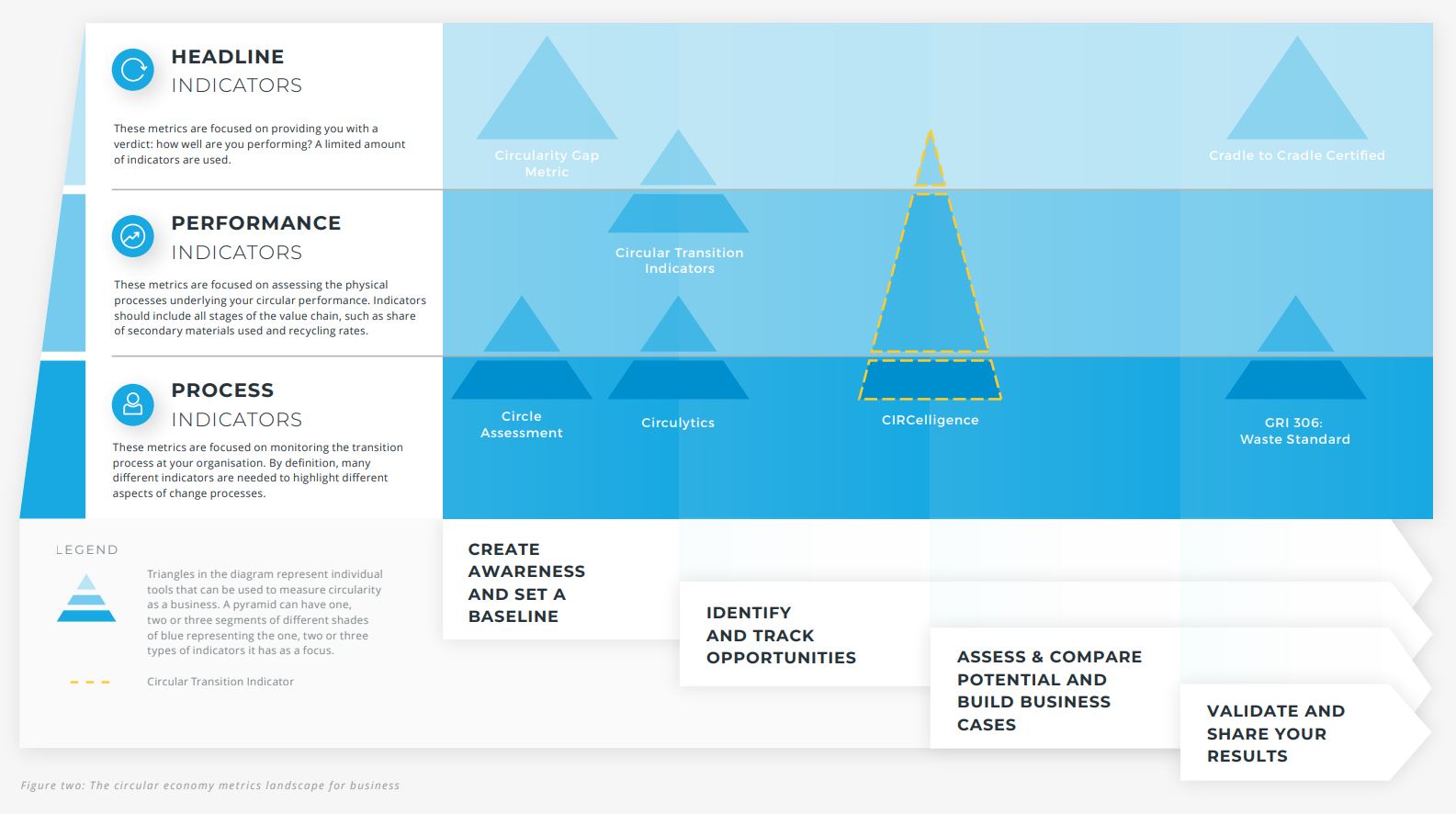
      The following graphic shows several of the available tools and systems for measuring different elements of circularity for companies. Some, such as GRI 306 focus on reporting and can be applied universally to any user, whereas others, such as CIRCelligence, which are more tailor-made to the needs of the particular client.

      Image source: BCG & CE

      These frameworks use indicators, with a wide range in the quantity of data points, which can be broken down into how they measure closing, slowing, and narrowing loops. Others focus more on the impact of circularity on revenue or overall impact or else on the systems that are in place for implementing circularity. For a few of these frameworks, you can see this breakdown below:

      Closing LoopsSlowing LoopsNarrowing LoopsOther
      WBCSD Circular Transition Indicators % material circularity;
      % water circularity;
      % renewable energy;
      Waste recovery
      Actual lifespan% critical materialsCircular material
      productivity;
      % revenue circular;
      GHG impact of circularity;
      Land use change
      EMF Circulytics % virgin vs used vs renewable materials;
      Waste recovery;
      Recirculation % material;
      Waste water recovery
      Uses per lifeWater sources;
      Water resource efficiency before disposal;
      Renewable energy
      Priority for top management;
      Inclusion in risks assessment;
      Inclusion in strategy;
      Targets, plans, tools;
      Circular Economy principles usage;
      Stakeholder engagement;
      Chemical usage;
      Circular Economy services/revenue;
      Finance
      CE & PACE Examples Recycling rate;
      Share of secondary resources;
      Share of renewable energy
      Share of scarce resource& Circularity;
      Share of sustainable products;
      # departments with circularity KPIs;
      Customer attitude;
      Employee awareness
      GRI 306: Waste Waste management practices;
      Waste diverted from vs directed to landfill
      Waste generation
      Cradle-to-Cradle Certified* Circular pathways (biological or technical) plans and actions;
      Use of recycled/renewable materials
      Use of materials compatible with cyclingCircularity education;
      Circularity data transparency;
      Circularity innovation & design;
      Product design for easy disassembly
      *Circularity is just one of five areas of assessment

      If you’d like to learn more about any of these (or other) circularity metrics, or if you’re curious about developing your own, feel free to reach out to either EFF’s Environmental Compliance Expert, Diego Perdomo, or EFF’s Sustainability Expert, Marie Gomersall.


      Sources:

      – “Circularity indicators in practice: Exploring companies’ application and linkages to sustainability” by Emilia Paredes Bassi (2023) as published by Lund University IIIEE
      – “Measuring circularity at the corporate level” by Irene Martinetti and Jarkko Havas (2021) as published in the journal Field Actions Science Reports
      – “Product design and business model strategies for a circular economy” by Bocken et al. (2015) as published in the Journal of Industrial and Production Engineering
      – “How can organisations measure their level of circularity? A review of available tools” by Valls-Val, Ibáñez-Forés, & Bovea (2022) as published in the Journal of Cleaner Production
      World Business Council Circular Transition Indicators
      Duni Group “Becoming Circular at Scale”
      Ellen MacArthur Foundation Circulytics indicators
      EU Circular Economy Monitoring Framework
      Duni Group Boston Consulting Group & Circular Economy CIRCelligence
      Duni Group Circular Economy & PACE

      6 May, 2024
    • USA SEC & ESG Reporting

      The United States Security & Exchange Commission (SEC), which oversees the enforcement of fair market practices to prevent manipulation and protect investors, has interrupted its progress toward climate disclosure rules, citing legal challenges to the new obligations.

      Climate regulations

      Within the United States, some states, notably, California, have established their own climate disclosure regulations, which are also being challenged in the courts. The European Union as well, has developed disclosure requirements to increase transparency for investors and consumers.

      In early March of this year, the SEC released and adopted these standards after two years, the first of their kind to require public companies in the US to disclose their climate risks (and plans to mitigate them), as well as the financial impact of risks such as severe weather events and even, in some cases, the greenhouse gas emissions caused by their activities.

      However, even prior to the final release of these rules, they faced backlash from twenty-five Republican state attorneys general (AGs) and energy services companies, among others, requesting a stay pending review (which was granted by the court) and a lawsuit. These arguments stem from the notion that the requirements are too burdensome and costly for companies, that some of the data points cannot be sufficiently reliable, and, furthermore, that the rules fundamentally overstep the SEC’s authority. The SEC, for its part, argues that the new requirements are “consistent with applicable law and within the Commission’s long-standing authority.”

      esg

      Following the lawsuit from Republican AGs, a coalition of nineteen Democratic AGs have initiated a campaign to support the SEC rules, arguing that the disclosures provide investors with “standardised, comparable, and reliable data” to accurately evaluate the climate-related risks of their investments. Additionally, non-governmental organisations such as the National Resources Defence Council and the Sierra Club believe that the standards are actually insufficient to provide full transparency on these issues.

      Ultimately, the SEC has announced it will pause the development of these rules until the legal challenges have been properly reviewed and resolved. However, in a statement, the body added that “the Commission will continue vigorously defending the Final Rules’ validity in court and looks forward to expeditious resolution of the litigation”.

      Sources:

      6 May, 2024
    • Combating inflation

      For some time now, all of Europe has been gripped by rampant inflation. Although it has begun to fall in some countries and continues to rise in others, there is one constant – prices are rising everywhere. This affects not only us as consumers, but also our business or employers. Therefore, it is now extremely important to manage your finances effectively.

      What steps should we take when controlling our receivables?

      It is fundamental to ensure the following:

      • active and continuous monitoring of the customer portfolio,
      • real-time tracking of customers’ accounts by working with their ERP systems,
      • high-quality technology and tools to help provide superior service,
      • investment in a team of experienced employees.

      EFF, with our location in the heart of Europe and team of experienced specialists, keeps pace with the main competitors on the market, but the costs associated with our services are lower than those of companies from the UK or other Western European countries. Our experts in the receivables department operate with confidentiality clauses, making them an “invisible extension” of our clients’ companies. It is worth betting on effective tools to fight inflation.

      21 March, 2024
    • EPR – who counts as a producer of EEE

      Are you wondering if you have obligations under Spanish Extended Producer Responsibility (EPR) regulation? EFF has recently opened a hub in Barcelona with EPR specialists ready to offer a personalized consultation on your requirements and guide your team through the process.

      Regulation on EPR

      The regulation on EPR has been strengthening in Europe and Spain in order to make the producer responsible for the entire life span of their products. One of the major industries under scrutiny is that of Electrical and Electronic Equipment (EEE).

      The amount of EEE produced worldwide has been rising with digitalization in previous years and particularly recently with the rise of artificial intelligence. Consequently, the Waste of Electronical and Electronic Equipment (WEEE) generated has been increasing exponentially every year in the world and it is estimated that the amount will continue to increase and double by 2050.

      Therefore, EPR regulation plays a fundamental role in this sector since it confers several obligations to those considered producers regardless of whether they are natural or legal persons.

      For companies established in Spain, the criteria to be considered as a producer of EEE in Spain is the following:

      • Designing or manufacturing EEE and marketing them under the firm’s own name/brand in the Spanish market
      • Reselling under its own name/brand or its own EEE-specific brand products manufactured by third parties, without being considered as a “producer” because the producer’s brand appears on the device (see Paragraph 1)
      • Being professionally dedicated to the introduction of EEE from third countries or another EU member state into the Spanish market

      EPR in Spain

      Additionally, entities which are established in another country or member state and which sell EEE via remote communication directly to private individuals or professional users in Spain are considered producers of EEE under the Royal Decree 110/2015 about WEEE.

      An EEE producer that manufactures in Spain and exports all their inventory, without selling any device in the Spanish market won’t be considered a producer in Spain for EPR terms, but it will be a producer in the countries in the EU where it sells its products.

      Finally, it’s important to remark that whoever acquires EEE in a Member State or another country and brings it to Spain privately for their use and enjoyment or to give it to a third party won’t be considered a producer of EEE.

      It is important to distinguish who must comply with the EPR legislation because they are considered a producer of a product. Under the scope of EPR, not only the manufacturer is the producer but also other actors in the chain, for instance, distributors, importers, among others.

      The different types of actors covered under the legislation that are considered as producers are the following:

      • Manufacturers in Spain, unless the manufacturing is done for third parties using the branding of another company, in which case that other company would be considered the producer.
      • White label, own brand, or distribution brand sellers producing devices under their own name (or hiring someone else to), be it in Spain or in another country and then imported to Spain.
      • Importers bringing products from other Member States or third countries to sell in Spain.
      • Distributors who import any of the EEE that they sell are deemed producers. However, if all the devices sold have been acquired from manufacturers or importers already considered producers in Spain (see above), then the distributor is not considered as another producer.
      • Remote sellers who are established outside of Spain and who sell EEE via remote communication channels directly to private individuals or professional parties are considered producers. Note: Remote sellers established in Spain can also fall under other categories within this list and would thus be considered a producer as well (e.g., if they import EEE and sell on the internet, they are also importers).
      13 March, 2024
    • Unlocking sustainable investments: understanding ESG ratings for companies

      In today’s rapidly changing world, investors are not just looking for financial returns; they also want to make a positive impact on the environment and society. This paradigm shift has given rise to the concept of Environmental, Social, and Governance (ESG) criteria, which play a crucial role in evaluating a company’s sustainability performance. In this…

      What is ESG?

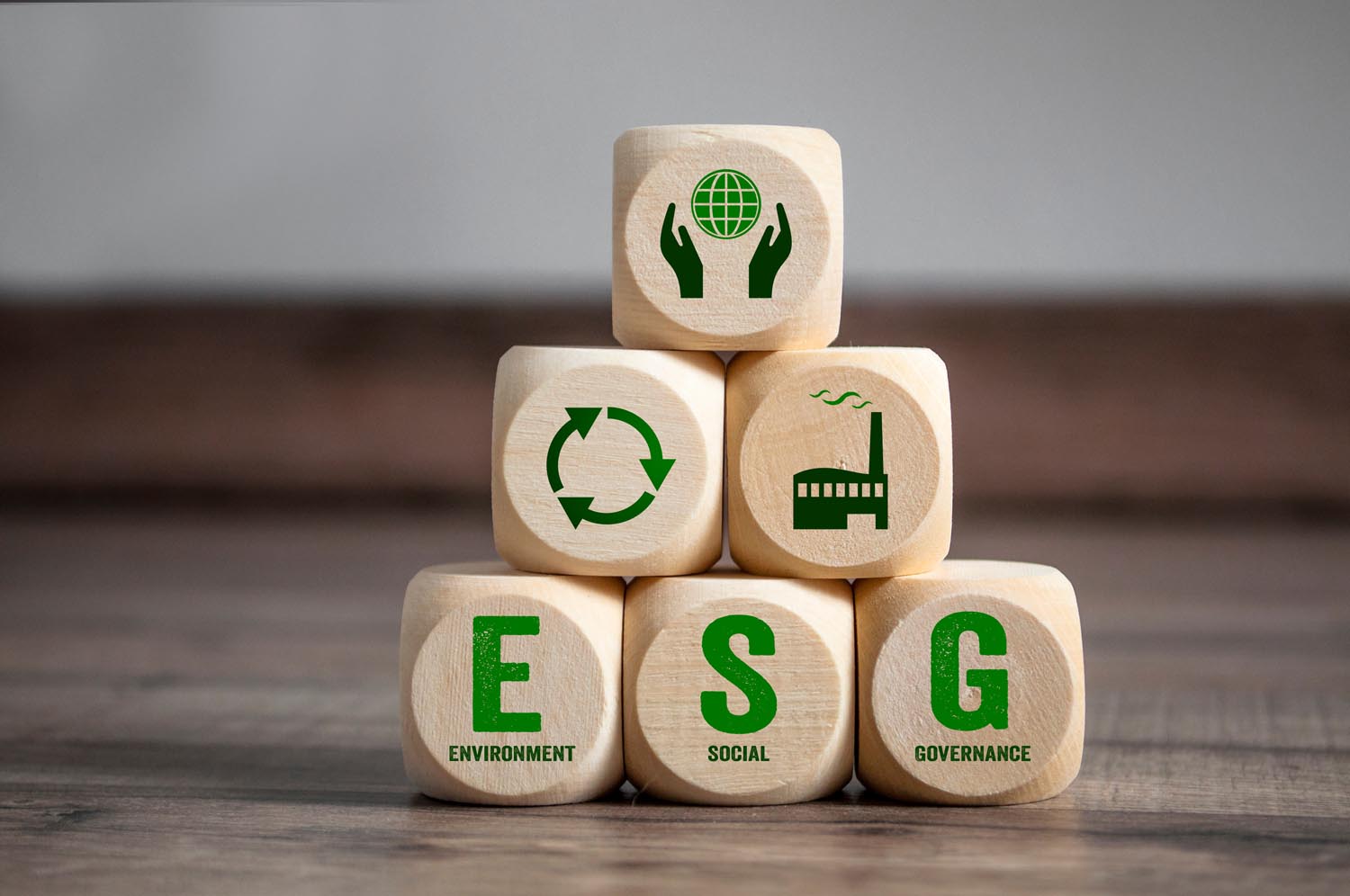
      ESG stands for Environmental, Social, and Governance. These three factors provide a framework for assessing the sustainability and ethical impact of a company’s operations.

      • Environmental: This dimension focuses on a company’s impact on the environment. It considers factors such as carbon emissions, waste management, water usage, and efforts to combat climate change.
      • Social: The social aspect of ESG evaluates a company’s treatment of its employees, community engagement, diversity and inclusion, and labor practices.
      • Governance: Governance deals with a company’s internal structure, transparency, and ethical leadership. It includes areas like executive compensation, board diversity, and adherence to legal and ethical standards.

      The rise of ESG ratings

      ESG ratings provide a standardized way of measuring a company’s performance in these three categories. Various rating agencies assess companies based on a range of indicators, producing a quantifiable score that investors can use to compare companies’ sustainability efforts.

      rozliczenia podatkowe

      Why ESG ratings matter

      • Risk Mitigation: Companies with strong ESG practices are often better equipped to manage risks. For instance, a company that actively addresses environmental issues is less likely to face legal or reputational problems related to pollution.
      • Investor Confidence: ESG ratings are becoming a critical factor in investment decisions. Investors increasingly prefer companies that demonstrate a commitment to sustainability and responsible practices.
      • Long-Term Viability: Addressing ESG factors contributes to a company’s long-term success. Companies that prioritize environmental responsibility and ethical governance are better positioned to adapt to changing regulations and consumer preferences.
      • Attracting Talent: Companies with high ESG ratings tend to attract and retain top talent. Employees are drawn to organizations that align with their values and make a positive impact on society.

      Challenges and opportunities

      While ESG ratings have gained prominence, challenges remain. Standardizing ESG metrics across industries and regions can be complex. Additionally, there is a need for transparency and consistency in reporting to ensure accurate ratings.

      However, the challenges present opportunities. As companies work to improve their ESG ratings, they can drive innovation, foster positive relationships with stakeholders, and ultimately contribute to a more sustainable future.

      ESG ratings are transforming the investment landscape by placing sustainability at the forefront. Investors are recognizing that financial gains must go hand in hand with responsible business practices. As ESG criteria become more integrated into investment decisions, companies that prioritize environmental and social responsibilities will likely be the leaders in creating lasting value for themselves and the world.

      13 March, 2024
    • Poland’s new plastic tax: what businesses need to know

      As of 2024, Poland has implemented a new plastic tax with a clear mission: to tackle the harmful effects of plastic on our environment. This tax is a step towards reducing the use of single-use plastic products and promoting eco-friendliness.

      New plastic tax

      With this new tax comes new responsibilities, especially for businesses across various sectors like shops, bars, and restaurants. These establishments are now required to charge for single-use plastic packaging. Additionally, from 2024 onward, entrepreneurs have more obligations regarding the recycling and recovery of plastic products.

      For businesses affected by this new regulation, customers can expect an additional charge of 0.20 to 0.25 Polish zlotys per cup or meal pack if they are disposable and made of plastic. What’s intriguing is that this charge doesn’t just apply to takeout items; even dishes served with disposable packaging within the premises fall under this rule.

      However, there’s been some uncertainty regarding whether this charge includes value-added tax (VAT). The legislation hasn’t directly addressed this, nor has it specified whether the charge should be listed on receipts alongside the purchased product or as a separate item.

      Despite the lack of official clarity, the Ministry of Finance has provided guidance. According to them, the collected charge should be considered as part of the meal or beverage’s price, thus subject to VAT. The fee will be an element of payment for the goods supplied and will therefore increase the VAT taxable base. The taxpayer will calculate the VAT due from the amount of the taxable base. In summary, VAT will be included in the added charge.

      As businesses navigate these new regulations, understanding the implications of the plastic tax and VAT is crucial. It’s not only about compliance; it’s a move towards a greener, more sustainable future.

      7 March, 2024

    Contact form

    Contact us and we will respond within 24 hours!
    Kontakt
    Close
    Would you like to change the market?
    Select area of operation
    You will be redirected to another page for the selected market
    Polska
    Jesteś tutaj
    United Kingdom
    Go to page