
Would you like to change the market?
Select area of operation
You will be redirected to another page for the selected market
FAQ
Would you like to change the market?
Select area of operation
You will be redirected to another page for the selected market
    Our solutions
    Business sectors
    Partners
    Get in touch

    Blog

    Check our blog

    Learn more about the latest industry trends, changes in regulations and development opportunities for your company.
    30 October, 2024

    VAT in real estate transactions

    Understanding the rules that apply to the taxation of real estate transactions is essential for anyone operating in the market, whether investors,...

    28 February, 2025

    Omnibus package – incoming changes in ESG reporting

    The European Commission’s proposals to simplify ESG regulations as part of the so-called Omnibus Package published on February 26th 2025 have sparked...

    Latest

    • Zero-emission – the key to competitive advantage

      In the face of advancing climate change and tighter environmental regulations in the European Union, companies face the challenge of aligning their operations with sustainability requirements. Zero-carbon, defined as a state of equilibrium between greenhouse gas emissions and their neutralization through reduction and absorption, has ceased to be merely an ambitious goal – it has become a condition for survival and development in the modern economy.

      What is zero-emission?

      Under zero-emission is a comprehensive approach:

      • Step 1: minimize emissions at every stage of operations
      • Step 2: invest in solutions to neutralize unavoidable emissions

      Linking zero-carbon with carbon footprint by scope

      Striving for zero-carbon is closely linked to reducing the carbon footprint in all three emission bands defined by the Greenhouse Gas Protocol.

      Scope 1 covers direct emissions over which companies have the most control, such as emissions from technological processes or vehicle fleets.

      Scope 2 refers to indirect emissions related to purchased energy, where a key element is the transition to renewable energy sources and energy efficiency improvements.

      Scope 3, which is the most challenging, addresses the entire value chain, including suppliers, logistics and product usage. A comprehensive approach to reducing carbon footprints in these scopes not only allows companies to move closer to climate neutrality, but also responds to the growing demands of stakeholders and customers, who increasingly expect transparency in emissions reporting.

      sustainability

      How to achieve zero-emission in each scope?

      Scope 1: Reduction of direct emissions

      • Upgrading equipment – replacing boilers or industrial machinery with modern, low-carbon technologies.
      • Decarbonizing the vehicle fleet – investing in electric or hydrogen-powered cars and optimizing logistics routes.
      • Switching to renewable energy sources – using locally generated energy, such as photovoltaic panels, making it possible to become independent of emissions generated by burning fossil fuels.

      Scope 2: Reduce emissions associated with purchased energy

      • Purchasing green energy – entering into renewable energy supply agreements (PPA – Power Purchase Agreement) or buying guarantees of origin for RES energy.
      • Increase energy efficiency – implement energy management systems (ISO 50001) to monitor and optimize energy consumption.
      • Investment in energy storage technologies – the installation of batteries makes it possible to use renewable energy sources also at times of lower energy availability.

      Scope 3: Neutralization of emissions in the value chain

      • Supplier engagement – selecting partners with sustainable practices and requiring them to report their carbon footprint.
      • Closed-loop product design – creating products that are easy to recycle, which reduces emissions associated with the extraction of raw materials.
      • Logistics optimization – reducing emissions through efficient transportation planning and use of low-emission modes of transportation.
      • Comprehensive waste management – reducing waste during production and investing in waste treatment technologies.

      Zero carbon as the future of business

      Data from organizations that monitor climate action, such as the Carbon Disclosure Project (CDP) and the Science Based Targets Initiative (SBTi), indicate that companies are increasingly committed to zero-carbon strategies. More and more companies are taking action to reduce emissions, setting goals in line with science and global standards. Statistics show that both multinational corporations and smaller organizations are implementing climate strategies, aligning with regulatory requirements and stakeholder expectations. Industries such as energy and heavy industry, known for their high emissions, are investing heavily in decarbonization, while service sectors are focusing on optimizing indirect emissions in supply chains. These moves underscore that the pursuit of climate neutrality is becoming an increasingly common element of business strategies, reflecting growing climate awareness and the need to address new market challenges.

      25 November, 2024
    • VAT in real estate transactions

      Understanding the rules that apply to the taxation of real estate transactions is essential for anyone operating in the market, whether investors, developers or individuals. The variety of regulations that determine when and how much VAT should be charged, and when to apply other forms of taxation, such as civil law transaction tax (PCC) or personal income tax (PIT), requires detailed analysis and an awareness of which regulations apply under which circumstances.

      Sale of real estate and VAT

      VAT in real estate transactions covers a broad spectrum of issues that relate to both the general rules for taxing these transactions and special cases of exceptions and exemptions. The most important thing is to understand which transactions are subject to VAT, and when the personal property tax (PCC) or personal income tax (PIT) should be applied.

      General principles of VAT taxation

      The basic principle is that the supply of real estate for consideration is generally subject to VAT. Normally, the seller of commercial real estate must charge VAT. However, there are a number of situations that may affect the application of this tax, including the first settlement of the building or the period that has elapsed since that settlement. If less than two years elapse between the first settlement and the delivery of the building, the transaction is subject to VAT. On the contrary, if this period is longer, the supply may be exempt from VAT, as long as no significant improvements have been made to the building that account for at least 30% of its initial value.

      VAT rates and place of taxation

      VAT rates may vary depending on the type of transaction and the location of the property. In international cases, it is important to determine the place of supply of services. In the European Union, the place of taxation depends on the location of the property, but the rules can vary depending on the details of the transaction and the tax status of the parties.

      VAT exemptions

      It is worth noting that not all real estate transactions are subject to VAT. For example, the sale of real estate may be exempt from VAT if it was purchased for personal use by an individual buyer. These exemptions also apply to real estate that has not changed hands for two years after initial occupancy.

      PCC tax vs. VAT

      Typically, when a property is sold on the secondary market by a person who is not registered as an active VAT payer, the transaction may be subject to PCC rather than VAT. The PCC is calculated based on the market value of the property and is usually 2%. It is payable by the buyer and is usually collected by the notary when the transaction is finalized.

      International settlements

      In the context of international transactions, VAT can be deducted by the purchaser depending on the nature of the transaction, such as WNT (Intra-Community Acquisition of Goods) or import of services. It is important that the goods and services are used for taxable activities in order for the purchaser to exercise the right to deduct VAT.

      30 October, 2024
    • Tax havens

      Can we really talk about fair play in the global financial system when certain countries offer much more favorable tax conditions, thus attracting capital that could be taxed in the country of origin? This question brings us closer to understanding what so-called tax havens are and how they work. These jurisdictions, often referred to as tax havens, have become a vital part of the global economy, influencing the tax decisions of businesses and individual investors around the world.

      What are tax havens?

      Tax havens offer foreigners and foreign companies attractive tax conditions that include low or zero tax rates, as well as a high degree of financial confidentiality. Countries such as Antigua and Barbuda, Belize, Grenada, Jersey, the Cayman Islands, the Principality of Andorra, the British Virgin Islands and the Kingdom of Bahrain use liberal laws to attract foreign capital that would otherwise be taxed in the investor’s home country.

      However, not all countries offering low taxation can be classified as tax havens. Germany and the United States, for example, despite strict financial secrecy, have relatively high tax rates, effectively eliminating them from this category according to the most widely accepted definition.

      Tax havens, while bringing economic benefits to investors and entrepreneurs, simultaneously generate serious challenges for the global financial system. It is estimated that through the use of tax havens, global capital of between $9 trillion and more than $32 trillion is hidden from the tax authorities, resulting in huge losses for national budgets, which cannot tax these funds. Poland, for example, loses about 3 to 4 billion zlotys a year from moving profits abroad.

      In response to these challenges, many countries, including Poland, have introduced legislation to limit the misuse of tax havens. In 2019, the Ministry of Finance presented a list of 26 countries and territories that were deemed to use harmful tax competition. These countries, such as Andorra, Bahrain and Panama, are on the so-called Black List, meaning that income earned in these jurisdictions does not enjoy foreign tax credits in Poland, which is expected to discourage Polish taxpayers from transferring profits to these places.

      The European Union has also taken steps to regulate tax practices, based on the principle of transparency and international cooperation. Thanks to these initiatives, many countries have amended their tax laws to bring them in line with the standards adopted by the EU.

      At the corporate level, tax havens are mainly used to create complex corporate structures that allow profits to be shifted to low-tax jurisdictions. For example, a company can sell its products to a subsidiary company registered in a tax haven at production prices so that it officially does not make profits that would be taxed in its home country. The subsidiary then sells these products on the international market at higher prices, generating profits that are not taxed in the home country.

      Another popular way to minimize the tax burden is to sell licenses or copyrights to subsidiary companies in tax havens for amounts far exceeding their actual value, thereby significantly reducing the tax base.

      In the context of individual taxpayers, tax havens also offer opportunities for those working abroad who want to minimize their tax obligations. However, taking advantage of these opportunities requires careful tax planning and an understanding of the regulations in both the country of origin and the country where the income is generated. In Poland, for example, the foreign relief (abolition relief) avoids double taxation, but does not cover income earned in blacklisted countries.

      30 October, 2024
    • Quality Management System based on ISO 9001:2015 in services

      ISO 9001:2015 is the international standard for quality management systems (QMS). It is a powerful tool that can help improve the quality of services provided, which is tantamount to an increase in customer satisfaction.

      Implementing ISO 9001:2015

      Implementing a standard in an organization may face some challenges, such as resistance from employees to the changes being made, or additional costs to implement and maintain the system. The key, however, is to understand the benefits of certification, which can lead to long-term success.

      A certified organization not only enjoys increased customer confidence in international markets, but also improves its operational efficiency through better organization of processes, their continuous monitoring and improvement. ISO 9001 certification is recognized worldwide and is very often required by international contractors. The implementation of a QMS based on this standard broadens an organization’s horizons to new markets. Organizations operating in accordance with ISO requirements are better prepared to manage risks and to adapt to changing stakeholder requirements.

      iso 9001 (7)

      ISO 9001:2015 is a flexible tool that can be applied to manufacturing companies, as well as service industries providing services including financial, health, IT, education and many others. By following the standard’s seven principles, which are:

      • Customer-based approach
      • Leadership
      • Engagement of people
      • Process approach
      • Continual improvement
      • Evidence-Based Decision Making
      • Relationship management

      They assure their clients of, among other things, regulatory compliance of services provided and minimization of financial risks, the provision of quality patient care, the delivery of quality services and products (software, project management, or technical support), and, in the case of the education industry, the pursuit of excellence in education.

      EFF has had the privilege of belonging to the group of certified organizations since May 2020 and reaping the benefits. Thanks to our interdisciplinary team, we managed to independently implement a Quality Management System based on ISO 9001:2015. Receiving the approval of an independent certification body as well as verifying the highest quality of accounting and financial reporting services we provide, was a source of great pride and joy for everyone involved.

      30 October, 2024
    • A specialist available immediately or Personnel Outsourcing in a nutshell

      Labor market dynamics and emerging challenges within new projects require ready solutions that can be implemented expediently, quickly, and without the additional costs usually related to a lengthy recruitment process. Today, the labor market can provide specific services that depend on particular tasks, projects, or investors. The most effective solution is outsourcing, or back-office partnership— renting personnel under demand.

      Body Leasing or Personnel Outsourcing?

      The term personnel outsourcing is very often used as a synonym for the term body leasing, but these services are considerably different. In outsourcing, a whole process or set of tasks is transferred to the suppliers, who then take up the related responsibility and control over the process or department entrusted. Body leasing means outsourcing specialists, when control over the “leased” employee and his or her tasks or duties remains with the client company.

      The formula behind a back-office partnership is rather simple and straightforward to implement. The contractee only has to define the scale and nature e of the project in question, whether it’s long-term engagement or just a short-term one, seasonal demand, or support of a temporary backlog. With the services provided by EFF, the clients can engage both individual specialists and entire teams created for a given project.

      outsourcing księgowości

      Advantages of Personnel Outsourcing

      In practice, companies outsource personnel to meet a variety of needs, but most often it is for short-term challenges, as it provides a number of advantages and does not involve the hassle of a long recruiting process. In personnel outsourcing, highly specialized skills can be secured for certain periods, which can range from a few days to a few months based on requirements defined by the specified project.

      The “hired” people or team engage only for the duration of the project, meaning fixed costs regarding these employees are borne by the supplier. In other words, this means considerable savings on the part of the hiring company because it incurs no resultant staffing obligations.

      All monthly employment-related costs, including wages, contributions, and taxes, are taken by the external provider.

      Does the Polish law allow back-office partnering as a form of employment?

      Polish law allows for the leasing of employees, which is based on providing for the employee’s unpaid leave for the purpose of performing work for another employer. Even though there are no separate legal provisions concerning such cooperation, the provisions of service contract are applicable.

      The back-office is a partnership agreement in which an agency provides another company with its human resources on an outsourcing basis. Here, the focus would not be on the outcome but rather on providing a specialist as needed.

      Are you short of personnel resources to ensure continuity for your company’s accounting processes?

      Consider personnel outsourcing! Contact our expert.
      Contact us

      Personnel outsourcing and temporary staffing are only a fraction of services available at EFF. We also offer flexible pricing to meet the needs of clients for instances, fixed annual availability fee, and an hourly rate for months when the services are used. Seasonal challenges, such as staffing for vacations, are effectively managed with our solutions. Many companies that start deploying the services of EFF for short-term staffing remain long-term clients once efficient process management and adaptable organizational solutions are experienced.

      5 September, 2024
    • Higher VAT rates in Finland from September 2024

      The Finnish government has decided to increase VAT rates. The change is expected to take effect on 1 September 2024. The decision was taken with the objective of stabilizing public finances and enhancing their robustness. Below you will find a summary of the current Value Added Tax (VAT) rates in Finland, along with the rates that will apply from 1 September 2024.

      Standard VAT rate

      • the current rate in effect until August 31st 2024: 24%
      • the new rate, which will take effect on September 1st 2024: 25.5%
      • goods and services subject to specific VAT rates: applies to all goods and services for which no exemption or one of the reduced VAT rates is applied.

      Reduced VAT rate

      • the current rate in effect until August 31st 2024: 14%
      • the new rate, which will take effect on September 1st 2024: 25.5%
      • goods and services subject to specific VAT rates: applies to the particular food items high in sugar (chocolate, sweets).

      Reduced VAT rate

      • the current rate in effect until August 31st 2024: 14%
      • the new rate, which will take effecton September 1st 2024: 14%
      • goods and services subject to specific VAT rates: applies to catering and restaurant services

      Reduced VAT rate

      • the current rate in effect until August 31st 2024: 10%
      • the new rate, which will take effecton September 1st 2024: 10%
      • goods and services subject to specific VAT rates: applies to pharmaceutical products, accommodation, books and cultural events.

      Please be advised that the Finnish government has also updated the VAT return form. The new declaration (online form) will include boxes for transactions at both current and future VAT rates, which will be effective from 1 September 2024.

      It is also worth keeping in mind that the Finnish Government is considering reclassifying products subject to the 10 and 14% rates. Any changes would be planned for 2025. We will keep you updated on any changes and decisions made. 

      The official guidelines for VAT rates in Finland can be found at this website.

      12 August, 2024
    • ESMA new greenwashing rules for investment fund names

      Last week, the European markets regulator, European Securities and Markets Authority (ESMA), announced its final guidelines for investment funds using “green” terms in their names. These guidelines will be in effect from three months after their publication in all EUB languages on the ESMA website, with a total transition time of six months for existing funds.

      New greenwashing rules

      According to the ESMA, interest in sustainable investments has grown dramatically in recent years, providing an incentive for funds to market themselves accordingly. Thus, these new rules are placed to address a new need in the industry, with the proportion of funds using such terms increasing four-fold in the past 10 years, according to one ESMA study.

      In the finalised version of the guidelines, which has changed slightly since the proposal was first introduced in November 2022, investments must meet a requirement of 80% minimum in sustainable causes to meet the criteria for terms like “sustainable” in investment names, with exclusions according to Paris-Aligned Benchmarks (PABs). There must also be a commitment to investment in truly sustainable causes.

      greenwashing

      The final guidelines do include a transition category, featuring terms such as “improving”, “evolution”, and “progress” or terms related to “social” or “governance”. This also contains the 80% investment threshold but applies the exclusions of the EU’s rules for Climate Transition Benchmarks (CTBs) to allow for investment in companies which still derive some revenue from fossil fuels.

      The document also includes guidance in the event of a combination of these two categories.

      Other markets have enacted similar regulations recently. Last September, the US Securities and Exchange Commission (SEC) amended its ruling to include fund names in scope and set a similar 80% threshold for investments. Likewise, the UK Financial Conduct Authority passed an anti-greenwashing packaging in November which added criteria for how firms use terms such as “ESG”, “green”, and “sustainable” in their marketing in an effort to reduce unfair or misleading claims.

      With investors and legislators alike increasingly interested in sustainability, many sectors may have to adopt such new guidelines to ensure fair competition and proper compliance with the EU’s increasing legal requirements. Companies in all industries will be expected, whether by legal obligation or by consumer scrutiny, to back-up their sustainability claims.

      Sources:

      – Brasseur, Kyle. “ESMA guidelines tackle greenwashing via fund names.” Compliance Week. 17 May 2024.
      ESMA. “ESMA Guidelines establish harmonised criteria for use of ESG and sustainability terms in fund names.” 14 May 2024.
      – Segal, Mark. “EU Issues New Rules for Funds Using “ESG” or “Sustainability” Names to Address Greenwashing Risk”. ESG Today. 14 May 2024.

      11 June, 2024
    • Growing your business online

      If you are wondering how to increase your sales, expansion into foreign markets is one of the solutions. This is a process that may seem daunting at first, but the European market promises significant profit in a short period of time. World wide access to the Internet, as well as membership in the Schengen Area, have made it easier than ever. However, there are things you need to keep in mind when planning your development.

      Where to sell your product

      When deciding to enter foreign markets, it is important to decide through which channels or platforms we will sell our products. We can choose one of the ready-made, already functioning e-commerce platforms, such as Amazon or E-bay, or their numerous local counterparts (e.g. Kaufland DE, CDiscount, Bol, Otto). They offer a plethora of off-the-shelf solutions, but they all come at the cost of commission.

      Another option is to create our own online store or expand the platform we currently run. Choosing this option will usually involve adjusting the parameters of the site and making additional language versions, as well as tailoring the payment and shipping methods to a wider group of customers. Translation alone may prove to be time consuming, so a good place to start would be the fundamental elements, such as statutes, rules for deliveries, returns or complaints. It is important that all regulations are in line with the laws of the target country. Keeping to European markets reduces the workload, as certain EU directives unify the legal systems of individual member states. Nonetheless, it is important to find out whether our store’s regulations adhere to local laws.

      Creating our own online store also comes with many benefits. We have full control of our offer, the look of our site, and the marketing strategy, not to mention the customer experience. Using the right tools, not only are we able to collect data about our customers, but also utilize it, personalizing the ads. Having our own sales platform, we have the ability to react quickly both to trends that emerge in our industry, and to possible legal revisions. At the same time, we reach beyond geographical limitations. With such tools, we are the ones deciding on which global markets we want to move into, and which categories of customers we want to focus on the most.

      Payment methods offered to our customers will also need to be adjusted, most importantly ensuring currency compatibility. While card payments are already quite widespread, each country has additional platforms that are most commonly used by consumers.

      Customer service

      The development of online sales in foreign markets also involves providing a high level of customer service. Customers will certainly appreciate the opportunity to speak with a specialist in their native language and are more likely to decide to purchase our products if they can receive reliable support and after-sales service. Hiring people fluent in several foreign languages will incur high costs, so if we do not have the ability to provide customer service in each of the official languages , it will be a good idea to start by providing service in English, which is the most popular language among European customers.

      When deciding to expand product sales to foreign markets, consider using marketplace platforms such as Amazon or eBay or smaller local partners. This is one way to gain recognition in markets around the world. There is no need to create or customize your existing platform by adding more forms of payment. If you’re set on a quick launch, this solution might be your best bet. It is important to note, that one of the downside of this option is limited control over which customers our offer reaches. Additionally, you will be charged on each purchase made through one of these platforms.

      Accounting support for online vendors

      Regardless of what form of sales we choose, once our business is ready to operate in foreign markets, it is necessary to take care of the accounting processes. As the European Union is also a customs union, we don’t have to worry about import duties and resultant paperwork. Despite this accommodation, it is still necessary to be familiar with both domestic and international tax regulations, especially those related to VAT. An external expert can help you maneuver this delicate matter. But is it worth the additional costs?

      Gain customers on new markets!

      We’ll provide VAT compliance and accounting services for your business. Get in touch and find out how we can help you!
      Contact us

      As a result of our cooperation with a tax consulting company, we gain point of contact with specialists in the field of tax law and reporting, which allows us to avoid mistakes in our tax returns. They are responsible for keeping track of any legal revisions, which are very difficult to follow on our own, especially in many countries at the same time. The knowledge and experience of experts will help us stay up to date and meet all necessary deadlines. By putting our tax returns in the hands of specialists, we gain extra time to develop our business and the range of products we sell. What’s more is that they are always available to help address any doubts you might have.

      As our business grows, so does the scope of processes we may need assistance with. For example, If we decide to extend payment terms for our customers, it might be helpful to hire accounts receivable management services, known as credit management. The selected service provider can take care of monitoring payments from our customers, sending reminders and notices of impending payment, or collection. With an increasing number of customers, this can significantly improve our liquidity and ultimately allow us to invest in further growth.

      Expanding our business into foreign markets may be a challenge, but with proper analysis and preparation, we will be able to reach new customers throughout Europe or the world.

      29 May, 2024
    • Circularity at company level

      What exactly does circularity mean for a company? We hear about circularity in multiple sustainability contexts, from the EU Taxonomy priorities and the European Green Deal (and even Duni Group’s 2030 Sustainability Strategy!) but what exactly does it entail at the microscale of a company?

      Circularity

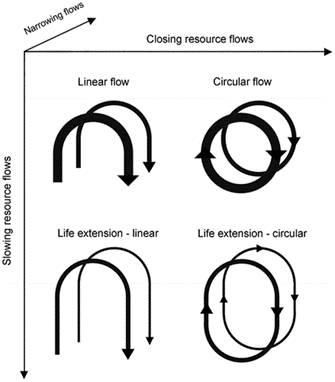
      While often circularity is referred to in terms of the “Circular Economy”, in reality, it is more about the amalgamation of making individual systems circular. Thus, a life-cycle perspective is essential, where actors work to move the existing cradle-to-grave linear economy into a cradle-to-cradle, more circular one.

      This can mean:

      • Slowing loops: Slowing down the resource flows by designing quality products which have long lifespans, and which can be repaired or remanufactured when issues arise. These days, many products, from our appliances to our personal electronics are designed with “planned obsolescence” to force consumers to continually be buying new products every few years. Slowing resource loops is just better for consumers, the environment, and, if capitalised on through creative business models, can be better for producers as well.
      • Closing loops: Even the best designed products will eventually reach the end of their lifespans. For this stage, we need to close the loops by putting the materials back into the system to the extent possible. Recycling is an example of closing the loop commonly employed in communities around the world. Other instances of closing the loop include designing products to be compostable or using waste for energy.
      • Narrowing loops: An added method is through resource and energy efficiency, which some call “narrowing the loop”. While this approach does not slow resource flows or create circular or closed systems, it does mean that fewer resources are put into the system in the first place, which ultimately supports the goals of the Circular Economy.

      circularity

      Image source: “Product design and business model strategies for a circular economy” by Bocken et al. (2015)

      Benefits

      Why should companies pursue this circularity? The Ellen MacArthur Foundation, a pioneer in the sphere of circularity has identified a few reasons:

      • Profit opportunities: For example, by leasing laundry machines instead of selling them, customers can save roughly 1/3 of the cost per wash and manufacturers can make roughly 1/3 more profit. This is just one example of a business using circularity to creatively increase their revenue streams. Another example is IKEA, who have introduced a buy-back programme and can resell the used furniture.
      • Reduced risk in the supply chain: In the past few years alone, wars, the pandemic, and even a ship stuck in a canal have upset global supply chains. By using fewer virgin materials, companies are less susceptible to volatile prices and disruptions, and have more opportunities to use alternative materials provided by more decentralised suppliers.
      • New business services: A shift to a more circular economy, as the EU is planning, will create demand for additional services, such as collection of end-of-use products to reintroduce into the system, specialised repairs, and parts manufacturing, to name a few. By capitalising on this demand early on, companies can not only increase their revenue streams but can benefit from being first movers in the industry.
      • Improved customer interaction: With new business models, such as leasing or trade-ins, businesses establish more long-term relationships with their customers with several touch points throughout their products’ lifespans. Thus, companies can gain insights into usage patterns, common issues with the products, etc., which will ultimately lead to improved products and customer service in the long run.

      Further benefits include:

      • Increased resource and energy efficiency (and thus cost savings in production)
      • Cost savings from relying on used materials over virgin
      • Minimised waste, which is essential, given Europe’s move toward EPR
      • Enhanced brand reputation because many consumers report interest in sustainability
      • Keeping ahead of regulation and avoiding penalties of non-compliance

      So, while the Circular Economy can seem like a daunting goal, breaking it down to the company level demonstrates tangible and actionable ways for individual businesses to benefit from circularity.

      Want to learn how to implement greater circularity into your business model and strategy and get ahead of your EU legal obligations? Contact our Environmental Compliance Expert, Diego Perdomo!

      Sources:
      – “Product design and business model strategies for a circular economy” by Bocken et al. (2015) as published in the Journal of Industrial and Production Engineering
      3E Exchange
      Ellen MacArthur Foundation

      28 May, 2024

    Contact form

    Contact us and we will respond within 24 hours!
    Kontakt
    Close
    Would you like to change the market?
    Select area of operation
    You will be redirected to another page for the selected market
    Polska
    Jesteś tutaj
    United Kingdom
    Go to page