
About cooperation with Gudrun Sjödén
The emergence of EU ESG legislation in recent years has raised numerous questions for companies regarding their obligations and future expectations. Even companies with a long-standing commitment to sustainability face additional work in collecting and reporting on their environmental and social data to comply with new regulations across the EU.
Client background
One such company was Gudrun Sjödén, a medium-sized Swedish fashion and home decor brand renowned for its vibrant, nature-inspired designs and commitment to sustainability. Gudrun Sjödén emphasizes the use of organic and recycled materials, environmentally conscious production processes, and fair labour practices.

Despite its strong sustainability ethos, Gudrun Sjödén had not consistently implemented formal measurement and reporting of its sustainability efforts through third-party verified labels. With the impending requirements from the upcoming Corporate Sustainability Reporting Directive (CSRD), the company sought support in understanding its obligations and performing a Double Materiality Assessment (DMA).
As a fashion retailer, navigating CSRD compliance felt overwhelming—but with Duni EFF’s support we have managed to create a seamless and insightful process. Their in-depth knowledge of sustainability reporting, supply chain transparency, and ESG regulations helped us align our business with the latest requirements while maintaining our brand’s authenticity and values. Their team worked closely with us to assess materiality, collect relevant data, and develop a reporting framework that not only meets regulatory standards but also strengthens our commitment to responsible fashion. Thanks to their strategic insights and hands-on support, we now have a clear and structured sustainability roadmap that enhances transparency and builds consumer trust. We highly recommend Duni EFF to any organization looking for reliable expertise in sustainability compliance and reporting.
Hans Pettersson, CFO, Gudrun Sjödén AB
Challenges
Gudrun Sjödén faced several challenges:
- Navigating the ambiguity of CSRD guidance without a dedicated sustainability department.
- Identifying and engaging with relevant stakeholders.
- Aligning their existing sustainability practices with formal reporting requirements.
Process and approach
Step 1: Sector review
We began with an extensive review of the fashion sector, analysing best practices from other companies, and gathering insights from industry and academic experts. This included: Ethical Fashion Initiative, McKinsey, EU Commission from the EU Strategy for Sustainable and Circular Textiles, Svensk Handel, Inditex, Kappahl, Columbia Climate School, etc.
This foundational step was crucial for identifying potential material topics and key stakeholders, particularly for a company with limited industry contacts.
Step 2: Stakeholder engagement
Identifying specific stakeholders for Gudrun Sjödén was the next critical step. We engaged with over twenty stakeholders, both internal and external, broken into the following categories:
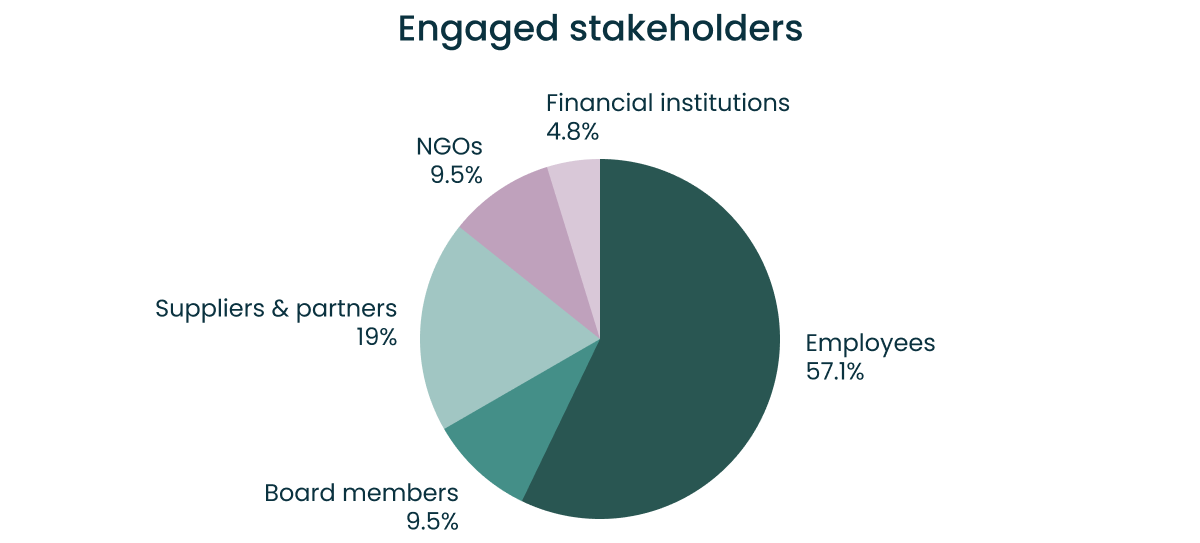
This engagement was conducted through open-ended interviews to capture their experiences and perspectives, asking questions such as “What do you see as the biggest risks and opportunities for this company?” and “What are the biggest sustainability trends in the industry?” Following the interviews, stakeholders were also surveyed and asked to score the topics identified in Step 1. This dual approach ensured a comprehensive understanding of the material issues.
Step 3 — Interim analysis & prioritisation
We analysed the responses using our CSRD-aligned methodology (scale, scope, irremediability), producing a defensible first-pass prioritisation of sustainability topics. Where evidence was insufficient to make a final call, we identified the specific stakeholder or data gap needed to complete the assessment. This created a usable decision-framework rather than just a list of issues.
Value delivered
Even at this interim stage, the DMA work enabled Gudrun Sjödén to:
- Anchor internal discussions in CSRD language and criteria
- Isolate the few topics most likely to be material for the business
- Gain a clear view of what must happen next to complete the DMA (stakeholder rounds, data closure, etc.)
- Move from unstructured debate to a repeatable, scalable materiality process
This early result is typical of engagements where clients need to build internal maturity before finalising materiality: our structured interim output gives them clarity on priorities and a ready-to-run path to CSRD compliance once they re-engage.
Conclusion
This case study highlights the importance of a tailored process in guiding companies through CSRD compliance. Each client has unique prior experience with sustainability practices and data collection that warrants a unique approach to addressing ESG reporting. Gudrun Sjödén’s journey underscores the value of expert support in navigating the complex ESG regulations.
If you’re interested in identifying your company’s most material topics and gaining a clear understanding of your corporate sustainability obligations, please reach out to EFF. Our team is ready to guide you through the process and provide the support you need to ensure compliance and enhance your sustainability strategy.