
Are you currently selling or planning to sell products to customers in Germany? Regardless of your sales model whether B2B, B2C, via your own online shop, or through platforms like Amazon or eBay, you are likely subject to Germany’s Extended Producer Responsibility (EPR) regulations.
What should you know about EPR as a seller, distributor, or manufacturer?
EPR places environmental responsibility on companies for the entire lifecycle of their products. Whether you’re a manufacturer or simply a seller, you must comply with specific obligations. Failure to do so can result in fines, blocked listings, or even a complete ban on selling in Germany. Below you’ll find all the essential information to help you stay compliant.
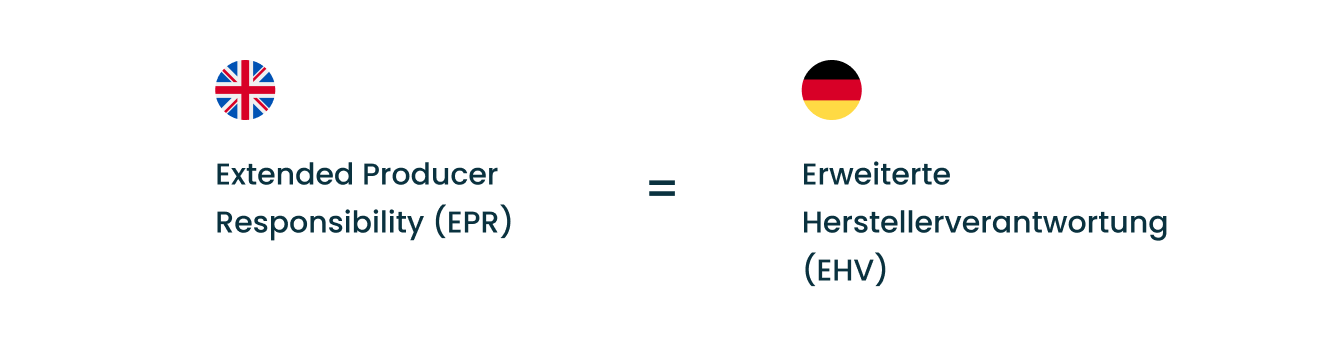
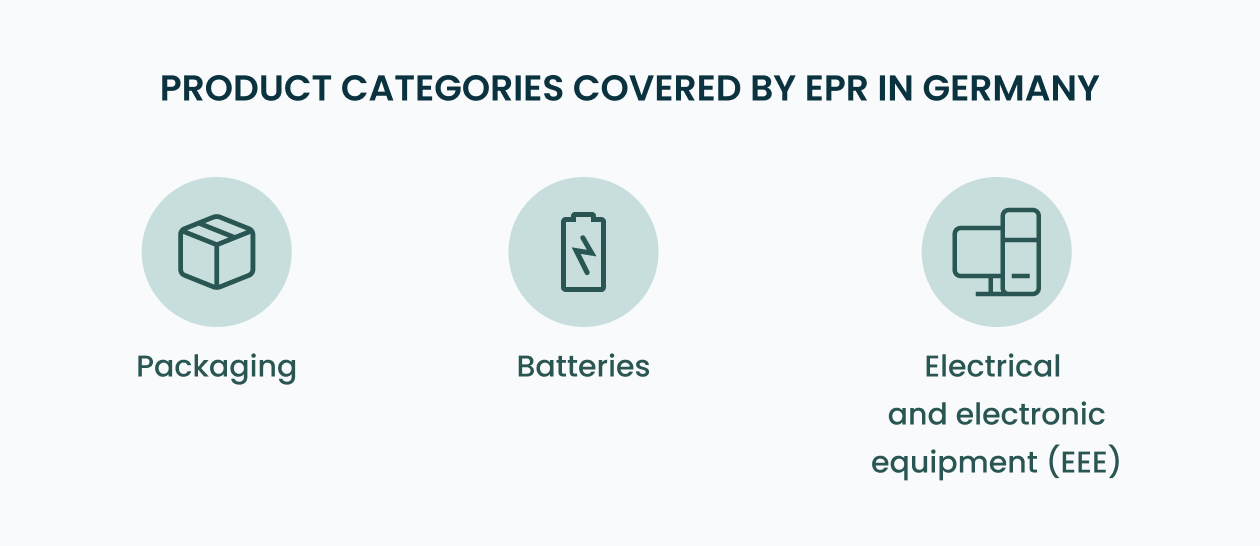
Extended Producer Responsibility (Erweiterte Herstellerverantwortung – EHV) is a legal framework that requires companies to manage their products after their end-of-life. It applies to several product categories: packaging, batteries, electrical and electronic equipment (EEE)
Under the “polluter pays” principle, if you profit from selling regulated products, you are also responsible for their environmental impact. This includes recycling, disposal, and financial contributions to waste management systems.
Who must comply?
- Manufacturers and brand owners
- Produce goods and sell under their own brand
- Outsource production but sell under their own brand (private label)
- Exporters and cross-border sellers
- Sell directly to German consumers via e-commerce
- Operate online shops or sales platforms with delivery to Germany
- Retailers and mail-order companies operating in Germany
- Sell online or via mail order within Germany
- Deliver products directly to end customers
- Importers and distributors
- Import goods into Germany
- Resell them (wholesale or retail)
If your business sells physical goods in Germany and those products generate waste such as packaging, electronic devices or batteries, you are likely subject to EPR regulations. These rules apply regardless of where your company is bases.
How to comply with EPR in Germany: Step-by-step guide
| Before starting sales | Ongoing obligations |
| 1. Identify which products are subject to EPR | 1. Report the volume of the products and packaging |
| 2. Register with the relevant authorities: | 2. Pay environmental fees |
| 3. Sign a contract with a dual system operator | 3. Keep your registration data up to date |
| 4. Obtain your EPR registration number | |
| 5. Appoint an authorized representative in Germany (if you don’t have a local entity) |
New plastic tax – what you should know
From 1 January 2024, Germany introduced an environmental levy on single-use plastic products. This includes takeaway food containers, plastic cups, bags, and wet wipes.
Obligations for producers and importers:
- Register in the DIVID system
- Track quantities sold from 2024
- Submit annual reports
- Pay the calculated levy
Funds collected are used to reimburse municipalities for waste management and environmental protection, reinforcing Germany’s commitment to sustainability.
Want to ensure safe and hassle-free compliance?
What are the risks of non-compliance?
Ignoring EPR obligations can lead to serious consequences:
- Fines – substantial financial penalties
- Blocked listings – marketplaces may suspend your products
- Sales bans – in extreme cases, complete exclusion from the German market
Beyond legal risks, non-compliance can damage trust with customers and business partners.
Not sure if EPR applies to your business?We’re here to help.
Navigating EPR requirements can be complex—especially for companies entering the German market. At EFF, we specialize in supporting businesses at every stage. From registration with LUCID and Stiftung EAR to appointing a local representative and ongoing reporting—we provide full support to help you stay compliant.
Act now – Avoid costs. Gain advantage. Be responsible.
Environmental regulations like EPR are here to stay and are becoming stricter. Governments and consumers expect greater accountability. Acting now helps you avoid financial and operational risks and positions your brand as a sustainability leader.
Source:
– Zentrale Stelle Verpackungsregister (ZSVR). (n.d.). Verpackungsregister [Website].https://www.verpackungsregister.org/
– Stiftung elektro‑altgeräte register (stiftung ear). (n.d.). stiftung ear – Your authority for implementing ElektroG & BattG [Website]. https://www.stiftung-ear.de/en/