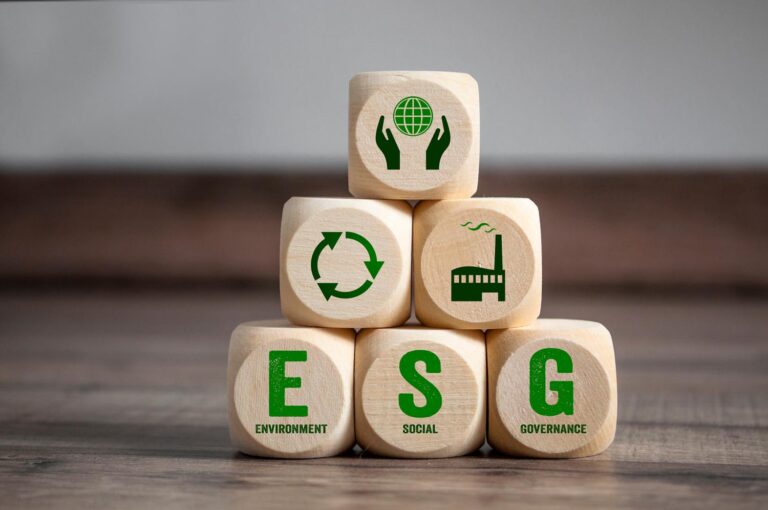

In recent years, climate policy has become one of the pillars of sustainable development strategies for companies worldwide. The obligation to report on ESG (Environmental, Social, Governance) was designed to increase transparency in environmental actions and to encourage businesses to take tangible preventive, corrective, and adaptive measures in response to climate change. However, plans to ease ESG reporting requirements, included in the European Commission’s so-called Omnibus proposal, may have serious consequences – both for the environment and the economy.
Slowing down climate action – Short-term gain, long-term loss
Although the proposal to reduce the number of companies required to report on ESG has its advantages and may be attractive to businesses seeking to avoid additional administrative costs, these short-term savings will not offset long-term consequences. Without transparent reporting, companies will find it easier to limit investments in green technologies and climate adaptation. This means:
- Fewer companies will monitor their greenhouse gas emissions and energy efficiency.
- Decarbonisation initiatives in production and supply chains will be scaled back.
- Businesses will be less inclined to implement adaptation strategies, such as protection against extreme weather events.
It is therefore crucial to emphasise the objective of the Omnibus. Simplifying reporting requirements is not intended to weaken climate strategies. On the contrary – by freeing up company resources from complex reporting processes, the goal is to give them space to implement actions as quickly as possible. In short: more action, less bureaucracy – a step towards real results.
Companies must remember that without adequate mitigation measures, climate change will accelerate, and its effects will cut across multiple areas.
Learn more about the Omnibus!
Here are a few examples of real consequences:
- Extreme weather events will damage infrastructure – Severe storms, floods, and heatwaves will become more frequent and intense. Without proper preparation and adaptation, companies exposed to these threats will face enormous financial losses. An example is the 2021 floods in Germany, which cost the economy over EUR 30 billion.
- Disruptions in raw material supplies and supply chains – Droughts and other weather anomalies will adversely affect agriculture, among other sectors, leading to higher food and raw material prices. Companies unprepared for such circumstances will face serious operational challenges.
- Higher insurance premiums and financial losses – Insurers are already raising premiums for companies in areas threatened by climate change. As the problem escalates, companies will be forced to pay more, impacting their profitability.
- Loss of investor and consumer trust – Investors increasingly factor ESG into financial decisions. Companies that scale back reporting and climate action risk losing access to financing and facing capital outflows.
Why is ESG transparency crucial?
Responsible ESG reporting is not merely a bureaucratic requirement – it is a mechanism that drives companies to take real climate action. Transparency enables progress evaluation and increases pressure on businesses to implement sustainable strategies on a broad scale.
If the limitation of ESG reporting obligations results in halting activities in these areas, it will be a step backwards in the fight against climate change. The growing climate risk and its consequences will cost global economies billions of dollars annually. If companies fail to act now, in a few years they will face even greater losses – both financial and environmental. Climate change does not wait for reports – it spreads regardless of political decisions. Businesses that ignore responsibility for their actions today will face unavoidable costs tomorrow.
Sources:
– Powódź w Niemczech. 30 mld euro na fundusz odbudowy [Floods in Germany: EUR 30 billion reconstruction fund]