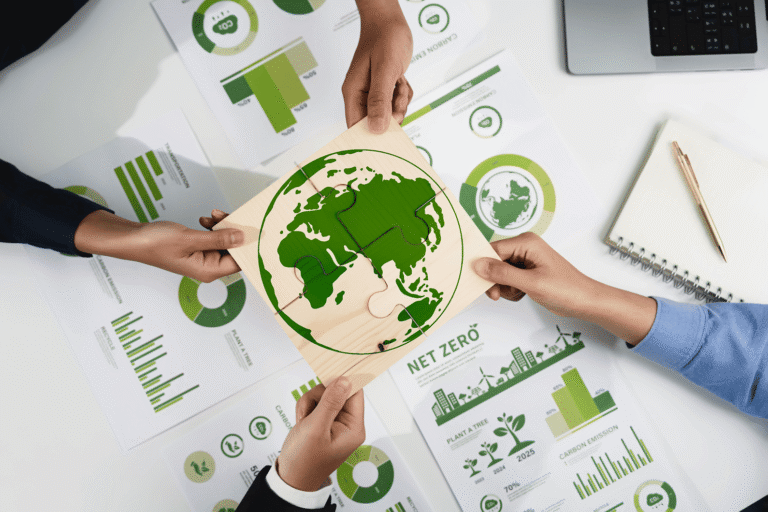

With consumers increasingly demanding sustainability from companies, it has become very common for many companies to tout their products as “green, “natural”, or “eco-friendly”. However, these three terms, like many others used to convey this message of sustainability end up leaving consumers unaware of the actual impact the company has. This miscommunication, deemed “greenwashing”, occurs when an organisation disseminates misleading or deceptive information with the intent to make their product, policy, or activity appear more environmentally friendly and/or less harmful than it truly is.
Greenwashing mistakes
Earlier this year, the European Parliament approved a general approach for the proposal of a Green Claims Directive. If approved, this legislation would oblige companies to provide evidence for any environmental claims made prior to selling their products.
To avoid the reputational (and perhaps soon, regulatory) risks of greenwashing, companies can start by avoiding what are known as the “7 sins of greenwashing”:
- Hidden trade-offs: Claims need to consider the entire lifecycle when making claims about benefits.
For example, paper from sustainably harvested forests is not necessarily environmentally beneficial because other parts of the paper-making process have environmental impacts (e.g., chlorine in bleaching or greenhouse gas emissions in production) that are equally important. - No proof: Claims need to have accessible supporting information (either internally or a third-party).
For example, often facial tissues or other hygiene products will claim some percentage of recycled content without providing any evidence. - Vagueness: Claims should be specific and accurate to avoid misunderstanding by the consumer.
For example, many chemicals and substances that are “natural” are still harmful (e.g., arsenic, uranium, or mercury). - Worshipping false labels: Claims cannot give the impression (either verbally or visually) that a third-party has endorsed the product or brand where this endorsement does not exist.
For example, putting an EU Eco-label on a product where you have not been verified by that organisation. - Irrelevance: Claims must be true but also must be important and pertinent.
For example, claiming that something is “CFC-free” is not very useful for consumers in modern day because CFCs (chlorofluorocarbons) have been banned for most uses since the Montreal Protocol. - Lesser of two evils: Claims of comparisons might be true within the product category but still ignore (and distract the consumer from) the harmful impacts of the product category as a whole.
For example, organic cigarettes are preferrable to non-organic but are still harmful to the body and dangerous to human health. - Lying: Claims must be true. For example, companies cannot claim to be ENERGY STAR, FSC, or any other certifications that it does not have.
Greenwashing examples
While the specific terms used might differ from company to company, here are a few general examples of terms to avoid:
| Eco-friendly | Biodegradable/ compostable | Responsibly sourced | Locally sourced |
| Green | Natural | Sustainable | Bio… |
| Circular | Low impact | Non-toxic | Clean |
For generic terms like this, it’s best to explain why or how it’s eco-friendly etc. For example, do you use renewable energy in production? Discuss that. Does the fabric only consist of natural fibres? Mention that.
It also helps to have a third-party verification. For example, the FSC standard for paper production, where applicable, might use terms like “responsibly sourced” with clear evidence provided by the certification.
In short: specificity and substantiation are key.
Sources:
– European Parliament Think Tank “’Green Claims’ Directive: Protecting Consumers from Greenwashing” (2024)
– CPS Bureau Veritas “EU Green Claims Directive: What You Need to Know” (2024)
– UL Solutions “Sins of Greenwashing” (n.d.)